
Andrena ovatula
This record describes Andrena ovatula (species). Recorded family: Andrenidae. Recorded order: Hymenoptera.
Identification and Appearance
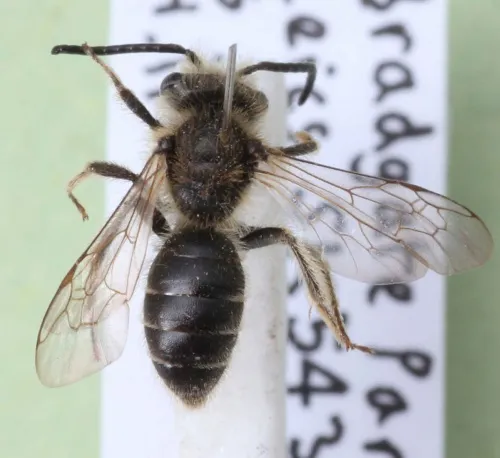
Length 7 to 11 mm. This is a small, dark species of solitary mining bee. There are several similar species and detailed examination is necessary. The females are the easiest sex to identify. The hind margin of tergite 3 with a complete band in fresh individuals (broken in wilkella and similis), the band on tergite 4 much broader than wilkella and similis and hairs at tip of abdomen dusky brown rather than orange-brown. Most solitary bees and wasps are difficult to identify, and can rarely be identified from photos taken in the field. All red-rated records should include a photo, or set of photos, showing the key characters, which may require the specimen. Please include a face shot, side, top and wings. Note whether male or female, explain how the specimen met the key characters and the key used. We will accept records identified by a recognised local or national expert, or that have been identified via the BWARS’ Facebook noting the name of the person/organisation identifying the record (e.g. ‘Stuart Roberts, BWARS Facebook’). Various habitats including hedgerows, flower meadows and post industrial areas. Usually seen between April and July but occasionally through to September. Mainly a southern species in Britain with most records concentrated along the south coast of England. No additional images available for this species.
Classification
- Kingdom
- Animalia
- Phylum
- Arthropoda
- Class
- Insecta
- Order
- Hymenoptera
- Family
- Andrenidae
- Genus
- Andrena
Imported taxonomy record. Source availability varies; see the source references and editorial policy below.
Habitat and Range
Habitat
Various habitats including hedgerows, flower meadows and post industrial areas.
Seasonal Activity
Usually seen between April and July but occasionally through to September.
Diet and Behavior
Life History
Feed on the pollen of various flowers.
Additional species information
Recorded status
Mainly a southern species in Britain with most records concentrated along the south coast of England.
About Flies: the wider group
Order-level background for Hymenoptera, the group containing Andrena ovatula. Species-specific details appear above.
Group overview
Hymenoptera includes over 150,000 described species of ants, bees, wasps, and sawflies. Earth harbors approximately 20 quadrillion (20×10^15) ants, with a combined biomass of ~12 megatons of dry carbon - exceeding the combined biomass of all wild birds and mammals (PNAS, 2022).
Ecological role of the group
About 35% of the world's food crops depend on animal pollinators. The chocolate industry, valued at over $100 billion, depends on pollinating flies and midges. Ants are the dominant soil engineers in most terrestrial ecosystems, turning more soil than earthworms in many habitats.
Economic and practical significance of the group
Pollinators contribute $235-577 billion worth of annual global food production (FAO). In the U.S., bee pollination alone benefits crops valued at $18 billion annually, and honey bees are responsible for $5.4 billion in agricultural productivity. Between April 2023-2024, 55.1% of managed honey bee colonies were lost. The U.S. bee population dropped from 5 million to 2.5 million.
Recorded sources for this group: FAO, USDA, EPA, PNAS (2022), US Fish & Wildlife Service. Imported estimates may describe particular regions or reporting periods.
Frequently Asked Questions About Andrena ovatula
What is Andrena ovatula?
Andrena ovatula is a species in the family Andrenidae, within the order Hymenoptera.
How big is Andrena ovatula?
7 to 11 mm. This is a small, dark species of solitary mining bee. There are several similar species and detailed examination is necessary. The females are the easiest sex to identify. The hind margin of tergite 3 with a complete band in fresh individuals (broken in wilkella and similis), the band on tergite 4 much broader than wilkella and similis and hairs at tip of abdomen dusky brown rather than orange-brown.
Where is Andrena ovatula found?
Habitat: Various habitats including hedgerows, flower meadows and post industrial areas.
When is Andrena ovatula active?
Andrena ovatula: seasonal activity - Usually seen between April and July but occasionally through to September..
What is the life cycle of a Andrena ovatula?
Feed on the pollen of various flowers.