
Blue-winged Grasshopper
Trimerotropis cyaneipennis
This record describes Trimerotropis cyaneipennis (species). Recorded family: Acrididae. Recorded order: Orthoptera.
Identification and Appearance
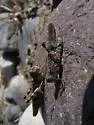
This is often a common and conspicuous species of rocky places in the lower mountain and canyon areas of the west, where it's blue wings and noisy flight are bound to grab attention. It's habits are such that it is often met in areas frequented by visitors to these areas, such as along trails, in camp grounds, and along gravel roadsides. It is known to occasionally hybridize with closely related Trimerotropis verruculata producing intermediate individuals.
Classification
- Kingdom
- Animalia
- Phylum
- Arthropoda
- Class
- Insecta
- Order
- Orthoptera (Grasshoppers, Crickets, Katydids)
- Suborder
- Caelifera
- Family
- Acrididae (Short-horned Grasshoppers)
- Subfamily
- Oedipodinae
- Tribe
- Trimerotropini
- Genus
- Trimerotropis
Imported taxonomy record. Source availability varies; see the source references and editorial policy below.
Habitat and Range
Habitat
Mostly broken terrain in mountainous regions, and mostly below the Montane forests, often associated with open scrub, Pinyon-Juniper, or Oak woodland. The insects favor steep rocky slopes, and often gather on exposed rocky ground near the base of such slopes. Often canyon bottoms and gravel roads that cut through such areas are good places to look. Less often exposed patches of ground on gentler slopes of hillsides, arroyos, hilltops, etc.
Geographic Range
Much of the U.S. west of the Great Plains and east of the Sierra Nevada and Cascades. Exact limits depend on how the species is defined, but populations that have been given other names occur along the east and west edges of this area (see Remarks below).
Seasonal Activity
Overwinters as eggs. Adults from June or July to frost, sometimes earlier or very late in hot desert climates, depending apparently on rains.
Additional species information
Species notes from the sources
Etymology: This species has a wide range and is variable. Those in more northern and western regions have wings mostly rich blue, sometimes even seeming a tad violet, and relatively transparent. Populations in the southeast (Arizona, New Mexico, and Texas) tend to have the wings a bit on the greenish side of blue, and this coloring is more opaque. *** In central and northern New Mexico green takes over and by the time one reaches Colorado (east from the San Juan Mountains) the insects have yellow wings, but still with blue hind tibiae. It is quite obvious that these green and yellow-winged insects with blue hind tibiae represent a transition to yellow-winged T. fratercula , which not too much further north in Colorado has mostly yellowish or sometimes greenish hind tibiae. T. fratercula replaces T. cyaneipennis the rest of the way north through Colorado into Wyoming and Nebraska. Even though it is usually treated as a distinct species, T. fratercula intergrades broadly with T. cyaneipennis and they probably would be better treated as subspecies.
About Grasshoppers, Crickets, Katydids: the wider group
Order-level background for Orthoptera, the group containing Trimerotropis cyaneipennis. Species-specific details appear above.
Group overview
Orthoptera includes ~28,000 described species of grasshoppers, crickets, and katydids. Desert locusts can form swarms covering 460 square miles containing up to 80 million individuals per square kilometer.
Ecological role of the group
Grasshoppers and crickets are a primary food source for birds, reptiles, and small mammals. Cricket farming is a growing industry - crickets require 12× less feed than cattle to produce the same amount of protein, using 2,000× less water.
Economic and practical significance of the group
A single large locust swarm can consume the same amount of food in one day as 35,000 people. The 2019-2021 East Africa locust crisis affected food security for 42 million people across multiple countries. Global crop losses from locusts can reach billions annually.
Recorded sources for this group: FAO, UN World Food Programme, research publications. Imported estimates may describe particular regions or reporting periods.
Photos of Blue-winged Grasshopper (5)
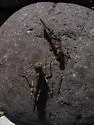
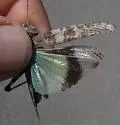

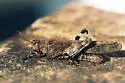
Photo credits: Contributed by Tom Bentley; Additional contributions by David Ferguson
Frequently Asked Questions About Blue-winged Grasshopper
What is Blue-winged Grasshopper?
Blue-winged Grasshopper (Trimerotropis cyaneipennis) is a species in the family Acrididae, within the order Orthoptera.
How big is Blue-winged Grasshopper?
males 25 - 35 mm females 28 - 40 mm
Where is Blue-winged Grasshopper found?
| Feature | Details |
|---|---|
| Habitat | Mostly broken terrain in mountainous regions, and mostly below the Montane forests, often associated with open scrub, Pinyon-Juniper, or Oak woodland. The insects favor steep rocky slopes, and often gather on exposed rocky ground near the base of such slopes. Often canyon bottoms and gravel roads that cut through such areas are good places to look. Less often exposed patches of ground on gentler slopes of hillsides, arroyos, hilltops, etc. |
| Range | Much of the U.S. west of the Great Plains and east of the Sierra Nevada and Cascades. Exact limits depend on how the species is defined, but populations that have been given other names occur along the east and west edges of this area (see Remarks below). |
When is Blue-winged Grasshopper active?
Blue-winged Grasshopper: seasonal activity - Overwinters as eggs. Adults from June or July to frost, sometimes earlier or very late in hot desert climates, depending apparently on rains..