
Badlands Grasshopper
Trimerotropis sparsa
This record describes Trimerotropis sparsa (species). Recorded family: Acrididae. Recorded order: Orthoptera.
Identification and Appearance
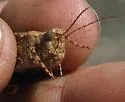
In an area in southern Idaho, T. sparsa, T. cyaneipennis, T. suffusa, T. gracilis, T. pseudofasciata , and T . unnamed species a can all be found relatively near to, or with one another, and the situation can become very confused there. It is also possible that some of these produce occasional hybrids where they meet.
Classification
- Kingdom
- Animalia
- Phylum
- Arthropoda
- Class
- Insecta
- Order
- Orthoptera (Grasshoppers, Crickets, Katydids)
- Suborder
- Caelifera
- Family
- Acrididae (Short-horned Grasshoppers)
- Subfamily
- Oedipodinae
- Tribe
- Trimerotropini
- Genus
- Trimerotropis
Imported taxonomy record. Source availability varies; see the source references and editorial policy below.
Habitat and Range
Habitat
Mostly bare eroded areas, particularly on soft fine soils or loose shaley areas in washes, on slopes, and in badland areas. These can be in near desert to openly wooded conditions. Also reported from flat alkali areas in the Great Basin, but those reports are likely all for another similar species.
Geographic Range
Alberta and North Dakota south to w. Nebraska, nw. New Mexico, and n. Arizona. Primarily a species of the western northern Great Plains, the Wyoming Basin, Colorado Plateaus, and Southern Rocky Mountains. Rare and spotty on patches of badlands of Great Plains near east base of the Rockies from Wyoming to New Mexico (here usually with yellow wings). Also reported from the Great Basin and Columbia/Snake Plains and Plateaus from s. British Columbia south to s. Nevada and e. California between the Rockies and Cascades/Sierra Nevada. However, records from this more western region are badly intertangled with (and may all really be) what is called " Trimerotropis unnamed species a" here.
Diet and Behavior
Life History
Overwinters as eggs buried in ground. Adults summer and early autumn.
Additional species information
Species notes from the sources
Etymology: The name T. leucophaea has been given to specimens from mountains in and bordering the Mojave Desert in California. Prior to the naming of T. leucopaea , these were often called T. sparsa , but differ in distribution and in having blue hind tibiae. The difference is weak, and recognition of leucophaea as more than a subspecies of sparsa is perhaps questionable.
About Grasshoppers, Crickets, Katydids: the wider group
Order-level background for Orthoptera, the group containing Trimerotropis sparsa. Species-specific details appear above.
Group overview
Orthoptera includes ~28,000 described species of grasshoppers, crickets, and katydids. Desert locusts can form swarms covering 460 square miles containing up to 80 million individuals per square kilometer.
Ecological role of the group
Grasshoppers and crickets are a primary food source for birds, reptiles, and small mammals. Cricket farming is a growing industry - crickets require 12× less feed than cattle to produce the same amount of protein, using 2,000× less water.
Economic and practical significance of the group
A single large locust swarm can consume the same amount of food in one day as 35,000 people. The 2019-2021 East Africa locust crisis affected food security for 42 million people across multiple countries. Global crop losses from locusts can reach billions annually.
Recorded sources for this group: FAO, UN World Food Programme, research publications. Imported estimates may describe particular regions or reporting periods.
Photos of Badlands Grasshopper (5)
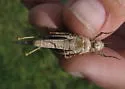
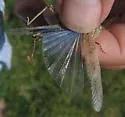
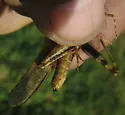
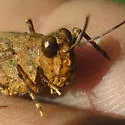
Photo credits: Contributed by David J. Ferguson
Frequently Asked Questions About Badlands Grasshopper
What is Badlands Grasshopper?
Badlands Grasshopper (Trimerotropis sparsa) is a species in the family Acrididae, within the order Orthoptera.
How big is Badlands Grasshopper?
males 25 - 35 mm females 30 - 45 mm
Where is Badlands Grasshopper found?
| Feature | Details |
|---|---|
| Habitat | Mostly bare eroded areas, particularly on soft fine soils or loose shaley areas in washes, on slopes, and in badland areas. These can be in near desert to openly wooded conditions. Also reported from flat alkali areas in the Great Basin, but those reports are likely all for another similar species. |
| Range | Alberta and North Dakota south to w. Nebraska, nw. New Mexico, and n. Arizona. Primarily a species of the western northern Great Plains, the Wyoming Basin, Colorado Plateaus, and Southern Rocky Mountains. Rare and spotty on patches of badlands of Great Plains near east base of the Rockies from Wyoming to New Mexico (here usually with yellow wings). Also reported from the Great Basin and Columbia/Snake Plains and Plateaus from s. British Columbia south to s. Nevada and e. California between the Rockies and Cascades/Sierra Nevada. However, records from this more western region are badly intertangled with (and may all really be) what is called Trimerotropis unnamed species a here. |
What is the life cycle of a Badlands Grasshopper?
Overwinters as eggs buried in ground. Adults summer and early autumn.