
Intricate Satyr - Hodges#4574.1
Hermeuptychia intricata
This record describes Hermeuptychia intricata (species). Recorded family: Nymphalidae. Recorded order: Lepidoptera.
Identification and Appearance
Classification
- Kingdom
- Animalia
- Phylum
- Arthropoda
- Class
- Insecta
- Order
- Lepidoptera (Butterflies and Moths)
- Superfamily
- Papilionoidea
- Family
- Nymphalidae (Brush-footed Butterflies)
- Subfamily
- Satyrinae
- Tribe
- Satyrini
- Genus
- Hermeuptychia (Hermeuptychia Satyrs)
Imported taxonomy record. Source availability varies; see the source references and editorial policy below.
Habitat and Range
Habitat
According to Austin 2018, Intricate Satyrs are most commonly found in hardwood ephemeral wetlands where the soil is perpetually moist and grassy vegetation is dense but there is not permanent standing water for any extended period of time throughout the year. This includes habitats such as floodplains, bottomlands, and isolated wooded low areas, particularly those with dense grassy understories. Both Intricate Satyrs and Carolina Satyrs will fly together when their habitats adjoin but Intricate Satyrs tend to be present in higher concentrations than their congener when both are present in a wetland habitat. Carolina Satyrs are far more generalist in their habitat selections than Intricate Satyrs.
Geographic Range
Southeast US: east TX to central FL to coastal NC, predominantly below the fall-line on the Atlantic coast - Map
Seasonal Activity
Adults fly from spring through fall in the coastal Southeast, primarily April through October.
Diet and Behavior
Diet: Larvae feed on the fresh growth of forest grasses. Ovipositing by females has been recorded on both Dichanthelium commutatum and Chasmanthium laxum and larvae have been identified on D. commutatum and D. dichotomum . Adults are predicted to feed on tree sap like other members of Satyrini. The species has been observed nectaring on several plant species, including Stellaria media , but typical do not nectar.
Life History
There are multiple broods per year. Eggs are laid singly on the new growth of a woodland grass in close proximity to an ephemeral wetland. The larvae are are very similar in appearance to those of the Carolina Satyr but are a slightly more yellow hue in most cases. (The right image below shows an Intricate Satyr on the left and a Carolina Satyr on the right for comparison.) They are green with a yellow hue, a faint mid-dorsal stripe, shallowly forked tail, and a round cleft head a shade darker than the body. Larvae are lethargic, sedentary, and solitary, clinging to the underside of the grass and feeding on the edge of the blade. Offspring of the fall brood overwinter as larvae on their host plant and begin pupation in late winter or spring. Pupae are very similar to those of Carolina Satyrs but appear to lack an abdominal spot present in the pupae of their congener. Adults live for a few months after eclosure. Intricate Saytrs emerge asynchronously from Carolina Satyrs, which can result in several week periods where only one species is flying at a site until the other emerges. Austin (2018) also documented a population of Intricate Satyrs that skipped the spring brood entirely, with adults appearing for the first time in June of that year.
Additional species information
Species notes from the sources
Etymology: "The name refers to the difficulty in recognizing this very distinct species and its intricate ventral wing patterns. The name is an adjective."
About Butterflies and Moths: the wider group
Order-level background for Lepidoptera, the group containing Hermeuptychia intricata. Species-specific details appear above.
Group overview
Lepidoptera includes approximately 180,000 described species of butterflies and moths. Moths outnumber butterflies roughly 10:1. The monarch butterfly's eastern population has declined by more than 80% since the mid-1990s, and the western population by over 95% since the 1980s. The IUCN lists the migratory monarch as Vulnerable.
Ecological role of the group
Butterflies and moths are essential indicators of ecosystem health. As caterpillars, they are a primary food source for birds - a single nest of blue tit chicks requires ~10,000 caterpillars. Adult moths pollinate many night-blooming plants.
Economic and practical significance of the group
Lepidoptera are critical pollinators. In Europe, grassland butterfly species have declined by almost 50% since the early 1990s. In the UK, three-quarters of butterflies are in decline. In the U.S., five butterfly species have gone extinct since 1950, with 29 listed as endangered.
Recorded sources for this group: IUCN Red List, Xerces Society, USFWS, PNAS, WWF. Imported estimates may describe particular regions or reporting periods.
Photos of Intricate Satyr - Hodges#4574.1 (5)
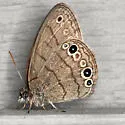
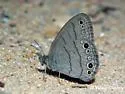
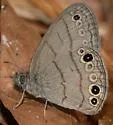
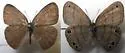
Photo credits: Contributed by Bill Dempwolf; Additional contributions by Steve Nanz , Mike Quinn , David Ferguson , Robert Lord Zimlich , Tom Austin
Frequently Asked Questions About Intricate Satyr - Hodges#4574.1
Where is Intricate Satyr - Hodges#4574.1 found?
| Feature | Details |
|---|---|
| Habitat | According to Austin 2018, Intricate Satyrs are most commonly found in hardwood ephemeral wetlands where the soil is perpetually moist and grassy vegetation is dense but there is not permanent standing water for any extended period of time throughout the year. This includes habitats such as floodplains, bottomlands, and isolated wooded low areas, particularly those with dense grassy understories. Both Intricate Satyrs and Carolina Satyrs will fly together when their habitats adjoin but Intricate Satyrs tend to be present in higher concentrations than their congener when both are present in a wetland habitat. Carolina Satyrs are far more generalist in their habitat selections than Intricate Satyrs. |
| Range | Southeast US: east TX to central FL to coastal NC, predominantly below the fall-line on the Atlantic coast - Map |
What does Intricate Satyr - Hodges#4574.1 eat?
The diet of the Intricate Satyr - Hodges#4574.1 includes Larvae feed on the fresh growth of forest grasses. Ovipositing by females has been recorded on both Dichanthelium commutatum and Chasmanthium laxum and larvae have been identified on D. commutatum and D. dichotomum . Adults are predicted to feed on tree sap like other members of Satyrini. The species has been observed nectaring on several plant species, including Stellaria media , but typical do not nectar..
When is Intricate Satyr - Hodges#4574.1 active?
Intricate Satyr - Hodges#4574.1: seasonal activity - Adults fly from spring through fall in the coastal Southeast, primarily April through October..
What is the life cycle of a Intricate Satyr - Hodges#4574.1?
There are multiple broods per year. Eggs are laid singly on the new growth of a woodland grass in close proximity to an ephemeral wetland. The larvae are are very similar in appearance to those of the Carolina Satyr but are a slightly more yellow hue in most cases. (The right image below shows an Intricate Satyr on the left and a Carolina Satyr on the right for comparison.) They are green with a yellow hue, a faint mid-dorsal stripe, shallowly forked tail, and a round cleft head a shade darker than the body. Larvae are lethargic, sedentary, and solitary, clinging to the underside of the grass and feeding on the edge of the blade. Offspring of the fall brood overwinter as larvae on their host plant and begin pupation in late winter or spring. Pupae are very similar to those of Carolina Satyrs but appear to lack an abdominal spot present in the pupae of their congener. Adults live for a few months after eclosure. Intricate Saytrs emerge asynchronously from Carolina Satyrs, which can result in several week periods where only one species is flying at a site until the other emerges. Austin (2018) also documented a population of Intricate Satyrs that skipped the spring brood entirely, with adults appearing for the first time in June of that year.