
Melangyna labiatarum
This record describes Melangyna labiatarum (species). Recorded family: Syrphidae. Recorded order: Diptera.
Identification and Appearance
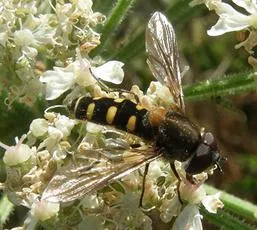
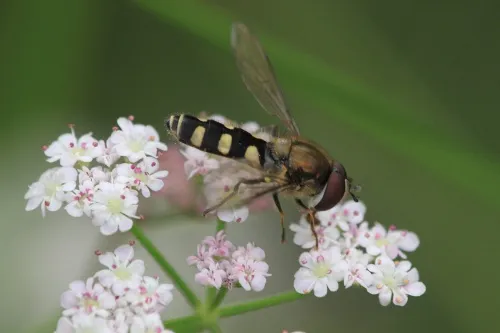
There is much debate as to the validity of taxonomic distinctions between the two species M. labiatarum and M. compositarum . The range of each species is more clearly defined. Melangyna labiatarum records come mainly from England and are denser in the south. The species shows a preference for feeding on umbellifers such as Hogweed and favours sunlit glades in areas with some tree cover, including deciduous trees. Melangyna compositarum is associated with coniferous woodland and is mainly recorded from Scotland and the far north of England. As our photographs were taken in exactly the type of area and location favoured by Melangyna labiatarum it is almost certain that this is the species shown. The fact that it is photographed on Hogweed adds further weight to the argument. April to October/November peaking between June / August. Each species is frequent in its preferred areas, but the issue of authenticity of identification clouds all of these records. No additional images available for this species.
Classification
Habitat and Range
Habitat
Melangyna labiatarum
Seasonal Activity
April to October/November peaking between June / August.
Additional species information
Recorded status
Each species is frequent in its preferred areas, but the issue of authenticity of identification clouds all of these records.
About Flies: the wider group
Order-level background for Diptera, the group containing Melangyna labiatarum. Species-specific details appear above.
Group overview
Diptera includes over 150,000 described species of flies, mosquitoes, and midges. Mosquitoes are the deadliest animal on Earth (CDC). Malaria alone causes ~249 million cases and over 608,000 deaths annually, mostly children under 5 (WHO). Vector-borne diseases account for over 17% of all infectious diseases, causing 700,000+ deaths per year.
Ecological role of the group
Despite their disease impact, flies are critical decomposers and pollinators. Hoverflies alone pollinate hundreds of crop and wildflower species. Flies are also the primary food source for many birds, bats, and fish. Forensic entomology relies heavily on fly species for crime scene analysis.
Economic and practical significance of the group
In the U.S., vector-borne disease cases tripled between 2004-2016, with over 640,000 cases reported in that period (CDC). Tickborne diseases doubled from 22,000 to 48,000 annual reports. Globally, mosquito-borne diseases cost billions in healthcare and lost productivity.
Recorded sources for this group: WHO, CDC, PNAS. Imported estimates may describe particular regions or reporting periods.
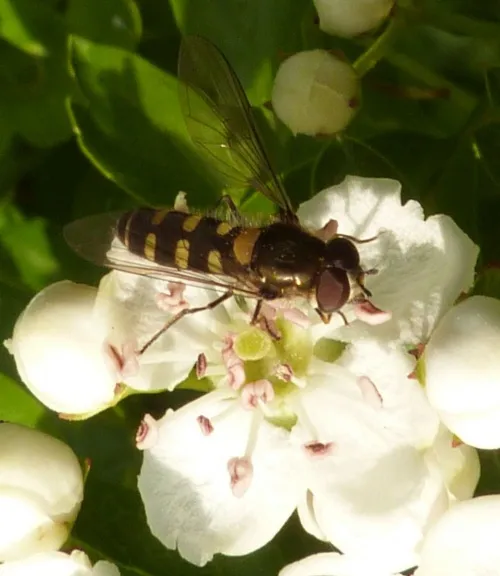
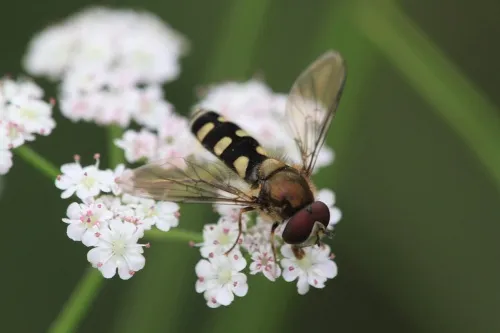
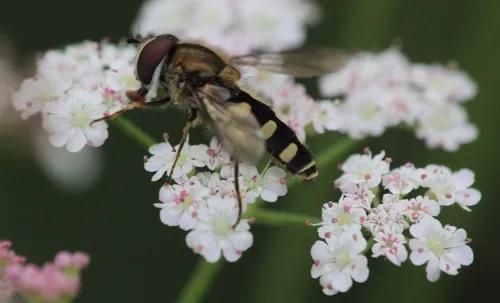
Photos of Melangyna labiatarum (5)
Frequently Asked Questions About Melangyna labiatarum
What is Melangyna labiatarum?
Melangyna labiatarum is a species in the family Syrphidae, within the order Diptera.
Where is Melangyna labiatarum found?
Habitat: Melangyna labiatarum
When is Melangyna labiatarum active?
Melangyna labiatarum: seasonal activity - April to October/November peaking between June / August..