
Family Crambid Snout Moths (Crambidae)
Crambidae is a family in the order Lepidoptera. Browse 788 named species recorded in this family, or open an individual profile for its available identification and natural-history information.
Species in Crambidae (788)
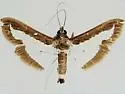
Diaphania elegans - Hodges#5207.1
Diaphania elegans
Identification: The brown outer band of the forewing has an enlarged area at the inner margin.
Cucumber Moth - Hodges#5207
Diaphania indica
Identification: Adult : Wings are white, with a dark brown band along the fringe. Larva : pale to dark green with a white stripe running along both sides of the body.
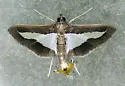
Diaphania infimalis - Hodges#5206
Diaphania infimalis
Type locality: French Guiana, Cayenne D. infimalis is still on most lists however, per Capps in Kimball , specimens of Diaphania modialis have been misidentified as D. infimalis which is not found in NA. However, it seems unclear as to whether modial
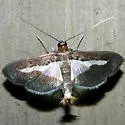
Diaphania Moth - Hodges#5205
Diaphania modialis
Type locality: Mexico, Cuernavaca It seems unclear as to whether modialis was ever formally elevated to species and some authors treat it as a subspecies of Diaphania infimalis .
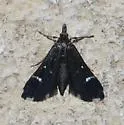
Diasemiodes nigralis - Hodges#5173
Diasemiodes nigralis
Identification: Original description is online as Pyrausta nigralis Fernald. (link below) -
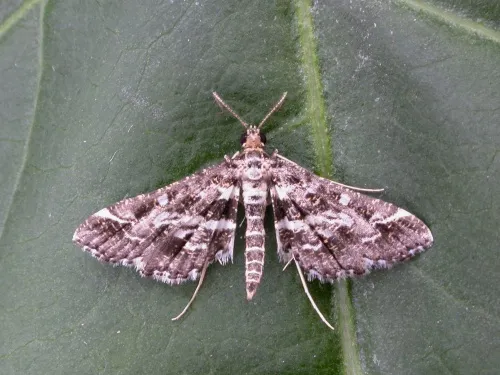
Diasemiopsis ramburialis
Diasemiopsis ramburialis
Wingspan 17 to 22 mm. It is easily confused with Diasemia reticularis and care should be taken when identifying either species. Only known as a migrant species in Britain. Encountered mainly on the southern coasts between June and October. A scarce m
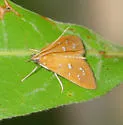
White-spotted Orange Moth - Hodges#5253
Diastictis argyralis
Identification: Forewing ground color varies from orange-yellow to dark fuscous, with darker specimens in summer; minute or obsolescent silvery spots as follows: round AM spot below cell and sometimes minute spot in cell above it; round or subquadrat
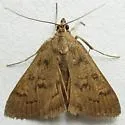
Diastictis caecalis - Hodges#5261
Diastictis caecalis
Identification: "Forewing chocolate brown with an irregular, darker postmedial, transverse line; hindwing milk chocolate brown to ochreous brown with a postmedial line extended to anal margin" .
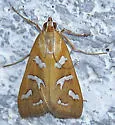
Fractured Western Snout Moth - Hodges#5256
Diastictis fracturalis
Identification: Powell & Opler described as pale tan to dark brown with highly variable silvery markings, from small, isolated spots to elongated, connected ones. "This is the most variable species of the genus, and, although there seem to be geograp
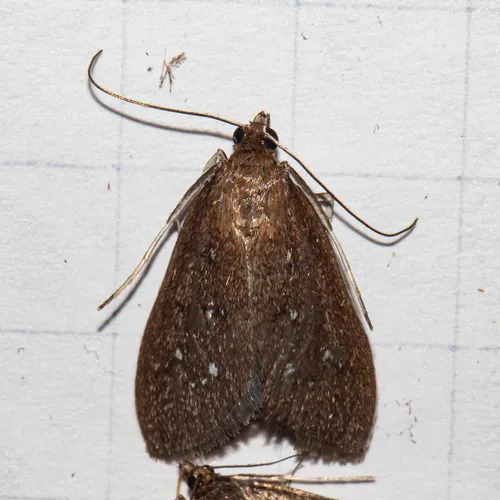
Diastictis pseudargyralis - Hodges#5254
Diastictis pseudargyralis
Identification: Closely similar to argyralis ; silvery spots on average smaller and rarely dark margined; posterior spot of submarginal row less strongly displaced basad. Munroe also described genitalia differences.
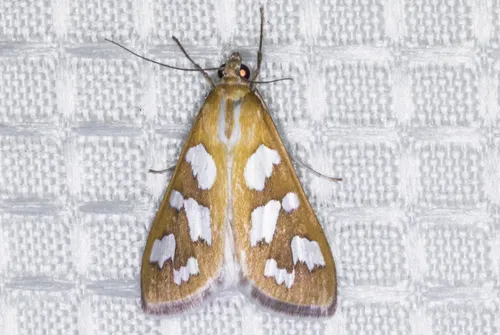
Diastictis robustior - Hodges#5259
Diastictis robustior
Identification: Larger and more robust than other species of the genus; large silver spots as follows: large broad spot below and extending into the cell near the base; small round or quadrate spot near outer end of cell; anvil-shaped spot below oute
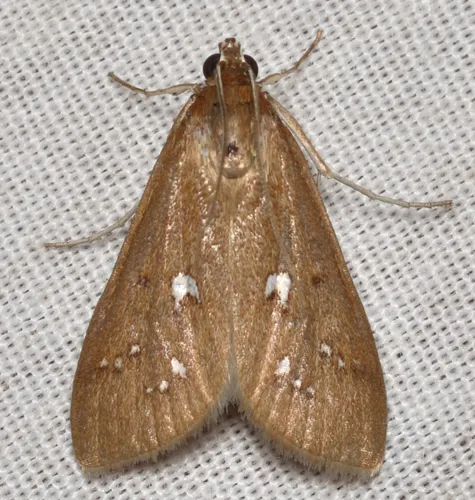
Diastictis ventralis - Hodges#5255
Diastictis ventralis
Identification: Adults - Similar in external appearance to D. argyralis , but with the antemedial spots absent, the outer cell-spot often absent, and the postmedial, submarginal, and subapical spots small or minute. Ground color varying from orange-y
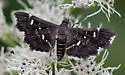
Diathrausta harlequinalis - Hodges#5175
Diathrausta harlequinalis
Identification: Diathrausta harlequinalis and D. reconditalis can not be distinguished reliably from photos. Genitalia: Type locality: Mexico: Tehuacan
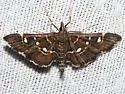
Diathrausta reconditalis - Hodges#5174
Diathrausta reconditalis
Identification: Diathrausta harlequinalis and D. reconditalis can not be distinguished reliably from photos. Range can be used in some regions Genitalia:
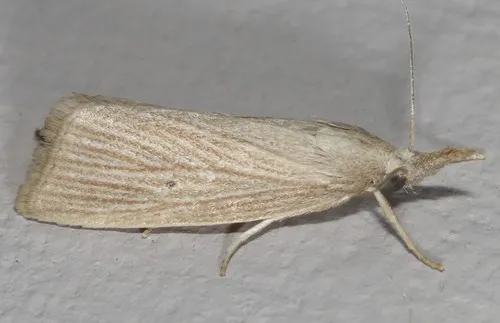
Diatraea evanescens - Hodges#5478
Diatraea evanescens
Identification: Introduced into Florida from Brazil in 1914. Has spread north. Not cold-hardy but can take light frost. Head: Large eyes, no hair. Palpi very long, beak-like, 2 to 3 times longer than head. Antenna: Simple, reaching to mid wing. Wings
Sugarcane borer moth - Hodges#5475
Diatraea saccharalis
Heppner (2003) reported this species was introduced to North America. Considered invasive in this country (from Central and South America). (Capinera, John L. North American Vegetable Pests. The Pattern of Invasion. American Entomologist. Spring 2002
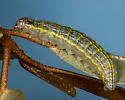
Dichogama amabilis - Hodges#4791
Dichogama amabilis
Identification: Forewings dirty white to gray with red spot at apex. See Dyar for a detailed description of the larva .
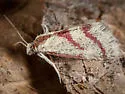
Dichozoma parvipicta - Hodges#4809
Dichozoma parvipicta
Dichozoma parvipicta - Hodges#4809 (Dichozoma parvipicta) is a species in the family Crambidae, commonly known as crambid snout moths, belonging to the order Lepidoptera (Butterflies and Moths). It is classified within the subfamily Odontiinae, tribe
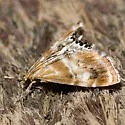
Dicymolomia metalliferalis - Hodges#4892
Dicymolomia metalliferalis
Identification: Adult: fine black wavy lines on hindwing are diagnostic
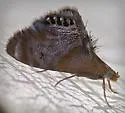
Dicymolomia opuntialis - Hodges#4891
Dicymolomia opuntialis
Identification: The original description is available online in the print references below.
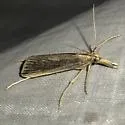
Donacaula aquilellus - Hodges#5317
Donacaula aquilellus
BOLD:AAA4101 appears to correspond to this species as treated by Martínez.
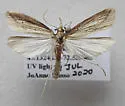
Donacaula dispersellus - Hodges#5316.1
Donacaula dispersellus
Identification: Genitalia: Treated as a full species in the unpublished revision
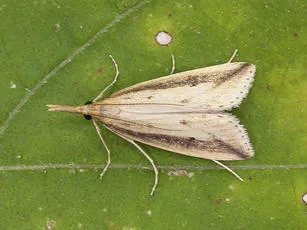
Donacaula forficella
Donacaula forficella
Inhabiting marshy areas, ditches and similar habitats. The moths fly in June and July and are usually encountered at light. The larva of this species has a peculiar habit of cutting part of a leaf to act as a raft, using this to float on the water to
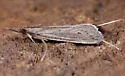
Donacaula nitidellus - Hodges#5322
Donacaula nitidellus
BOLD:AAA4102 appears to correspond to this species as treated by Martínez and may represent a species complex.
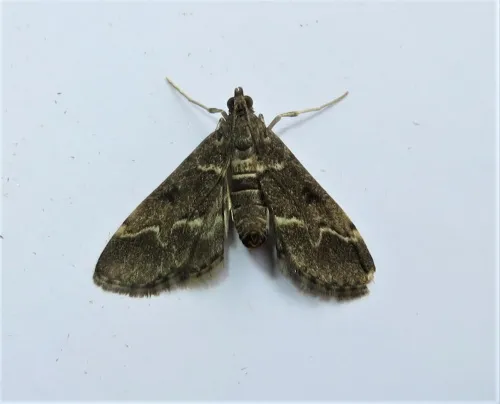
Duponchelia fovealis
Duponchelia fovealis
The species has the potential to be a pest in horticultural establishments, and there have been reported outbreaks in nurseries. On the continent it already has become such a pest in certain areas, and feeds on a wide range of host plants. The adults
Ecpyrrhorrhoe puralis - Hodges#4973.1
Ecpyrrhorrhoe puralis
Naturalized species from Asia. Ecpyrrhorrhoe puralis was first reported in the United States from Alabama, Georgia, Kentucky, Maryland, Mississippi, Pennsylvania, South Carolina, Tennessee, and West Virginia by Solis et al. .
Nymphula Moth - Hodges#4747
Elophila ekthlipsis
Identification: Adult: wings deep yellow with large white patches rimmed by thick black lines; medial area of forewing has large white U-shaped patch, with the base of the "U" touching the costa, and another large oval patch touching the inner margin
Waterlily Borer - Hodges#4751
Elophila gyralis
Identification: Adult: sexually dimorphic - female usually unmarked orangish-yellow to dark brown; male forewing orangish-brown to dark grayish-brown; lines of male black with white edging; AM and PM lines connected at upper and lower third to form l
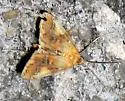
Nebulous Munroessa - Hodges#4750
Elophila nebulosalis
Identification: Adult: forewing orangish-yellow with diffuse dark gray patch that forms a semicircle along the costa; area inside semicircle filled with ground color and a small white patch that touches costa anteriorly; subterminal line wavy, white
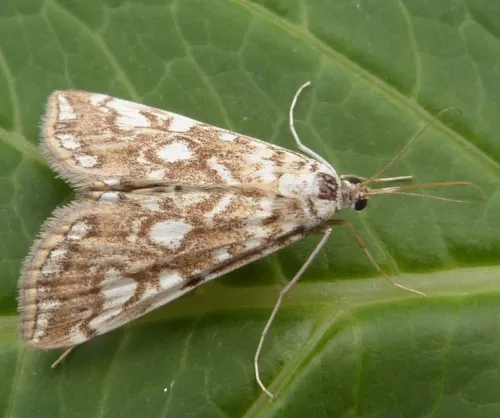
Brown China-mark
Elophila nymphaeata
Wingspan 22-30 mm. This species is quite variable and some examples are quite dark and dull-looking, whereas others can have delicately-patterned white patches and streaks. The group of moths known as China-marks are unusual in that their larvae are
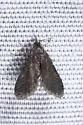
Black Duckweed Moth - Hodges#4754
Elophila tinealis
Identification: forewing and hindwing dark brown or blackish with silvery-white patch in medial area, and sparse white dots; abdomen dark with white ring around each segment, and stout triangular or cone-shaped terminal segment Genitalia:
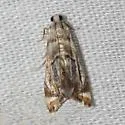
Dewy Leafcutter - Hodges#4785
Eoparargyractis irroratalis
Identification: Small, with triangular wings usually held tent-like over body. Has the typical pattern for the subfamily with brown bands across white ground color on both wings and dark speckliing in the outer half; a series of brown, white, and or
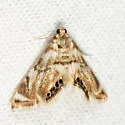
Eoparargyractis plevie - Hodges#4787
Eoparargyractis plevie
Identification: Small, with triangular wings usually held tent-like over body. Has the typical pattern for the subfamily with brown bands across white ground color on both wings and dark speckliing in the outer half; a series of brown, white, and ora
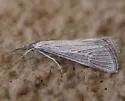
Eoreuma callista - Hodges#5497
Eoreuma callista
Eoreuma callista - Hodges#5497 (Eoreuma callista) is a species in the family Crambidae, commonly known as crambid snout moths, belonging to the order Lepidoptera (Butterflies and Moths). It is classified within the subfamily Crambinae, tribe Haimbach
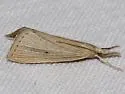
Wainscot Grass-veneer - Hodges#5492
Eoreuma densellus
Identification: Adult - Wings: Yellowish-white with white veins and brown speckles between the veins. A large dark dot about mid wing at end of discal cell. Wing tip has series of small dark dots. Fringe yellowish-white. Hind wing white. see key Geni
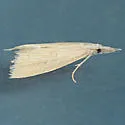
Mexican rice borer - Hodges#5493
Eoreuma loftini
Identification: Apex of fore wing acute; whitish straw-color, the veins light, edged on each side by a line of fine brown scales, which diffuse in the interspaces ; a small black discal dot ; a row of terminal black dots in the interspaces, connected
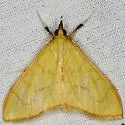
Epicorsia oedipodalis - Hodges#4938
Epicorsia oedipodalis
Identification: Identified by Jim Hayden, Curator of the Florida State Collection of Arthropods, McGuire Center for Lepidoptera and Biodiversity, Gainesville. Thanks to Bob Patterson who was kind enough to forward the photo for the ID help. Abdomen h
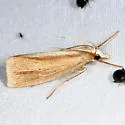
Epina alleni - Hodges#5469
Epina alleni
Identification: The cream colored hindwing has a dark brown terminal line that ends before reaching the anal angle.
Epina dichromella - Hodges#5468
Epina dichromella
Identification: See description of Diatraea differentialis Fernald, 1888, in "Print References" below. Note that females are described as brownish yellow and males as seal brown. These specimens ( 3 ) and ( 4 ) were identified by James E. Hayden, Ph.

Epipagis disparilis - Hodges#5148
Epipagis disparilis
Identification: Distinguished from all others of the genus by the distinctive heavy and continuous antemedial (AM) line of the hind wing
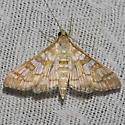
Epipagis fenestralis - Hodges#5147
Epipagis fenestralis
Identification: The antemedial (AM) line of the hindwing is broken and does not extend all the way across the wing
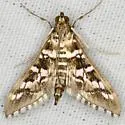
Forsyth's Epipagis - Hodges#5146
Epipagis forsythae
Identification: Adult: forewing brown with white markings in AM, median, and subterminal areas; dark PM line widens into broad base at inner margin; small white patch beyond PM line at anal angle; hindwing mostly white, with 2 or 3 dark discal spots,
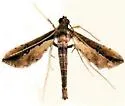
Ercta vittata - Hodges#5111
Ercta vittata
Identification: Specimen identified by DNA analysis (BOLD).

Chemsak's Desert Moth - Hodges#4815
Eremanthe chemsaki
Identification: Munroe original description is in MONA. Determined by Ed Knudson (Texas Lepidoptera Survey). Diurnal .
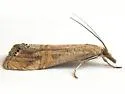
Euchromius californicalis - Hodges#5455
Euchromius californicalis
Identification: Resembling E. ocellea Hodges#5454 in color and maculation but with the whitish patch adjacent to blackish terminal dots somewhat broader; and the thin brownish line within, closer to termination of irrorated area than to the terminal
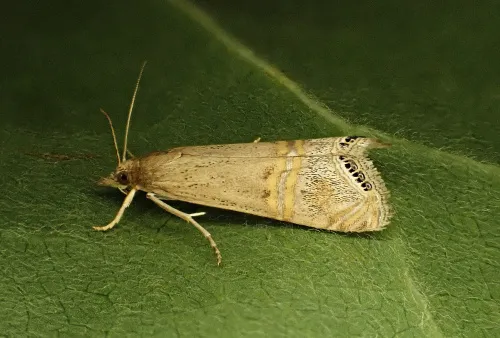
Euchromius ocellea
Euchromius ocellea
Wingspan 16 to 27 mm. Distinguished by a row of white-edged black spots along the outer edge of the forewing. Very rare in our area - records must be supported by a clear photograph. A migrant species, which may sometimes be imported with grain produ
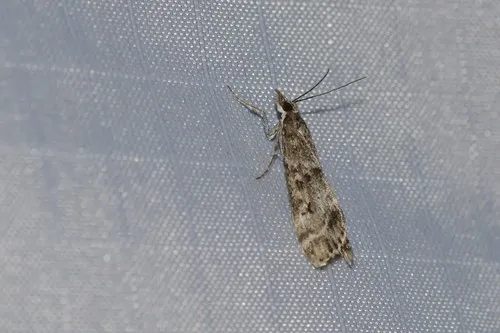
Eudonia alpina - Hodges#4737
Eudonia alpina
Identification: Male: Brown, ash-gray beneath. Palpi slender, porrect, white beneath, much shorter than the breadth of the head; third joint lanceolate, about half the length of the second. Abdomen ash-gray, extending much beyond the hind wings. Legs
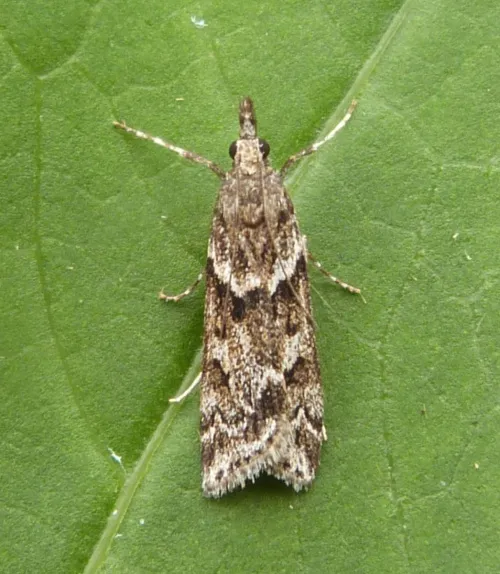
Eudonia angustea
Eudonia angustea
Wingspan 17-22 mm. A rather small, narrow-winged species. Scopariinae are a difficult group to identify and sometimes it is necessary to refer to genitalia to be sure. A useful guide can be found at the following LINK Prefers coastal habitats but it
Eudonia echo - Hodges#4735
Eudonia echo
Identification: Adult: forewing a mosaic of black, white, and gold scales, giving an overall dull greenish-gray appearance from a distance; AM and PM lines white; upper portion of PM line jogs outward, and lower portion curves inward in concave arc;
Eudonia heterosalis - Hodges#4739
Eudonia heterosalis
Identification: Mark Dreiling’s DNA Supported Specimen
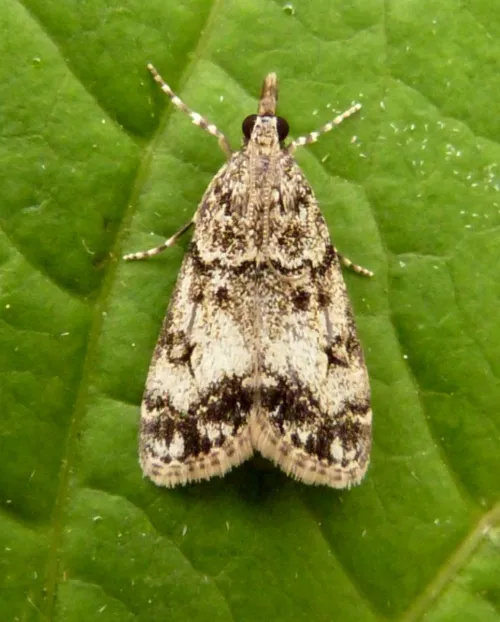
Eudonia lacustrata
Eudonia lacustrata
Wingspan 15-20 mm. One of the more distinctive of the Scopariinae, identifiable by its rather plain creamy or greyish central portion of the wing. The larvae feed on mosses, usually on walls or tree-trunks. Species has a distribution over most of Gre
Eudonia leucophthalma - Hodges#4734
Eudonia leucophthalma
Identification: The original description as Scoparia leucophthalma Dyar is avaiable online. Specimen identified by DNA analysis (BOLD).
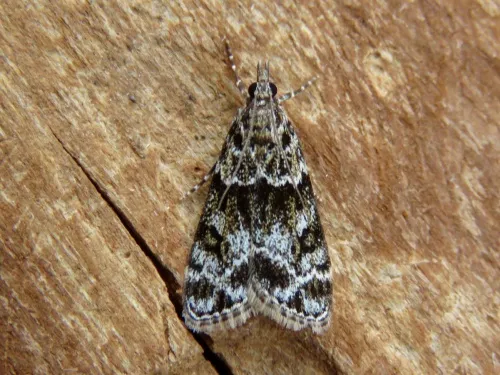
Eudonia mercurella
Eudonia mercurella
Wingspan 16-19 mm. Its similarity to several other species makes it difficult to identify. Scopariinae are a difficult group to identify and sometimes it is necessary to refer to genitalia to be sure. A useful guide can be found at the following LINK
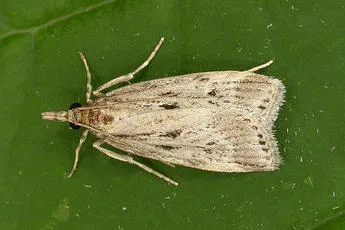
Eudonia pallida
Eudonia pallida
Wingspan around 18 mm. The palest of the British Scopariinae and quite distinctive, although care must be taken not to confuse small, worn specimens of related species. Scopariinae are a difficult group to identify and sometimes it is necessary to re
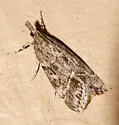
Eudonia rectilinea - Hodges#4722
Eudonia rectilinea
Identification: Forewing gray with nearly straight postmedial line that has a slight bend near the costa.
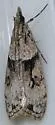
Eudonia spaldingalis - Hodges#4729
Eudonia spaldingalis
Identification: Description can be found in MONA Fascicle 13-1A at link in citations below.
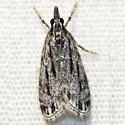
Striped Eudonia - Hodges#4738
Eudonia strigalis
Identification: Dyar (1906) original description as Scoparia strigalis is available in PDF. ( 3 ) Adult: forewing light dappled gray with several short black longitudinal streaks in specific locations: one near the base, two side-by-side in median ar
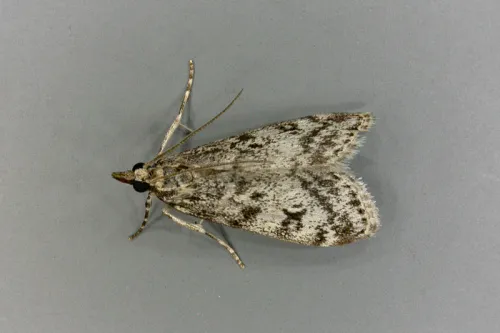
Eudonia truncicolella
Eudonia truncicolella
Wingspan 18-22 mm. One of the confusing range of Scopariinae , which can be difficult to tell apart. Most likely to be confused with the commoner Eudonia lacustrata, although the present species is said to have a more 'scratchy' appearance and more p
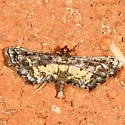
Eurrhyparodes lygdamis - Hodges#5122
Eurrhyparodes lygdamis
Originally described from Mexico; "Obispo", Panama (presumably Bas Obispo, an historical name for a location in the Canal Zone); and the states of Amazonas and Ceará in Brazil.
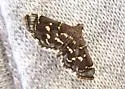
Eurrhyparodes splendens - Hodges#5122.1
Eurrhyparodes splendens
Identification: Druce (1895) original description is available online in the print references.
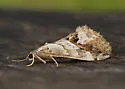
Evergestis dischematalis - Hodges#4913
Evergestis dischematalis
Identification: Description as Evergestis dimorphalis can be found in MONA Fascicle 13-1C at link in citations below.
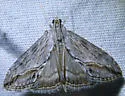
Evergestis eurekalis - Hodges#4911
Evergestis eurekalis
Identification: Description can be found in MONA Fascicle 13-1C at link in citations below. AM line obsolete or nearly so; narrow zone of light brown shading distad of middle of PM line; dark streaks only in apical and tornal areas.
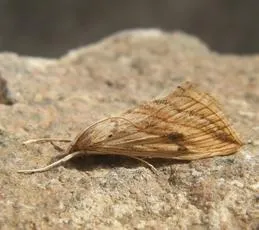
Garden Pebble
Evergestis forficalis
Wingspan 25-28 mm. This species has a distinctive resting posture and when completely at repose has the wings held in a steep tent-like fashion. Gardens and similar habitats throughout Britain. Double-brooded, flying in May and June, then again from
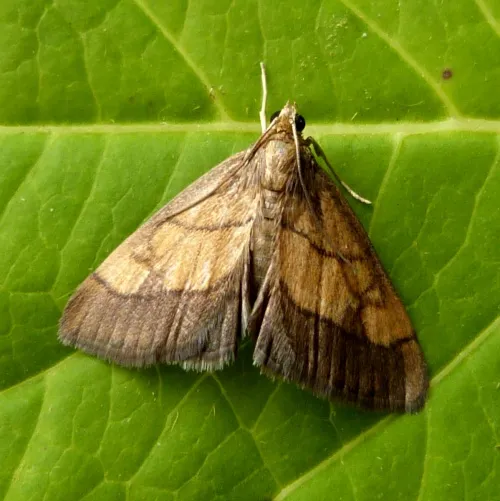
Evergestis limbata
Evergestis limbata
Wingspan 20 to 23 mm. It is unlike any other British species and quite distinctive. A rare migrant. - Abroad, the species occurs in southern Europe, where it flies in July and August. The larvae feed, like other Evergestis species, on Brassicaceae, e
Evergestis obliqualis - Hodges#4912
Evergestis obliqualis
Identification: Large photo of pinned adult at University of California, Berkeley . - Determined by Bob Patterson.
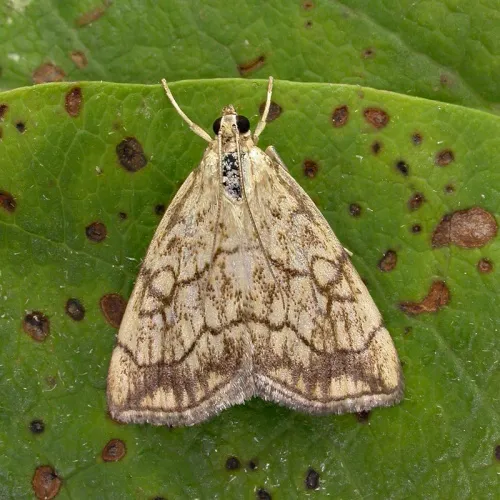
Evergestis pallidata
Evergestis pallidata
Wingspan 24 to 29 mm. A fairly distinctive moth with pale creamy wings laced with dark brown markings. Various habitats including damp open woodland and other damp areas. The moths fly between June and August when they are attracted to light. The lar
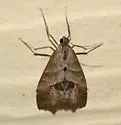
Evergestis triangulalis - Hodges#4914
Evergestis triangulalis
Identification: Original description is online at link below. (Barnes & McDunnough)
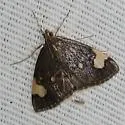
Large-spotted Evergestis - Hodges#4901
Evergestis unimacula
Identification: Adult - forewing dark grayish-brown with irregular pale patch along outer half of costa; small pale discal spot in lower half of wing; terminal line and fringe dark; hindwing similarly colored but pale patch more diffuse and fringe so
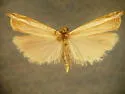
Fernandocrambus harpipterus - Hodges#5389
Fernandocrambus harpipterus
Identification: Distinguished from very similar looking species of Crambus by the striking falcate FW tips.
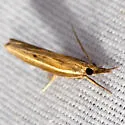
Carpet-grass Webworm Moth - Hodges#5433
Fissicrambus haytiellus
Identification: See the cautionary note on the Fissicrambus genus page .
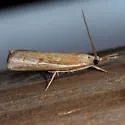
Fissicrambus hemiochrellus - Hodges#5434
Fissicrambus hemiochrellus
Identification: See the cautionary note on the Fissicrambus genus page and in Bleszynski, 1963 . Genitalia: ♀ page creation based on Brian Scholtens' identification of this image , as reported by Bob Patterson via email
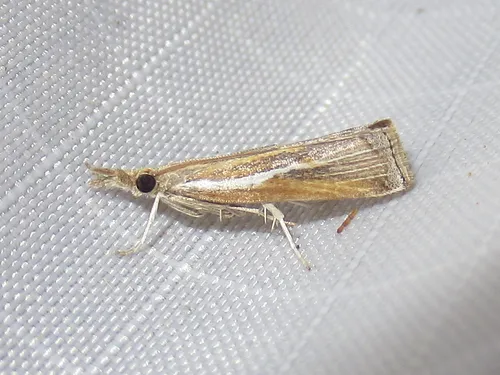
Fissicrambus intermedius - Hodges#5432
Fissicrambus intermedius
Identification: Kearfott's original description as Crambus intermedius is online (see below). Kearfott describes the rich buff-orange color ("dark ochreous") of the FW between the white streak and the costal margin. The white streak widens from the b
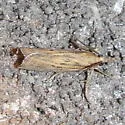
Fissicrambus quadrinotellus - Hodges#5385
Fissicrambus quadrinotellus
Identification: See Bleszynski, 1963 Det. E. Knudson, 2009 Specimen identified by DNA analysis: Genitalia:
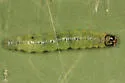
Framinghamia helvalis - Hodges#5262
Framinghamia helvalis
Identification: In Framinghamia, the discocellular bar is double, the pm line of the FW is less dentate, the bulge in the pm line is less rounded, the costal portion of the pm line does not bend basad but is instead relatively perpendicular to the co
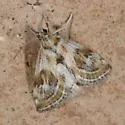
Frechinia laetalis - Hodges#4800
Frechinia laetalis
Identification: Adult - forewing white with yellowish-brown patches and some gray scales; PM line white, curving in long arc from costa to mid-way along inner margin; medium brownish-gray patch inside PM line contains white scales along veins; hindwi
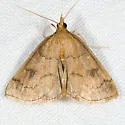
Mint Root Borer - Hodges#4950
Fumibotys fumalis
Identification: Adult: forewing orangish to light brown with AM line shaped like an arc, and PM line shape like a sine wave; large diffuse dark patch near middle of wing between AM and PM lines Larva: young larva is 2-3 mm long, yellow to light green
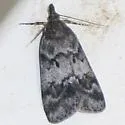
Gesneria centuriella - Hodges#4703
Gesneria centuriella
Identification: Adult: forewing variably gray to brown with black spots and jagged AM and PM lines; median area pale compared to dark distal half of wing; hindwing light yellowish-gray with dark discal spot and terminal band. More detailed descriptio
Gesneria rindgeorum - Hodges#4704
Gesneria rindgeorum
Identification: Detailed description can be found in MONA Fascicle 13.1A at link below under citations. Images of the described species can be found in MONA Fascicle 13.1C at link below under citations.
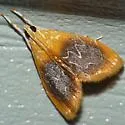
Glaphyria cappsi - Hodges#4874
Glaphyria cappsi
Identification: See here for how to separate G. fulminalis from G. cappsi : Wings: Forewing pale yellowish-orange, with a large dark purplish-brown central area. Two white lines across the wing. The first line AM antemedial is wavy with 2 distinct, p
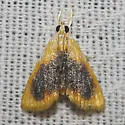
Glaphyria decisa - Hodges#4874.1
Glaphyria decisa
Identification: "The white forewing lines of G. decisa are diffusely scaled, not distinctly sharp, as in the other species..." - Hayden (2016).
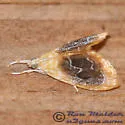
Black-patched Glaphyria Moth - Hodges#4873
Glaphyria fulminalis
Identification: See here for how to separate G. fulminalis from G. cappsi : Types: Holotype & Allotype as Homophysa fulminalis by Lederer, 1863. Type Localities: Unknown. In the Natural History Museum of Austria, Vienna, Austria.
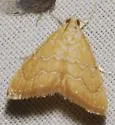
White-roped Glaphyria - Hodges#4870
Glaphyria sesquistrialis
Identification: Adult: forewing yellowish with wavy white AM and PM lines bordered on both sides by dark gray; hindwing whitish or light gray with yellowish shading beyond jagged PM line. Specimen identified by DNA analysis (BOLD).
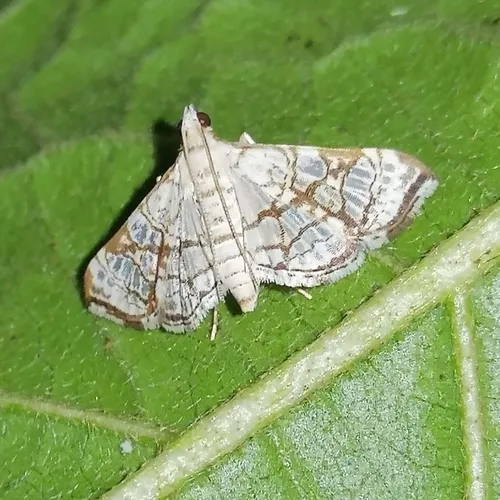
Glyphodes floridalis - Hodges#5199
Glyphodes floridalis
Type locality: USA, Florida, Palm Beach and Key West
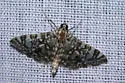
Glyphodes onychinalis - Hodges#5199.1
Glyphodes onychinalis
Known since 2000 in California (Newport Beach), larvae on jasmine and oleander and probably other plants. Originally from Afro-Asian Region (India, Sri Lanka, Indonesia, Australia, New Zealand). Based on molecular data a new genus may be required for
Gonocausta sabinalis - Hodges#5078.1
Gonocausta sabinalis
Gonocausta sabinalis - Hodges#5078.1 (Gonocausta sabinalis) is a species in the family Crambidae, commonly known as crambid snout moths, belonging to the order Lepidoptera (Butterflies and Moths). It is classified within the subfamily Spilomelinae, t
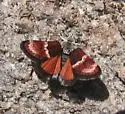
Gyros muirii - Hodges#4811
Gyros muirii
Identification: Pl. 21.42 in Moths of Western North America. … Bob Patterson, 29 September, 2009 Type locality: USA, California, Tuolumne Co.
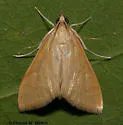
Hahncappsia alpinensis - Hodges#4961
Hahncappsia alpinensis
Identification: A little larger that Hahncappsia fordi with ground color paler and markings weaker. Photo from C. W. Melton of a specimen that was identified by DNA.
Hahncappsia cochisensis - Hodges#4969
Hahncappsia cochisensis
Identification: Much like Hahncappsia perilvalis but ground color usually more ochreous and transverse lines of forewing smoother; PM line of hindwing often lacking, or if present, smooth and diffuse.
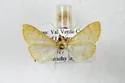
Hahncappsia fordi - Hodges#4960
Hahncappsia fordi
Identification: Described by Munroe in MONA Fascicle 13.2A as "remarkably similar in appearance to Helvibotys helvialis ". The two species can be separated by examination of genitalia and the tibia. However, the range of these two species does not ov
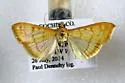
Hahncappsia jaralis - Hodges#4966
Hahncappsia jaralis
Identification: See Capps Type locality: Mexico, Guadalajara
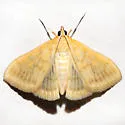
Hahncappsia marculenta - Hodges#4962
Hahncappsia marculenta
Hahncappsia marculenta - Hodges#4962 (Hahncappsia marculenta) is a species in the family Crambidae, commonly known as crambid snout moths, belonging to the order Lepidoptera (Butterflies and Moths). It is classified within the subfamily Pyraustinae,
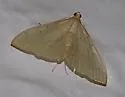
Hahncappsia mellinialis - Hodges#4973
Hahncappsia mellinialis
Identification: see Capps 1967 Type locality: Guatemala, Dueñas
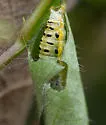
Hahncappsia neobliteralis - Hodges#4965
Hahncappsia neobliteralis
Hahncappsia neobliteralis - Hodges#4965 (Hahncappsia neobliteralis) is a species in the family Crambidae, commonly known as crambid snout moths, belonging to the order Lepidoptera (Butterflies and Moths). It is classified within the subfamily Pyraust
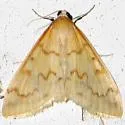
Hahncappsia pergilvalis - Hodges#4968
Hahncappsia pergilvalis
Identification: Adult: forewing light yellowish-tan with brown AM, PM, and ST lines; brown orbicular and reniform spots; AM line arc-shaped with noticeable curving jog near inner margin; PM line wavy, irregular, with abrupt basal jog in lower half;
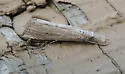
Silvered Haimbachia moth - Hodges#5488
Haimbachia albescens
Identification: Capps description of adult including notes on genitalia in PDF. The adults are similar to the smaller Haimbachia floridalis and can be separated by the range. The forewing fringe appears metallic. Genitalia:
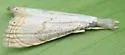
Peppered Haimbachia - Hodges#5489
Haimbachia placidellus
Identification: Adult: forewing pale tan or whitish with dark speckling; PM and subterminal lines variably distinct to faint; PM line thick, diffuse, V-shaped, slightly irregular; subterminal line double, relatively thick, somewhat blurred, runs para
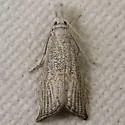
Haimbachia squamulellus - Hodges#5482
Haimbachia squamulellus
Identification: See discussion below. page creation based on Bob Patterson's identification of this image
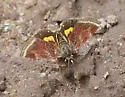
Heliothelopsis arbutalis - Hodges#4841
Heliothelopsis arbutalis
Identification: Forewings dark brown with a narrow grey submarginal line from the apex to the anal angle. The hindwings are black, crossed in the middle with a pale yellow-orange band from the costal margin to the inner margin.
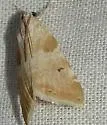
Hellula aqualis - Hodges#4849
Hellula aqualis
Identification: Barnes & McDunnough original description is online. The females are much paler and without the bolder maculation of the males. Specimen determined by DNA analysis (BOLD).
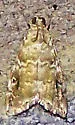
Cabbage Budworm Moth - Hodges#4847
Hellula phidilealis
Identification: Adult: forewing brownish-yellow mottled with white patches, especially in basal half; basal, AM, and PM lines wavy, bordered by white; reniform spot an irregular-shaped blackish patch; terminal line consists of three main black dots -