
Family Narrow-winged Damselflies (Coenagrionidae)
Coenagrionidae is a family in the order Odonata. Browse 106 named species recorded in this family, or open an individual profile for its available identification and natural-history information.
Species in Coenagrionidae (106)
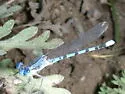
California Dancer
Argia agrioides
Identification: Separation from nahuana: Nice explanation by Jim Johnson here Another comparison here
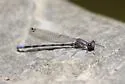
Emma's Dancer
Argia emma
Identification: Note the narrow top stripe, 'pinched' side stripe and yellowish color on the female.
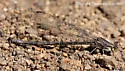
Spine-tipped Dancer
Argia extranea
Identification: Male has distinctive saddle-shaped black mark on side of abdominal segment 2.
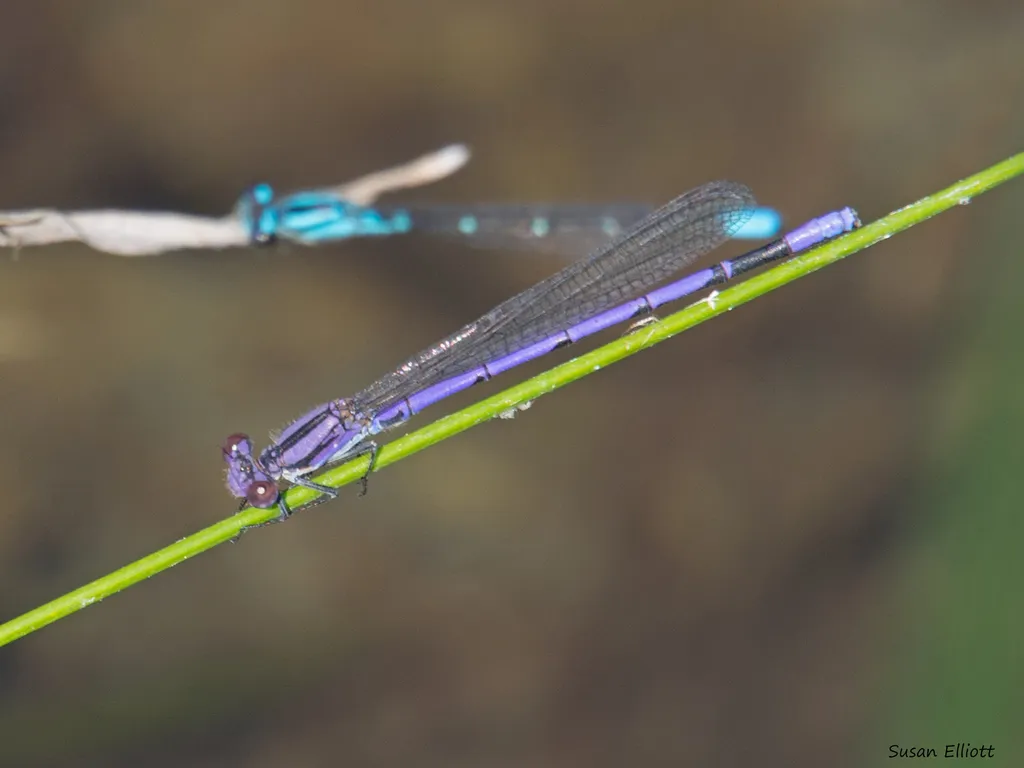
Variable Dancer
Argia fumipennis
As the name suggests, this is a variable species. The variation has led to the describing of three subspecies. The Violet Dancer ( A. f. violacea ) to the north has clear wings, the Smoky-winged Dancer ( A. f. fumipennis ) of the southeast has brown
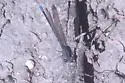
Kiowa Dancer
Argia immunda
Identification: Blue or violet and black. Alternating pale-dark-pale abdominal pattern is distinctive.
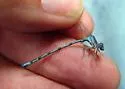
Leonora's Dancer
Argia leonorae
uncommon but widely distributed species in south-central and western Texas
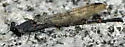
Sooty Dancer
Argia lugens
Identification: detailed description in females: blue form and brown form
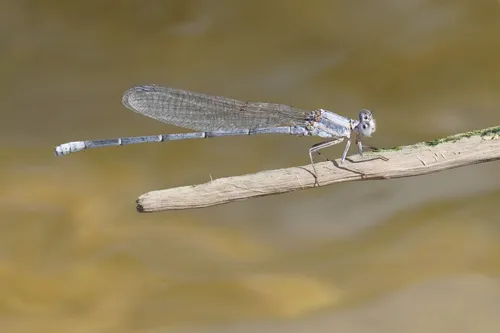
Powdered Dancer
Argia moesta
Identification: Identification reference, Dunkle, Damselflies of Florida (Scientific Publishers, 1990), figure 59. Guide TBA--PC
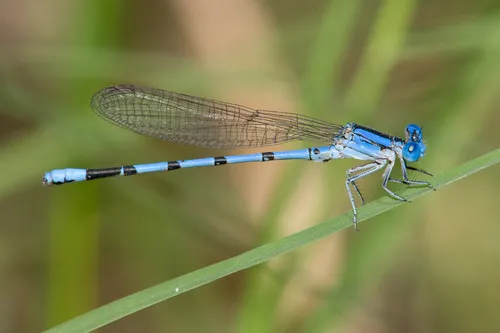
Aztec Dancer
Argia nahuana
Identification: Separation from agrioides: Nice explanation by Jim Johnson here Another comparison here
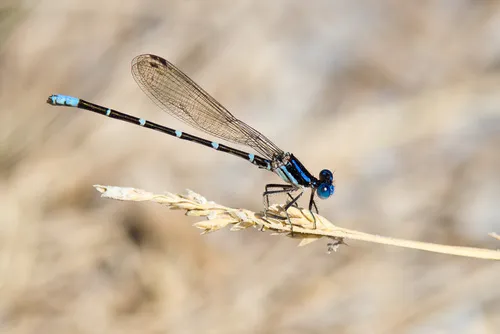
Blue-ringed Dancer
Argia sedula
Identification: Male has black abdomen with blue rings. Resembles a bluet, but abdominal segment 2 mostly black, has wide black, forked, shoulder stripe. Thorax of male darkens during tandem oviposition . Some southern populations have slight tinting
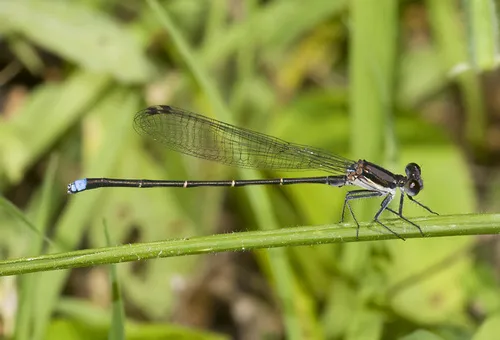
Blue-tipped Dancer
Argia tibialis
Identification: Male very dark above, with broad brownish-purple stripes on thorax , abdominal segments 9 and 10 blue. Female has blue and brown forms, but in both note wide black shoulder stripes, mostly dark abdomen. See Odonata Central (dead link)
Tonto Dancer
Argia tonto
Identification: Adult: overall violet color; humeral stripe dark, not forked, widest anteriorly, narrowing posteriorly to form a thin line
Aurora Damsel
Chromagrion conditum
Identification: Large black patch on top of thorax, with wavy edges.
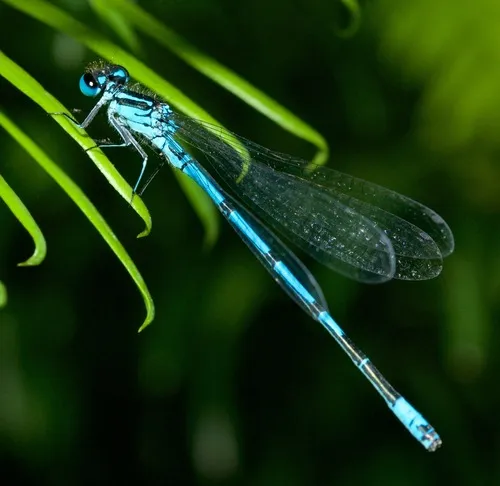
Azure Damselfly
Coenagrion puella
Best distinguished from the similar Common Blue Damselfly by the thinner blue stripes on its thorax. The female is much darker with mainly black markings on its abdomen interspersed with greenish rings. The Common Blue Damselfly has thicker antehumer
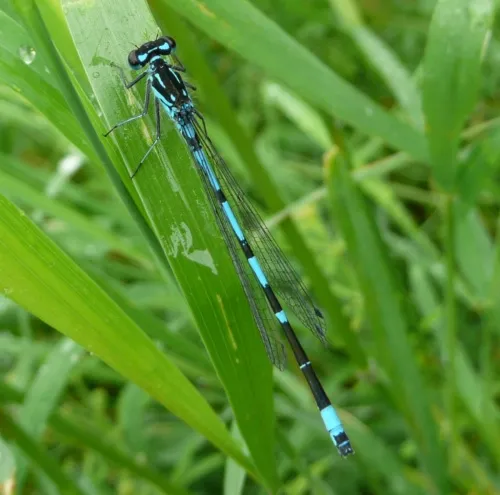
Variable Damselfly
Coenagrion pulchellum
A medium-small damselfly, very similar to the Azure Damselfly. Great care is needed to identify this species. In the male, the thoracic stripes are usually broken to form an exclamation mark (but not in females). Also on males, the black U-shaped mar
Taiga Bluet
Coenagrion resolutum
Identification: Back half of segment 5 and all of segments 6 and 7 are all black, with greenish sides on thorax.
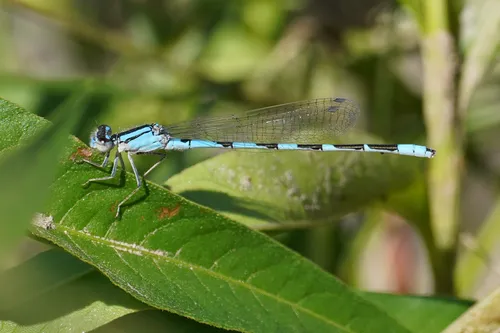
Tule Bluet
Enallagma carunculatum
Identification: Most abdominal segments half or more black above.
Cherry Bluet
Enallagma concisum
Identification: Overall color is blackish. Mature males extensively marked with red.
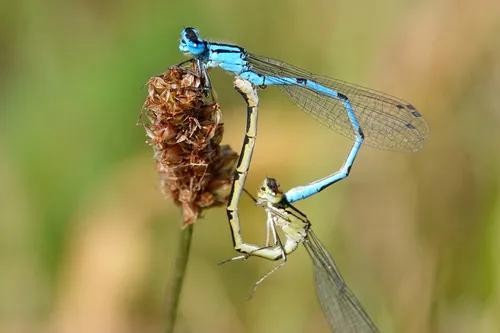
Common Blue Damselfly
Enallagma cyathigerum
A medium-small damselfly. It can be distinguished from other blue damselflies by the thick blue stripe on its thorax. The other common and similar damselfly, the Azure, has a much thinner stripe. With a little practice, it is relatively easy to pick
Turquoise Bluet
Enallagma divagans
Identification: Males have turquoise blue sides of thorax, abdomen mostly black, segments 8 and 9 are blue. Guide TBA--PC (more on id--details from Lam)
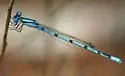
Atlantic Bluet
Enallagma doubledayi
Identification: Shorter terminal appendages on the male than Familiar Bluet , Enallagma civile , otherwise nearly identical. No black patches on the sides of abdominal segments 8 and 9 .
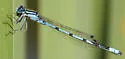
Marsh Bluet
Enallagma ebrium
Identification: Mostly blue bluet with segment 7 almost totally black and segment 6 half black. Black spots on other segments approximately equal sized.
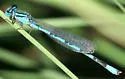
Baja Bluet
Enallagma eiseni
Identification: Intermediate abdominal segments of the male have spear-shaped black marks with the tip pointed towards the tail (not spear-shaped or pointed towards the head in other species).
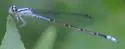
Neotropical Bluet
Enallagma novaehispaniae
Identification: Post-ocular spots have an occipital bar between them, but the spots and bar are not usually confluent. Thorax blue in females and immature males, turning purple in older males, with a thin black shoulder stripe. Abdomen blue on segmen
Pale Bluet
Enallagma pallidum
Identification: Very similar to Attenuated (E. daeckii) and Slender (E. traviatum) bluets. Very pale, and very faintly marked with black. Abdominal segment 7 black in males, partly blue in male Attenuated Bluets. Abdominal segment 2 has full-length b
Florida Bluet
Enallagma pollutum
Identification: Very similar to Orange Bluet, Enallagma signatum --can be distinguished by details of male cerci, see:
Orange Bluet
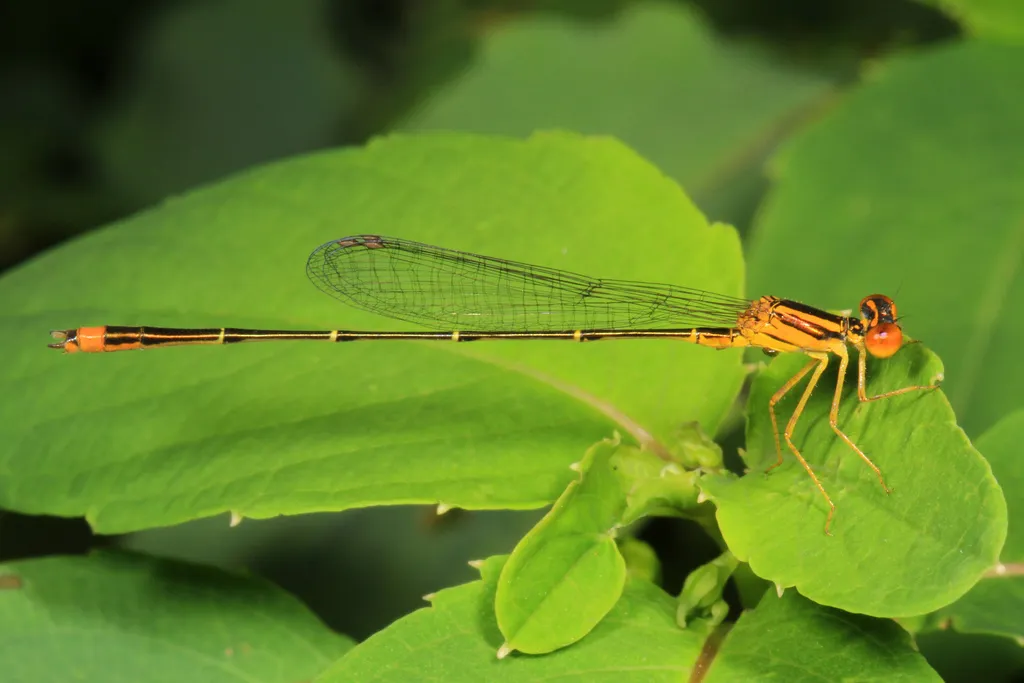
Enallagma signatum
Identification: Orange and black, medium-sized. Note that segment 9 is all orange and orange eyespots connected, forming a bar . Very similar to Florida Bluet, Enallagma pollutum --can be distinguished by details of male cerci, see:
Golden Bluet
Enallagma sulcatum
Identification: Per Paulson Enallagma vesperum is identically colored but has narrower black thoracic stripes than E. sulcatum . E. sulcatum has broad black thoracic stripes in both sexes.
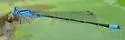
Slender Bluet
Enallagma traviatum
Identification: Abdominal segments 8 and 9 blue. Male has abdominal segment 10 black, with long appendages. Female has segment 10 blue. Middle segments black with blue rings. Large blue eyespots connected by narrow bar. Black shoulder stripes narrow.
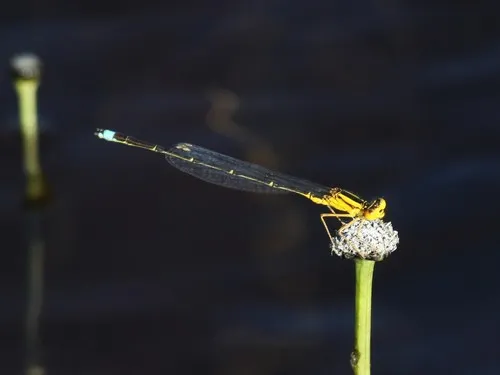
Vesper Bluet
Enallagma vesperum
Identification: Male: Bright yellow thorax. Black lateral thoracic stripe is quite thin or may barely be present at all. The abdomen is tipped in blue. Specifically, abdominal segment 10 is blue on the sides, while segment 9 is completely blue.
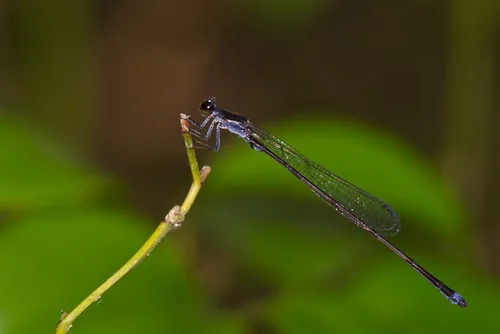
Blackwater Bluet
Enallagma weewa
Identification: Long, thin, and dark. Adult male is distinctive, with body mostly black and just abdominal segment nine blue. Female has distinctive pattern of black, blue, and brown stripes on thorax. Teneral male is similar to female . Author of sp
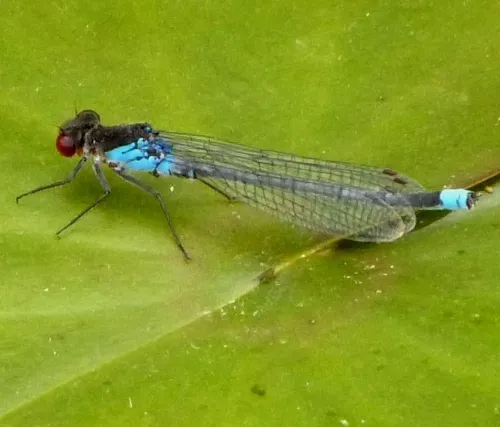
Red-eyed Damselfly
Erythromma najas
This species is quite a large and robust damselfly, with distinctive 'bug-eyed' look. Adult males have blood-red eyes and tend to rest on floating vegetation. They are very territorial and chase off any other encroaching male. When newly emerged they
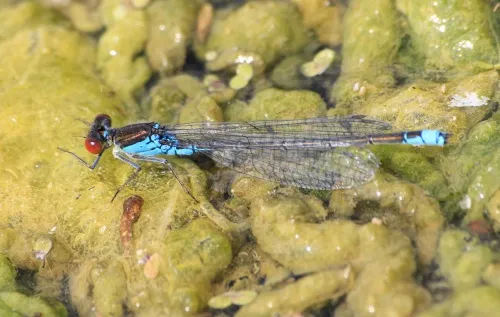
Small Red-eyed Damselfly
Erythromma viridulum
Length: 29mm. A small damselfly with a dark abdomen and a blue tip in the male. The eyes of the male are brownish red and the thorax in both sexes is bronze black on top. The female has complete, thin green or blue ante-humeral lines. Very similar to
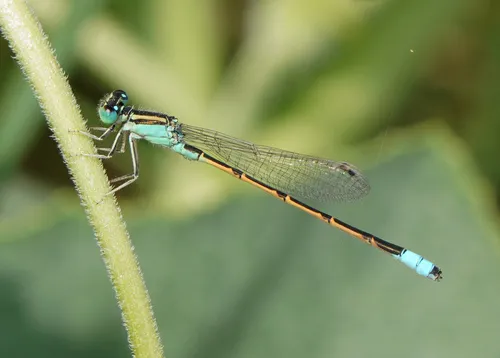
Desert Forktail
Ischnura barberi
Identification: ramburii vs barberi: In Rambur's Forktail the antehumeral stripe is narrow, wide in Desert Forktail. In Rambur's the black markings on the dorsal side of the abdominal segments are straight-edged on the sides of the segments. In the D
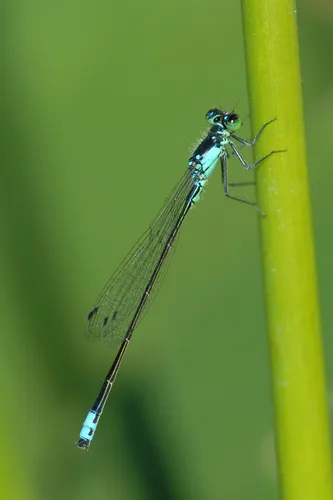
Pacific Forktail
Ischnura cervula
Identification: abdomen blue only on segments 8 & 9 -- blue on top and bottom touch along sides. Four tiny blue dots on top of thorax. teneral: See California Dragonflies and Damselflies or Dennis Paulson Andromorphic females will have a blue 8th abd
Plains Forktail
Ischnura damula
Identification: Ischnura damula and I. cervula are very similar and we may not be able to separate them when examining images here on BugGuide. At present all images from the areas where their ranges overlap (Arizona, New Mexico, Utah, Colorado, and
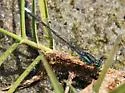
Black-fronted Forktail
Ischnura denticollis
Identification: Males similar to cervula but no spots on top of thorax and blue only on top of 8 and 9: Females similar to cervula, but blue spots only on top and on both 8 and 9
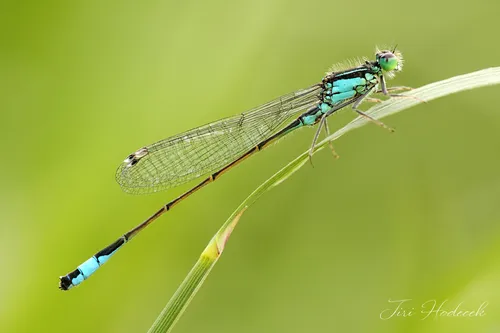
Blue-tailed Damselfly
Ischnura elegans
The dark body and blue tip is distinctive. However a number of colour forms exist, where the abdomen can be pink ( rufescens ), lilac ( violacea ) or green ( infuscans ) when the damselfly first emerges, slowly turning to the blue of most mature adul
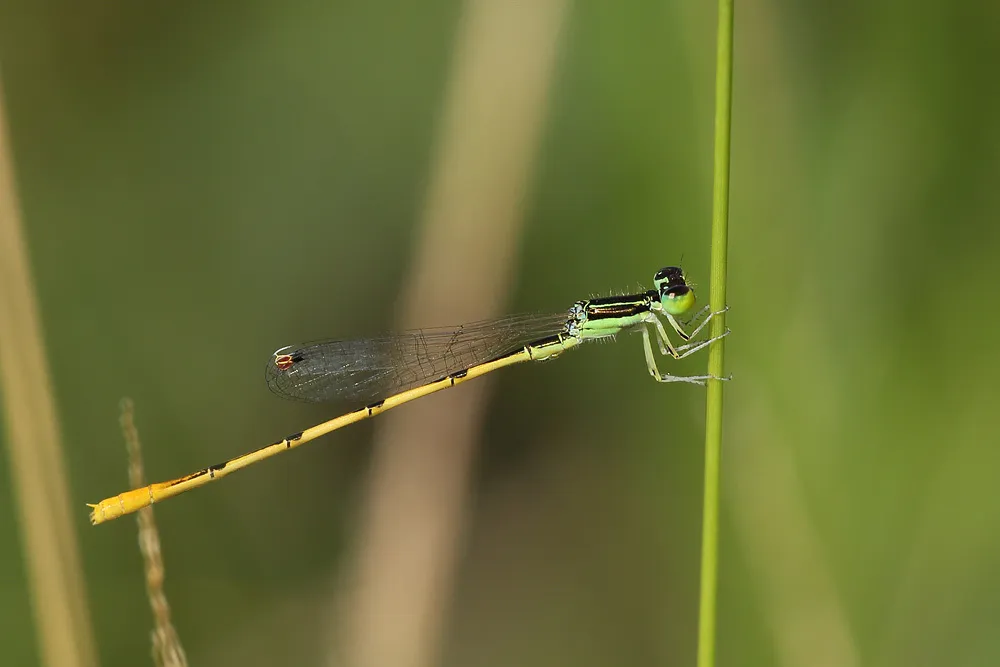
Citrine Forktail
Ischnura hastata
Identification: Male has mostly yellow abdomen with some black markings; the tip is entirely yellow. Alone of all damselfly species in the world, the male Citrine Forktail has a forewing stigma that is not along the leading edge of the wing (in othe
Western Forktail
Ischnura perparva
Identification: blue on segments 8-9/10 only -- black stripes on sides of segments 8-10 See California Dragonflies and Damselflies or Dennis Paulson Males: Orange females, orange on 2, 3, and 4: Mature females:
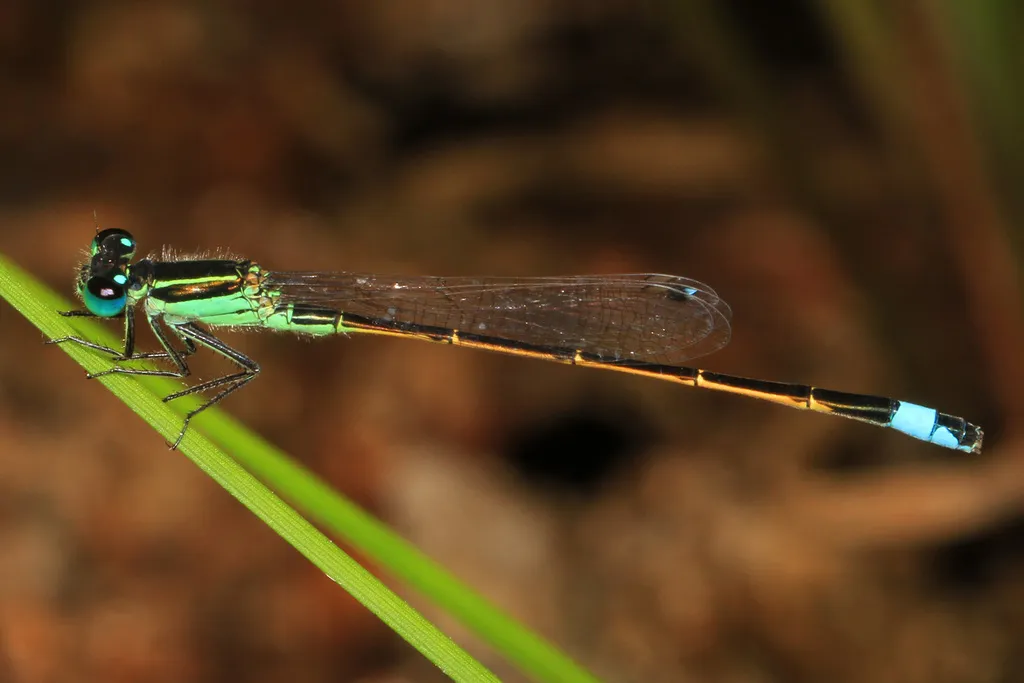
Rambur's Forktail
Ischnura ramburii
Identification: The completely blue abdominal segment 8 (A8) in males appears to be diagnostic. Male-like female with blue (A8) is also diagnostic. The two other female forms are not readily separable from other species. The females do have a strong
Lucifer Swampdamsel
Leptobasis lucifer
Identification: Males with bright orange tip of the abdomen Odonata Central records
Sedge Sprite
Nehalennia irene
Identification: Thicker than sphagnum sprite. Metallic green body with blue tip and yellow thorax. See Ed Lam page 88
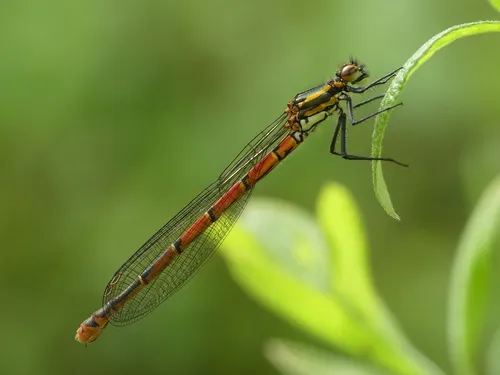
Large Red Damselfly
Pyrrhosoma nymphula
Often the earliest dragonfly or damselfly to appear, it is relatively easy to identify being red and black, with the black legs, which distinguish it from the Small Red Damselfly. Larvae are distinctive with extended wing sheaths, which reach almost
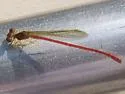
Duckweed Firetail
Telebasis byersi
Identification: Males have a bright red abdomen that is essentially unmarked with black. On the dorsal surface of the thorax are two black marks shaped like the numeral "1." Females are dull red to brownish yellow but otherwise like the males. Very
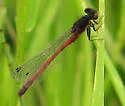
Western Red Damsel
Amphiagrion abbreviatum
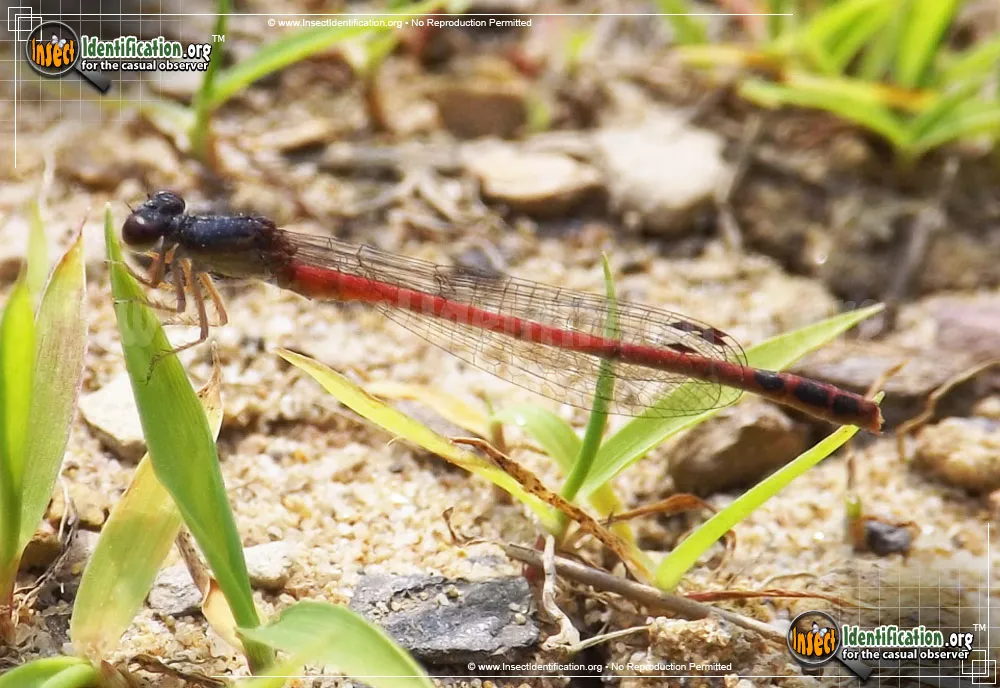
Eastern Red Damsel
Amphiagrion saucium
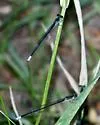
Black-and-white Damsel
Apanisagrion lais
Paiute Dancer
Argia alberta
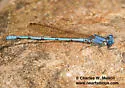
Cerulean Dancer
Argia anceps
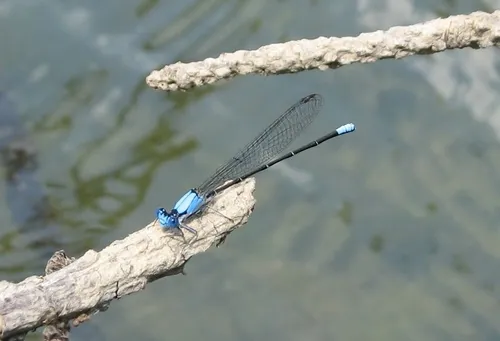
Blue-fronted Dancer
Argia apicalis
Comanche Dancer
Argia barretti
Seepage Dancer
Argia bipunctulata
Coppery Dancer
Argia cuprea
Springwater Dancer
Argia funebris
Lavender Dancer
Argia hinei

Sierra Madre Dancer
Argia lacrimans
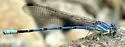
Apache Dancer
Argia munda
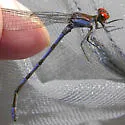
Fiery-eyed Dancer
Argia oenea
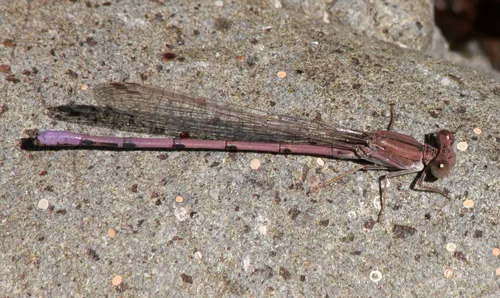
Amethyst Dancer
Argia pallens
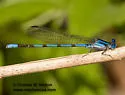
Tarascan Dancer
Argia tarascana
Tezpi Dancer
Argia tezpi
Dusky Dancer
Argia translata
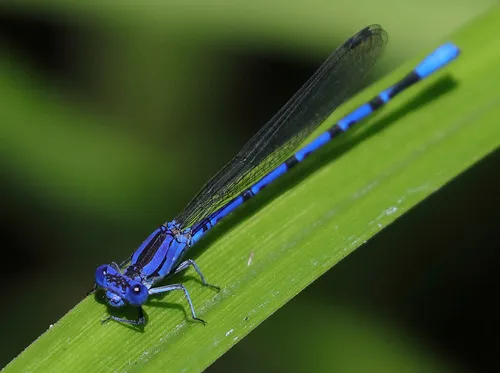
Vivid Dancer Damselfly
Argia vivida
Prairie Bluet
Coenagrion angulatum
Subarctic Bluet
Coenagrion interrogatum
River Bluet
Enallagma anna
Northern Bluet
Enallagma annexum
Rainbow Bluet
Enallagma antennatum
Azure Bluet
Enallagma aspersum

Double-striped Bluet
Enallagma basidens
Boreal Bluet
Enallagma boreale
Purple Bluet
Enallagma cardenium
Familiar Bluet
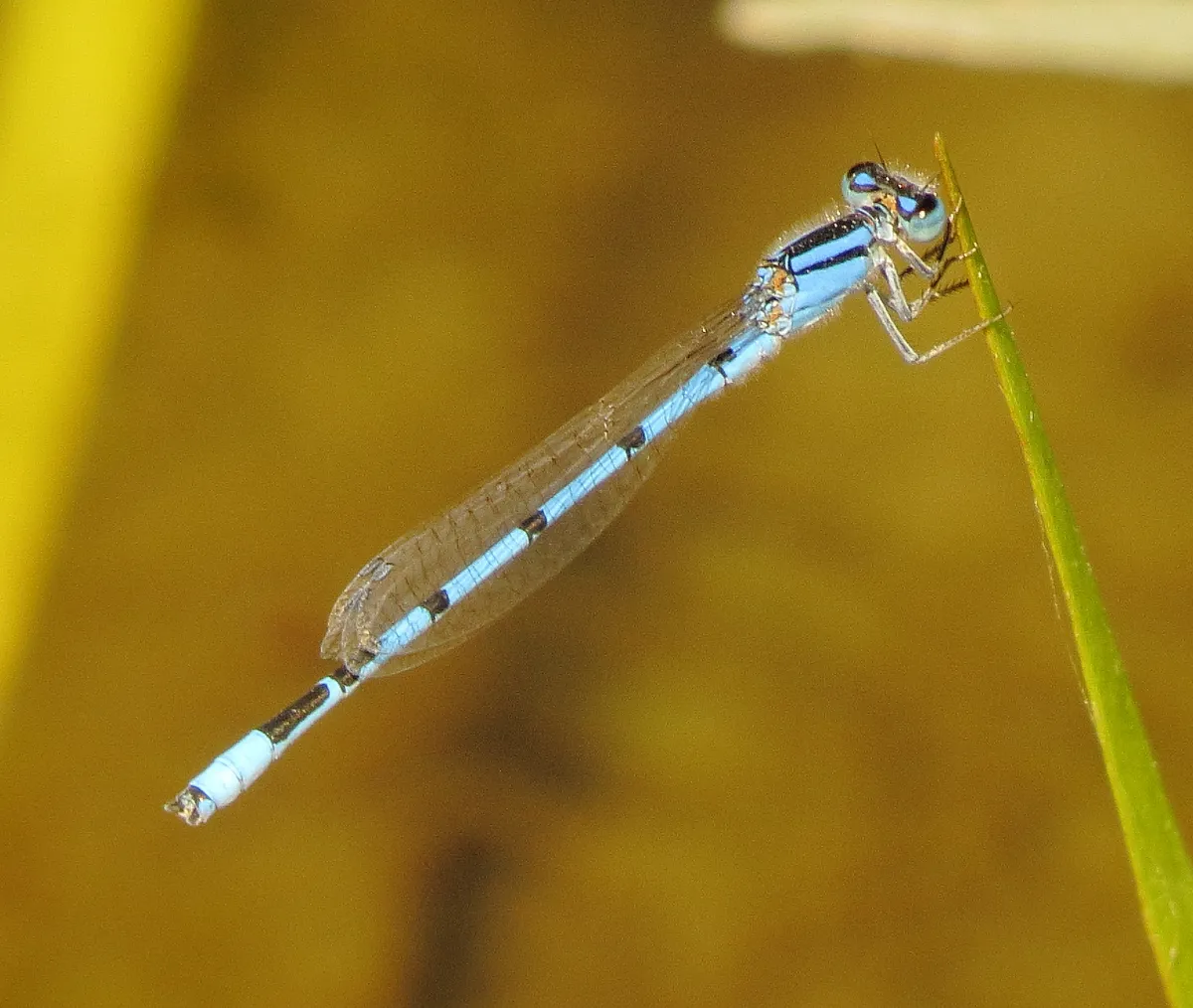
Enallagma civile
Alkali Bluet
Enallagma clausum
Attentuated Bluet
Enallagma daeckii
Sandhill Bluet
Enallagma davisi
Burgundy Bluet
Enallagma dubium
Big Bluet
Enallagma durum
Stream Bluet
Enallagma exsulans
Skimming Bluet
Enallagma geminatum

Hagen's Bluet
Enallagma hageni
New England Bluet
Enallagma laterale
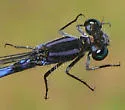
Little Bluet
Enallagma minusculum
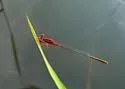
Scarlet Bluet
Enallagma pictum
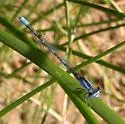
Arroyo Bluet
Enallagma praevarum
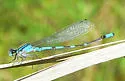
Pine Barrens Bluet
Enallagma recurvatum
Claw-tipped Bluet
Enallagma semicirculare
Vernal Bluet
Enallagma vernale
Painted Damsel
Hesperagrion heterodoxum
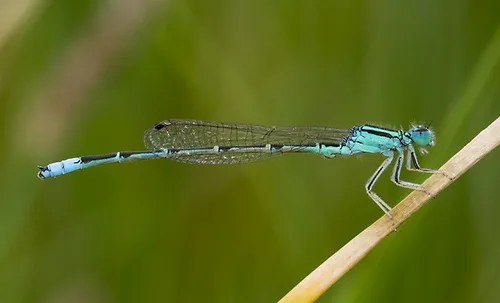
Mexican Forktail
Ischnura demorsa
Swift Forktail
Ischnura erratica
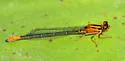
San Francisco Forktail
Ischnura gemina
Lilypad Forktail
Ischnura kellicotti
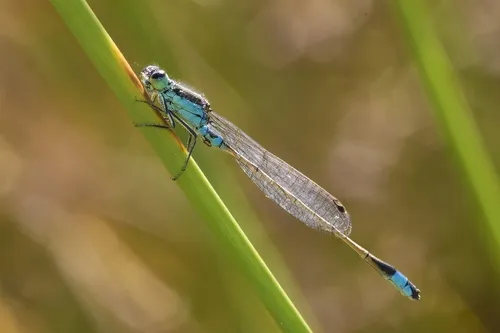
Furtive Forktail
Ischnura prognata
Common Bluetail
Ischnura senegalensis
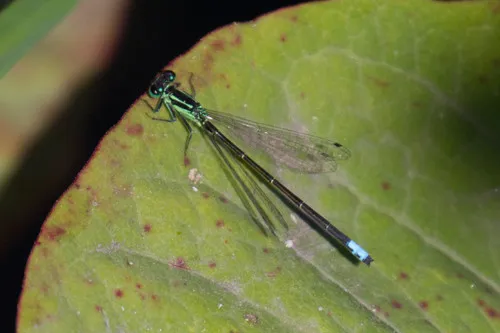
Eastern Forktail Damselfly
Ischnura verticalis
Cream-tipped Swampdamsel
Leptobasis melinogaster
Red-tipped Swampdamsel
Leptobasis vacillans
Sphagnum Sprite
Nehalennia gracilis