
Baja Bluet
Enallagma eiseni
This record describes Enallagma eiseni (species). Recorded family: Coenagrionidae. Recorded order: Odonata.
Identification and Appearance
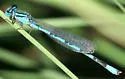
Intermediate abdominal segments of the male have spear-shaped black marks with the tip pointed towards the tail (not spear-shaped or pointed towards the head in other species).
Classification
- Kingdom
- Animalia
- Phylum
- Arthropoda
- Class
- Insecta
- Order
- Odonata (Dragonflies and Damselflies)
- Suborder
- Zygoptera
- Family
- Coenagrionidae (Narrow-winged Damselflies)
- Genus
- Enallagma (American Bluets)
Imported taxonomy record. Source availability varies; see the source references and editorial policy below.
Habitat and Range
Geographic Range
Historically known only from Baja California Sur prior to discoveries in south-central Arizona in 1992, northern Baja California in 2006, and just north of the Mexican border in California in 2007.
Additional species information
Species notes from the sources
Etymology: "This species is named after Dr. Gustav Eisen , the well known student of Oligochaetous worms, to whose labors so much of the present paper is due." (Calvert, 1895)
About Dragonflies and Damselflies: the wider group
Order-level background for Odonata, the group containing Enallagma eiseni. Species-specific details appear above.
Group overview
Odonata includes ~6,000 described species of dragonflies and damselflies. Dragonflies are among the fastest flying insects, reaching 36 mph (58 km/h). They can fly in any direction including backward, and hover in place - each wing operates independently.
Ecological role of the group
Dragonflies predate dinosaurs by nearly 100 million years - fossils date to 325 million years ago. The largest dragonfly ancestor, Meganeuropsis permiana (285 mya), had a 75cm wingspan, enabled by atmospheric oxygen levels of 31-35% compared to today's 21%. Dragonflies have a 95% hunting success rate - the highest of any predator.
Economic and practical significance of the group
Dragonflies are voracious predators that consume hundreds of mosquitoes daily, providing natural pest control worth millions in reduced mosquito-borne disease risk. A single dragonfly can eat 30 to hundreds of mosquitoes per day.
Recorded sources for this group: Natural History Museum London, Britannica, fossil record research. Imported estimates may describe particular regions or reporting periods.
Photos of Baja Bluet (2)
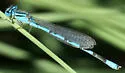
Photo credits: Contributed by John F. Carr
Frequently Asked Questions About Baja Bluet
What is Baja Bluet?
Baja Bluet (Enallagma eiseni) is a species in the family Coenagrionidae, within the order Odonata.
How do you identify Baja Bluet?
Intermediate abdominal segments of the male have spear-shaped black marks with the tip pointed towards the tail (not spear-shaped or pointed towards the head in other species).
Where is Baja Bluet found?
Range: Historically known only from Baja California Sur prior to discoveries in south-central Arizona in 1992, northern Baja California in 2006, and just north of the Mexican border in California in 2007.