
Vesper Bluet
Enallagma vesperum
This record describes Enallagma vesperum (species). Recorded family: Coenagrionidae. Recorded order: Odonata.
Identification and Appearance
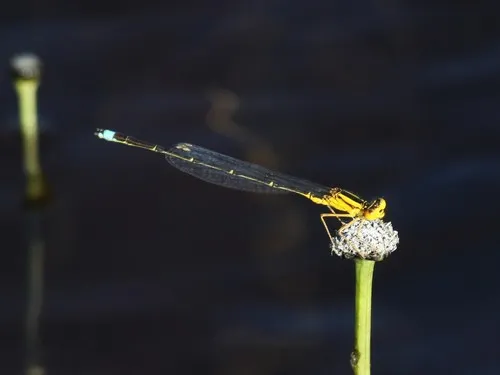
Male: Bright yellow thorax. Black lateral thoracic stripe is quite thin or may barely be present at all. The abdomen is tipped in blue. Specifically, abdominal segment 10 is blue on the sides, while segment 9 is completely blue. Large green eyespots. Female. Similar to the male, but with bright yellow replaced by bright green. Abdominal segment 10 is pale blue and segment 9 is pale blue on the sides and dark on the dorsal surface. Its crepuscular habits gave it its common name. Crepuscular habits also mean this attractive species is often overlooked.
Classification
- Kingdom
- Animalia
- Phylum
- Arthropoda
- Class
- Insecta
- Order
- Odonata (Dragonflies and Damselflies)
- Suborder
- Zygoptera
- Family
- Coenagrionidae (Narrow-winged Damselflies)
- Genus
- Enallagma (American Bluets)
Imported taxonomy record. Source availability varies; see the source references and editorial policy below.
Habitat and Range
Habitat
Preferred habitat includes small lakes with lots of floating vegetation. Occasionally found at slow-moving streams.
Geographic Range
New Brunswick, Nova Scotia, Ontario, Quebec, and the Eastern United States from Maine to Florida and as far west as Colorado and Texas.
Seasonal Activity
Most commonly seen in June through early September.
Diet and Behavior
Diet: Tiny flying insects.
About Dragonflies and Damselflies: the wider group
Order-level background for Odonata, the group containing Enallagma vesperum. Species-specific details appear above.
Group overview
Odonata includes ~6,000 described species of dragonflies and damselflies. Dragonflies are among the fastest flying insects, reaching 36 mph (58 km/h). They can fly in any direction including backward, and hover in place - each wing operates independently.
Ecological role of the group
Dragonflies predate dinosaurs by nearly 100 million years - fossils date to 325 million years ago. The largest dragonfly ancestor, Meganeuropsis permiana (285 mya), had a 75cm wingspan, enabled by atmospheric oxygen levels of 31-35% compared to today's 21%. Dragonflies have a 95% hunting success rate - the highest of any predator.
Economic and practical significance of the group
Dragonflies are voracious predators that consume hundreds of mosquitoes daily, providing natural pest control worth millions in reduced mosquito-borne disease risk. A single dragonfly can eat 30 to hundreds of mosquitoes per day.
Recorded sources for this group: Natural History Museum London, Britannica, fossil record research. Imported estimates may describe particular regions or reporting periods.
Photos of Vesper Bluet (2)
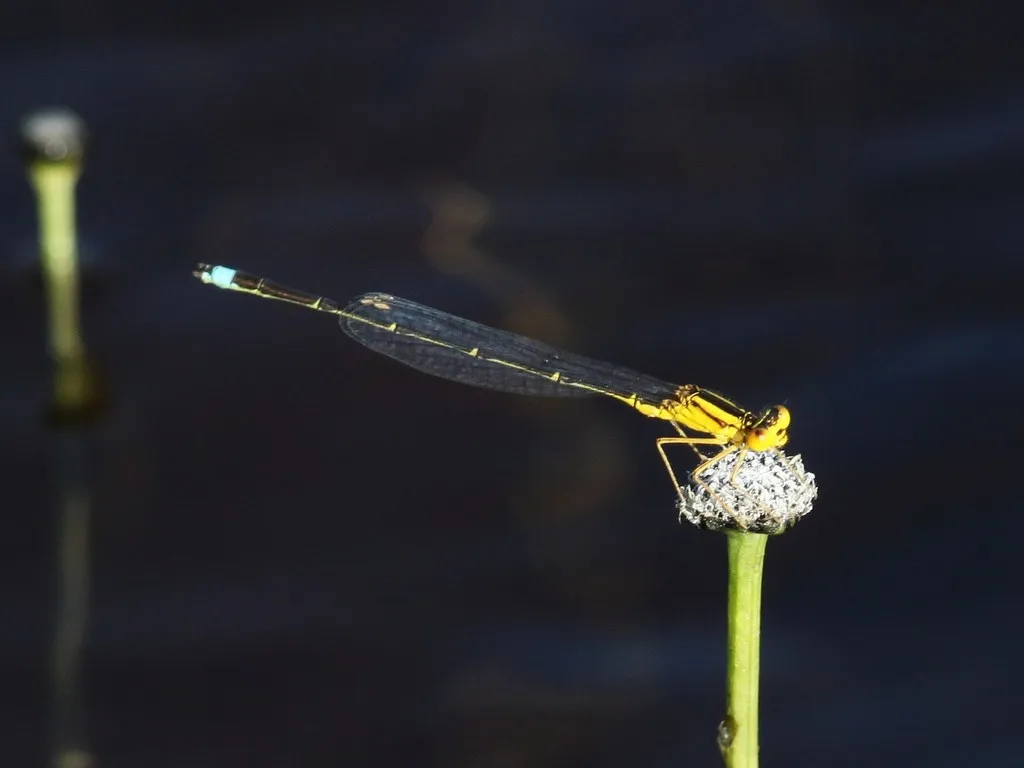
Photo credits: Contributed by Stephen_WV
Frequently Asked Questions About Vesper Bluet
What is Vesper Bluet?
Vesper Bluet (Enallagma vesperum) is a species in the family Coenagrionidae, within the order Odonata.
How big is Vesper Bluet?
32-35 mm
How do you identify Vesper Bluet?
Male: Bright yellow thorax. Black lateral thoracic stripe is quite thin or may barely be present at all. The abdomen is tipped in blue. Specifically, abdominal segment 10 is blue on the sides, while segment 9 is completely blue. Large green eyespots. Female. Similar to the male, but with bright yellow replaced by bright green. Abdominal segment 10 is pale blue and segment 9 is pale blue on the sides and dark on the dorsal surface.
Where is Vesper Bluet found?
| Feature | Details |
|---|---|
| Habitat | Preferred habitat includes small lakes with lots of floating vegetation. Occasionally found at slow-moving streams. |
| Range | New Brunswick, Nova Scotia, Ontario, Quebec, and the Eastern United States from Maine to Florida and as far west as Colorado and Texas. |
What does Vesper Bluet eat?
The diet of the Vesper Bluet includes Tiny flying insects..
When is Vesper Bluet active?
Vesper Bluet: seasonal activity - Most commonly seen in June through early September..