
Plains Forktail
Ischnura damula
This record describes Ischnura damula (species). Recorded family: Coenagrionidae. Recorded order: Odonata.
Identification and Appearance
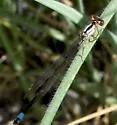
Ischnura damula and I. cervula are very similar and we may not be able to separate them when examining images here on BugGuide. At present all images from the areas where their ranges overlap (Arizona, New Mexico, Utah, Colorado, and eastern Wyoming) have been placed here while we search for an expert. The image from Manitoba is certainly I. damula , but the others need to be checked. We may need to make a No Taxon combined page in the future if it turns out we can't separate some.
Classification
- Kingdom
- Animalia
- Phylum
- Arthropoda
- Class
- Insecta
- Order
- Odonata (Dragonflies and Damselflies)
- Suborder
- Zygoptera
- Family
- Coenagrionidae (Narrow-winged Damselflies)
- Genus
- Ischnura (Forktails)
Imported taxonomy record. Source availability varies; see the source references and editorial policy below.
Additional species information
Species notes from the sources
Etymology: Probably the diminutive of Latin dama " (fallow) deer ". No doubt a reference to Ischnura cervula , which is named after another European deer species
About Dragonflies and Damselflies: the wider group
Order-level background for Odonata, the group containing Ischnura damula. Species-specific details appear above.
Group overview
Odonata includes ~6,000 described species of dragonflies and damselflies. Dragonflies are among the fastest flying insects, reaching 36 mph (58 km/h). They can fly in any direction including backward, and hover in place - each wing operates independently.
Ecological role of the group
Dragonflies predate dinosaurs by nearly 100 million years - fossils date to 325 million years ago. The largest dragonfly ancestor, Meganeuropsis permiana (285 mya), had a 75cm wingspan, enabled by atmospheric oxygen levels of 31-35% compared to today's 21%. Dragonflies have a 95% hunting success rate - the highest of any predator.
Economic and practical significance of the group
Dragonflies are voracious predators that consume hundreds of mosquitoes daily, providing natural pest control worth millions in reduced mosquito-borne disease risk. A single dragonfly can eat 30 to hundreds of mosquitoes per day.
Recorded sources for this group: Natural History Museum London, Britannica, fossil record research. Imported estimates may describe particular regions or reporting periods.
Photos of Plains Forktail (5)
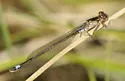
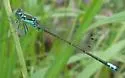
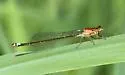
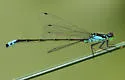
Photo credits: Contributed by john and jane balaban; Additional contributions by Chuck Entz , Tyler Hedlund