
Agromyza anthracina
This record describes Agromyza anthracina (species). Recorded family: Agromyzidae. Recorded order: Diptera.
Identification and Appearance
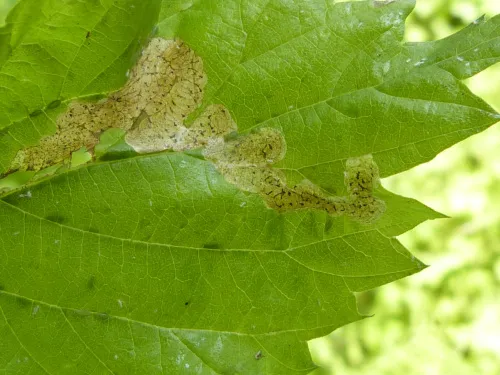
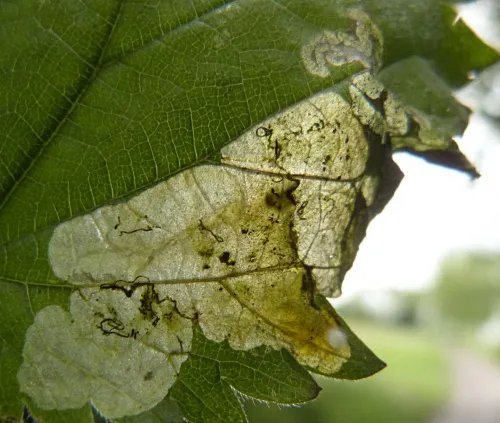
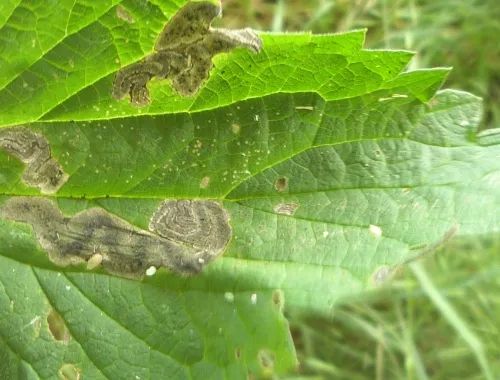
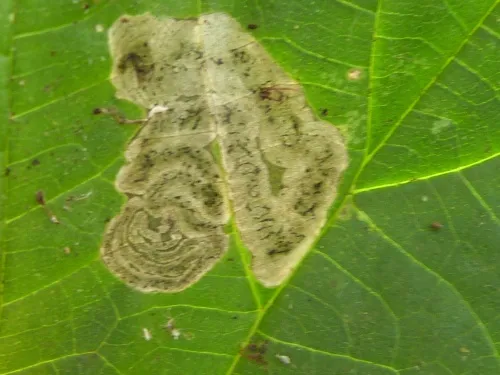
The larvae mine the leaves of Common Nettle and other related host plants. The mine usually starts away from the leaf edge and has a coiled intestine like start; it has frass in long threads in the broader part of the mine. See the National Agromyzidae Recording Scheme website for further details of larva, adult insect and host plants Agromyza pseudoreptans and Agromyza reptans (especially if the coiled start is located at the leaf edge). (ref.: Warrington, B.P. (2023). Agromyza anthracina . Accessed at https://agromyzidae.co.uk/species/agromyzidae/agromyzinae/agromyza/agromyza-anthracina-meigen-1830/ on 10/12/2023) Provide backlit photographs of the whole leaf-mine in the leaf, and the larva, and note the host plant. Click on the ' further details ' link in the 'Description' section above. Then click on the Phenology tab which will provide phenology details for both adult and larval stages. Warrington, B. P. 2022 . A provisional review of the status of Agromyzidae in Great Britain & Northern Ireland
Classification
- Kingdom
- Animalia
- Phylum
- Arthropoda
- Class
- Insecta
- Order
- Diptera
- Family
- Agromyzidae
- Genus
- Agromyza
Imported taxonomy record. Source availability varies; see the source references and editorial policy below.
Habitat and Range
Habitat
Where Common Nettle occurs.
Seasonal Activity
Click on the '
Additional species information
Recorded status
Common
About Flies: the wider group
Order-level background for Diptera, the group containing Agromyza anthracina. Species-specific details appear above.
Group overview
Diptera includes over 150,000 described species of flies, mosquitoes, and midges. Mosquitoes are the deadliest animal on Earth (CDC). Malaria alone causes ~249 million cases and over 608,000 deaths annually, mostly children under 5 (WHO). Vector-borne diseases account for over 17% of all infectious diseases, causing 700,000+ deaths per year.
Ecological role of the group
Despite their disease impact, flies are critical decomposers and pollinators. Hoverflies alone pollinate hundreds of crop and wildflower species. Flies are also the primary food source for many birds, bats, and fish. Forensic entomology relies heavily on fly species for crime scene analysis.
Economic and practical significance of the group
In the U.S., vector-borne disease cases tripled between 2004-2016, with over 640,000 cases reported in that period (CDC). Tickborne diseases doubled from 22,000 to 48,000 annual reports. Globally, mosquito-borne diseases cost billions in healthcare and lost productivity.
Recorded sources for this group: WHO, CDC, PNAS. Imported estimates may describe particular regions or reporting periods.
Photos of Agromyza anthracina (4)
Frequently Asked Questions About Agromyza anthracina
What is Agromyza anthracina?
Agromyza anthracina is a species in the family Agromyzidae, within the order Diptera.
Where is Agromyza anthracina found?
Habitat: Where Common Nettle occurs.
When is Agromyza anthracina active?
Agromyza anthracina: seasonal activity - Click on the '.