
Timema boharti
This record describes Timema boharti (species). Recorded family: Timematidae. Recorded order: Phasmida.
Identification and Appearance
The distinctive male terminalia are illustrated in Fig. 1 here . The female terminalia have the apex of the last (10th) tergite shallowly-notched (or emarginate), as emphasized in the keys in both Vickery (1993) and the earlier paper by Tinkham (1942)...see here . Note that in other species, like T. californicum , females also have the the apex of the 10th tergite notched...but subtleties in the size and shape of the notch and terminalia can still allow them to be distinguished.) Tinkham's detailed original 1942 description, based on two specimens from Borrego can be read here . Note however that, at the time Tinkham was writing, the occurrence of distinct intraspecies color forms in many Timema taxa was not yet known. Rentz, writing 21 years later, discussed a large series of T. boharti he had collected in the Pinyon Flats area of the Santa Rosa Mountains: The habitat is xeric pinyon-juniper with chaparral intrusions, and the T. boharti were taken at approximately 3000 feet. The entire series of specimens was taken at night. Mating pairs as well as last instar nymphs, some moulting, were found. Heretofore, this species was known only in the grey color phase. This timema, however, is dichromatic as are most other species in the genus. Green and grey color phases were taken with no indications of intermediates. It was of particular interest that mating pairs were segregated by color. Specimens were found on Yucca schidigera, Y. whipplei , Pinyon Pine ( Pinus parryana ), and a single pair was taken in copulo on Eriogonum fasciculatum . The majority of specimens was taken on Y. whipplei . The arcid odor commonly released by timema when handled was quite noticeable...
Wikipedia reference for Timema boharti: https://en.wikipedia.org/wiki/Timema_boharti.
Classification
- Kingdom
- Animalia
- Phylum
- Arthropoda
- Class
- Insecta
- Order
- Phasmida (Walkingsticks)
- Family
- Timematidae
- Genus
- Timema
Imported taxonomy record. Source availability varies; see the source references and editorial policy below.
Habitat and Range
Geographic Range
Known from the Santa Rosa, San Jacinto, and Laguna Mountains of southern California, generally above 2300' elevation. (Also one record from Tecate Peak, San Diego Co.)
Diet and Behavior
Diet: Timema boharti has been associated with the following plant taxa: Adenostoma spp.; Arctostaphylos spp.; Brickellia frutescens; Ceanothus leucodermis; Elymus sp.; Eriogonum fasciculatum; Pinus quadrifolia; Quercus dumosa; Yucca shidigera ; and Yucca whipplei . It is not entirely clear whether each of these is an actual host plant on which the Timema regularly feed, or if some are simply incidental perches where they have been found. However, BugGuide contributors have observed them actually feeding on Brickellia frutescens :
Additional species information
Species notes from the sources
Etymology: The specific epithet honors the celebrated entomologist Richard M. Bohart .
About Walkingsticks: the wider group
Order-level background for Phasmida, the group containing Timema boharti. Species-specific details appear above.
Group overview
Phasmida (stick insects and leaf insects) includes ~3,000 described species. The longest insect ever discovered is a stick insect - Phryganistria chinensis Zhao - measuring 64 cm (25.2 inches) found in China in 2016.
Ecological role of the group
Many stick insect species can reproduce without mating (parthenogenesis) - entire populations can consist of only females. Their eggs often mimic plant seeds and are dispersed by ants, which carry them to their nests.
Economic and practical significance of the group
Stick insects are among the most popular pet insects worldwide. The Indian stick insect (Carausius morosus) is widely used in schools and laboratories for biology education and genetic research.
Recorded sources for this group: Guinness World Records, entomology research. Imported estimates may describe particular regions or reporting periods.
Photos of Timema boharti (2)
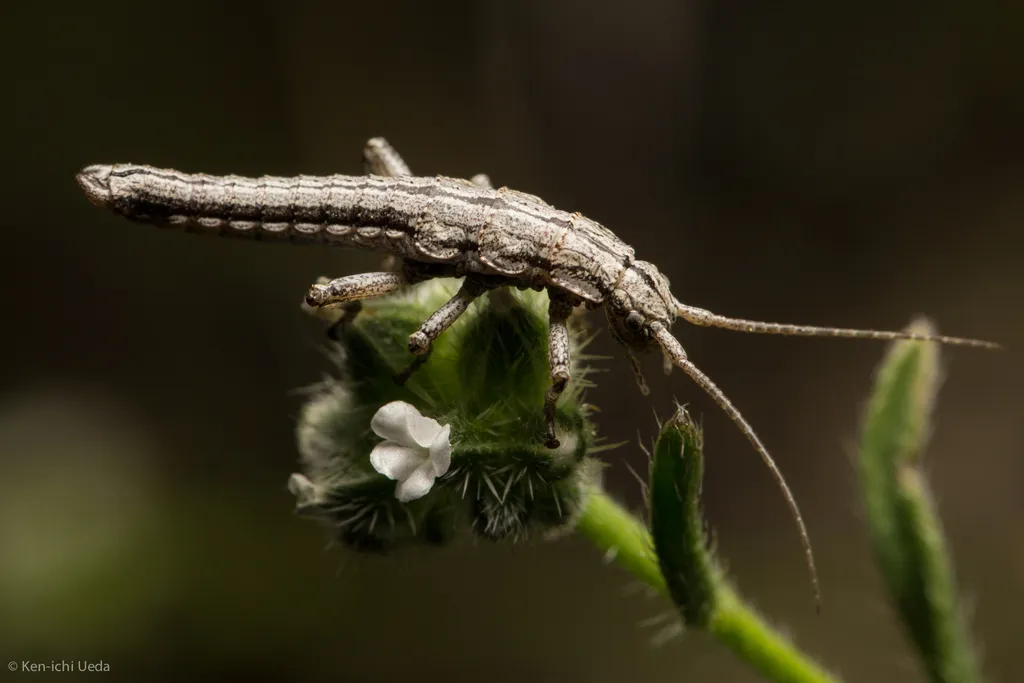
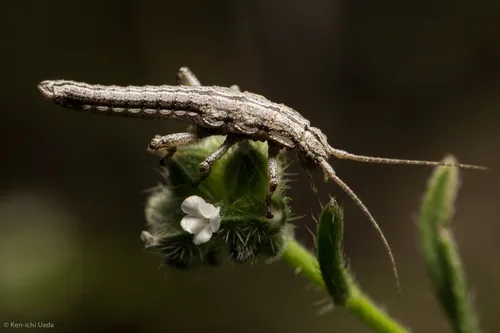
Photo credits: Contributed by Aaron Schusteff
Frequently Asked Questions About Timema boharti
What is Timema boharti?
Timema boharti is a species in the family Timematidae, within the order Phasmida.
How do you identify Timema boharti?
The distinctive male terminalia are illustrated in Fig. 1 here . The female terminalia have the apex of the last (10th) tergite shallowly-notched (or emarginate), as emphasized in the keys in both Vickery (1993) and the earlier paper by Tinkham (1942)...see here . Note that in other species, like T. californicum , females also have the the apex of the 10th tergite notched...but subtleties in the size and shape of the notch and terminalia can still allow them to be distinguished.)
Where is Timema boharti found?
Range: Known from the Santa Rosa, San Jacinto, and Laguna Mountains of southern California, generally above 2300' elevation. (Also one record from Tecate Peak, San Diego Co.)
What does Timema boharti eat?
The diet of the Timema boharti includes Timema boharti has been associated with the following plant taxa: Adenostoma spp.; Arctostaphylos spp.; Brickellia frutescens; Ceanothus leucodermis; Elymus sp.; Eriogonum fasciculatum; Pinus quadrifolia; Quercus dumosa; Yucca shidigera ; and Yucca whipplei . It is not entirely clear whether each of these is an actual host plant on which the Timema regularly feed, or if some are simply incidental perches where they have been found. However, BugGuide contributors have observed them actually feeding on Brickellia frutescens :.