
Brownsville Short-wing Grasshopper
Melanoplus cameronis
This record describes Melanoplus cameronis (species). Recorded family: Acrididae. Recorded order: Orthoptera.
Identification and Appearance
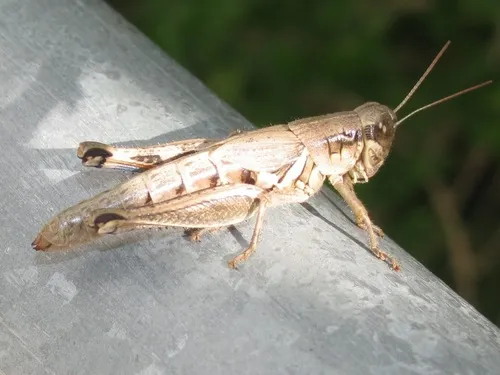
Differs from M. plebejus in male cerci narrower; male furculae averaging shorter (basically peg-like but still diverging in M. cameronis ); tegmina, when short-winged, with apex drawn into a longer and more acute point. Differs from M. lakinus in more easterly distribution, slightly more slender build, generally more plain coloration (though some M. lakinus are just as plain), a shorter & less pointed male subgenital plate, and in having elongate male cerci instead of rounded cerci with a dorsal lobe. Differs from similar looking Phoetaliotes nebrascensis in having head proportionately smaller, and cerci broader apically. Rare long-winged specimens could be confused with several other species, but the rather plain coloration combined with relatively slender and big-headed proportions will help to distinguish these. The shapes of male cerci and subgenital plate, along with the very short (almost non-existant) male furculae can also help to identify them. Also, long-winged individuals will usually be associated with more abundant and otherwise like-looking short-winged individuals. Tip of male abdomen In the original description, Roberts considered some specimens to be intermediate with M. plebejus to the north, which would indicate that this is not a different species. However, for the time being the current treatment of Otte in the Orthoptera Species File will be followed here.
Classification
- Kingdom
- Animalia
- Phylum
- Arthropoda
- Class
- Insecta
- Order
- Orthoptera (Grasshoppers, Crickets, Katydids)
- Suborder
- Caelifera
- Family
- Acrididae (Short-horned Grasshoppers)
- Subfamily
- Melanoplinae
- Tribe
- Melanoplini
- Genus
- Melanoplus
Imported taxonomy record. Source availability varies; see the source references and editorial policy below.
Habitat and Range
Geographic Range
s. TX (Hidalgo & Cameron Co.) and probably into adjacent Mexico. (Roberts 1947),(BG data)
About Grasshoppers, Crickets, Katydids: the wider group
Order-level background for Orthoptera, the group containing Melanoplus cameronis. Species-specific details appear above.
Group overview
Orthoptera includes ~28,000 described species of grasshoppers, crickets, and katydids. Desert locusts can form swarms covering 460 square miles containing up to 80 million individuals per square kilometer.
Ecological role of the group
Grasshoppers and crickets are a primary food source for birds, reptiles, and small mammals. Cricket farming is a growing industry - crickets require 12× less feed than cattle to produce the same amount of protein, using 2,000× less water.
Economic and practical significance of the group
A single large locust swarm can consume the same amount of food in one day as 35,000 people. The 2019-2021 East Africa locust crisis affected food security for 42 million people across multiple countries. Global crop losses from locusts can reach billions annually.
Recorded sources for this group: FAO, UN World Food Programme, research publications. Imported estimates may describe particular regions or reporting periods.
Photos of Brownsville Short-wing Grasshopper (2)
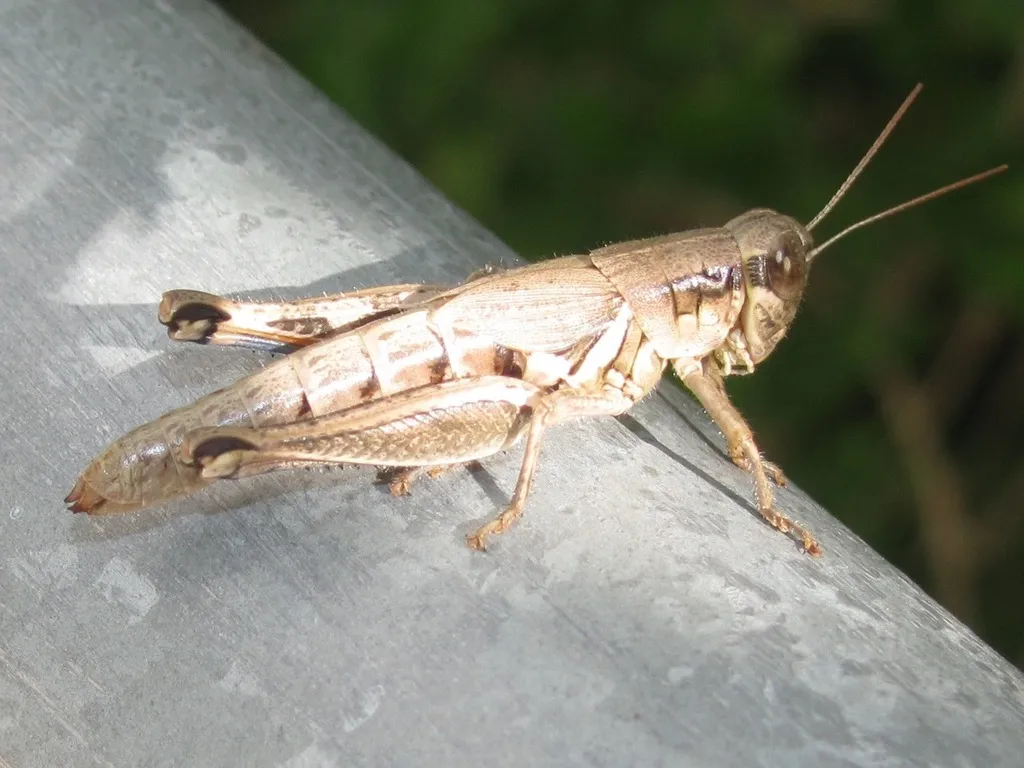
Photo credits: Contributed by David J. Ferguson; Additional contributions by Mike Quinn , Tyler Hedlund
Frequently Asked Questions About Brownsville Short-wing Grasshopper
What is Brownsville Short-wing Grasshopper?
Brownsville Short-wing Grasshopper (Melanoplus cameronis) is a species in the family Acrididae, within the order Orthoptera.
How do you identify Brownsville Short-wing Grasshopper?
Differs from M. plebejus in male cerci narrower; male furculae averaging shorter (basically peg-like but still diverging in M. cameronis ); tegmina, when short-winged, with apex drawn into a longer and more acute point. Differs from M. lakinus in more easterly distribution, slightly more slender build, generally more plain coloration (though some M. lakinus are just as plain), a shorter & less pointed male subgenital plate, and in having elongate male cerci instead of rounded cerci with a dorsal lobe. Differs from similar looking Phoetaliotes nebrascensis in having head proportionately smaller, and cerci broader apically. Rare long-winged specimens could be confused with several other species, but the rather plain coloration combined with relatively slender and big-headed proportions will help to distinguish these. The shapes of male cerci and subgenital plate, along with the very short (almost non-existant) male furculae can also help to identify them. Also, long-winged individuals will usually be associated with more abundant and otherwise like-looking short-winged individuals. Tip of male abdomen
Where is Brownsville Short-wing Grasshopper found?
Range: s. TX (Hidalgo & Cameron Co.) and probably into adjacent Mexico. (Roberts 1947),(BG data)