
Salt Marsh Cicada
Diceroprocta viridifascia
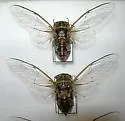
This record describes Diceroprocta viridifascia (species). Recorded family: Cicadidae. Recorded order: Hemiptera.
Identification and Appearance
Classification
- Kingdom
- Animalia
- Phylum
- Arthropoda
- Class
- Insecta
- Order
- Hemiptera (True Bugs, Cicadas, Hoppers, Aphids and Allies)
- Suborder
- Auchenorrhyncha
- Superfamily
- Cicadoidea
- Family
- Cicadidae (Cicadas)
- Subfamily
- Cicadinae
- Tribe
- Fidicinini
- Genus
- Diceroprocta (Scrub Cicadas)
Imported taxonomy record. Source availability varies; see the source references and editorial policy below.
Habitat and Range
Habitat
Coastal Maritime forests, salt marshes, coastal marshes and dune vegetative communities. Rarely more than a couple miles or so from the coast.
Geographic Range
Atlantic Coast: VA, NC, SC, GA, FL (perhaps a little further north than VA) Gulf Coast: FL, AL, MS, LA, & TX D. viridifascia ranges from the mid-Atlantic (Delmarva region) south into Florida. Its distribution around Florida is often patchy, but it can be abundant. This cicada can be found on both the Atlantic and Gulf coasts of the state, but seems to range only as far north as the "Big Bend" region of Florida in the west and appears absent along the Panhandle (?). This species is common all around the Florida coast and abundant in the Palm Beach area. (as stated here )
Seasonal Activity
May-September This cicada is an annual species with multiple overlapping generations.
Diet and Behavior
Diet: Likely several plant groups (seems abundant on perennial grasses, Poaceae). Among the dunes, the nymphs and shells are common on Uniola sp. (Poaceae)
Life History
UNKNOWN: Likely a couple years or so with overlapping generations
About True Bugs, Cicadas, Hoppers, Aphids and Allies: the wider group
Order-level background for Hemiptera, the group containing Diceroprocta viridifascia. Species-specific details appear above.
Group overview
Hemiptera (true bugs) includes over 80,000 described species across cicadas, aphids, leafhoppers, shield bugs, and bed bugs. Aphids alone cost global agriculture an estimated $2.5 billion annually in crop losses.
Ecological role of the group
Many Hemiptera are essential food sources for birds and predatory insects. Cicadas provide massive nutrient pulses during emergence events - a single Brood X emergence can involve trillions of individuals across 15 states.
Economic and practical significance of the group
The brown marmorated stink bug (Halyomorpha halys) caused $37 million in apple crop losses in a single year in the U.S. Mid-Atlantic region. Bed bug infestations in the U.S. increased by 500% between 2001-2010, costing the hotel industry hundreds of millions annually.
Recorded sources for this group: USDA, EPA, University research. Imported estimates may describe particular regions or reporting periods.
Photos of Salt Marsh Cicada (5)
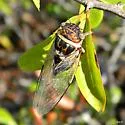
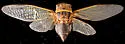
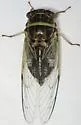
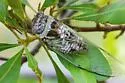
Photo credits: Contributed by Tony DiTerlizzi; Additional contributions by JohnMaxwell22 , Bill Reynolds
Frequently Asked Questions About Salt Marsh Cicada
Where is Salt Marsh Cicada found?
| Feature | Details |
|---|---|
| Habitat | Coastal Maritime forests, salt marshes, coastal marshes and dune vegetative communities. Rarely more than a couple miles or so from the coast. |
| Range | Atlantic Coast: VA, NC, SC, GA, FL (perhaps a little further north than VA) Gulf Coast: FL, AL, MS, LA, & TX D. viridifascia ranges from the mid-Atlantic (Delmarva region) south into Florida. Its distribution around Florida is often patchy, but it can be abundant. This cicada can be found on both the Atlantic and Gulf coasts of the state, but seems to range only as far north as the Big Bend region of Florida in the west and appears absent along the Panhandle (?). This species is common all around the Florida coast and abundant in the Palm Beach area. (as stated here ) |
What does Salt Marsh Cicada eat?
The diet of the Salt Marsh Cicada includes Likely several plant groups (seems abundant on perennial grasses, Poaceae). Among the dunes, the nymphs and shells are common on Uniola sp. (Poaceae).
When is Salt Marsh Cicada active?
Salt Marsh Cicada: seasonal activity - May-September This cicada is an annual species with multiple overlapping generations..
What is the life cycle of a Salt Marsh Cicada?
UNKNOWN: Likely a couple years or so with overlapping generations