
Diapheromera persimilis
This record describes Diapheromera persimilis (species). Recorded family: Diapheromeridae. Recorded order: Phasmida.
Identification and Appearance
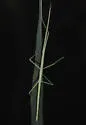
Similar to Diapheromera velii , but more slender with head proportionately longer. Middle femur has a spine on lower side near tip, but equivalent spine on hind femur is often missing (always present in males, and usually females in D. velii ). Manomera blatchleyi from further north is nearly the same, and the relationship between the two should be studied more closely. They are clearly very closely related and perhaps(?) the same. Apparently that species has (in males) the 7th abdominal segment proportionately shorter, the head even a bit narrower, and (in females) the cerci somewhat longer. Apparently the small spine that is present at the inner base of the cerci is even smaller in this species than in M. blatchleyi , but the difference is trivial and perhaps not real. D. persimilus is supposed to be limited to Texas, and the other species occurs over a wide area north and east from Oklahoma to Iowa, Wisconsin, Connecticut, and Virginia.
Classification
- Kingdom
- Animalia
- Phylum
- Arthropoda
- Class
- Insecta
- Order
- Phasmida (Walkingsticks)
- Family
- Diapheromeridae
- Genus
- Diapheromera
Imported taxonomy record. Source availability varies; see the source references and editorial policy below.
Habitat and Range
Geographic Range
Poorly outlined in literature, but most records are from central and south Texas, and from near the Rio Grande in west Texas. Perhaps widespread in northeastern Mexico, but there are few documented specimens from either country. Specimens from further northeastward in Texas may actually be referable to Manomera blatchleyi , and more study is needed as to which species is found where.
About Walkingsticks: the wider group
Order-level background for Phasmida, the group containing Diapheromera persimilis. Species-specific details appear above.
Group overview
Phasmida (stick insects and leaf insects) includes ~3,000 described species. The longest insect ever discovered is a stick insect - Phryganistria chinensis Zhao - measuring 64 cm (25.2 inches) found in China in 2016.
Ecological role of the group
Many stick insect species can reproduce without mating (parthenogenesis) - entire populations can consist of only females. Their eggs often mimic plant seeds and are dispersed by ants, which carry them to their nests.
Economic and practical significance of the group
Stick insects are among the most popular pet insects worldwide. The Indian stick insect (Carausius morosus) is widely used in schools and laboratories for biology education and genetic research.
Recorded sources for this group: Guinness World Records, entomology research. Imported estimates may describe particular regions or reporting periods.
Photos of Diapheromera persimilis (5)
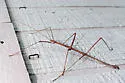
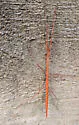
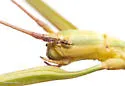
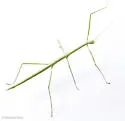
Photo credits: Contributed by Graham Montgomery; Additional contributions by cotinis , David Ferguson
Frequently Asked Questions About Diapheromera persimilis
What is Diapheromera persimilis?
Diapheromera persimilis is a species in the family Diapheromeridae, within the order Phasmida.
How do you identify Diapheromera persimilis?
Similar to Diapheromera velii , but more slender with head proportionately longer. Middle femur has a spine on lower side near tip, but equivalent spine on hind femur is often missing (always present in males, and usually females in D. velii ). Manomera blatchleyi from further north is nearly the same, and the relationship between the two should be studied more closely. They are clearly very closely related and perhaps(?) the same. Apparently that species has (in males) the 7th abdominal segment proportionately shorter, the head even a bit narrower, and (in females) the cerci somewhat longer. Apparently the small spine that is present at the inner base of the cerci is even smaller in this species than in M. blatchleyi , but the difference is trivial and perhaps not real. D. persimilus is supposed to be limited to Texas, and the other species occurs over a wide area north and east from Oklahoma to Iowa, Wisconsin, Connecticut, and Virginia.
Where is Diapheromera persimilis found?
Range: Poorly outlined in literature, but most records are from central and south Texas, and from near the Rio Grande in west Texas. Perhaps widespread in northeastern Mexico, but there are few documented specimens from either country. Specimens from further northeastward in Texas may actually be referable to Manomera blatchleyi , and more study is needed as to which species is found where.