
Family Diapheromeridae
Diapheromeridae is a family in the order Phasmida. Browse 14 named species recorded in this family, or open an individual profile for its available identification and natural-history information.
Species in Diapheromeridae (14)
Diapheromera arena
Diapheromera arena
Identification: Very similar to D. velii, but apparently never found together. Third antennal segment distinctly swollen and enlarged (especially in males). Larger and broader male poculum than in D. velii. Egg capitulum narrower and more elongated t
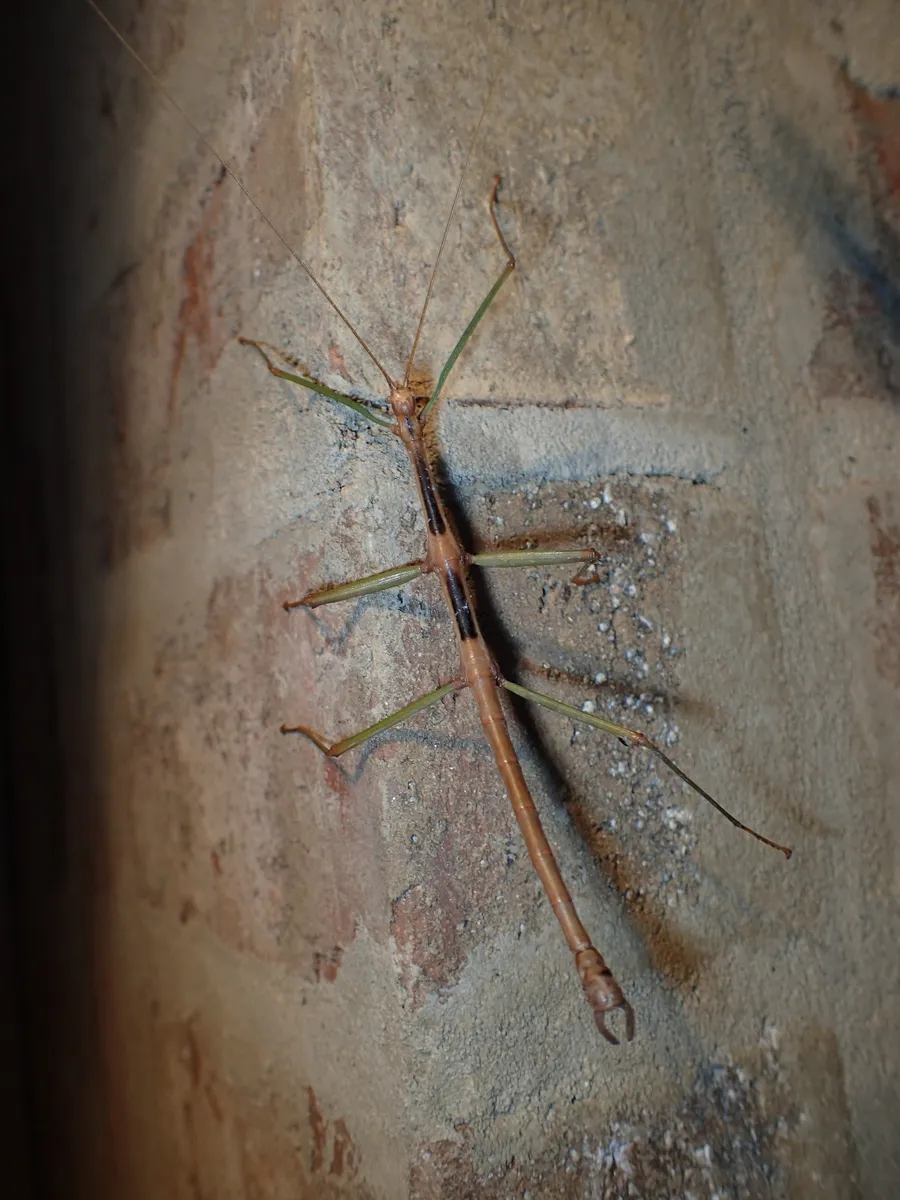
Carolina Walkingstick
Diapheromera carolina
Identification: Described from a male specimen from North Carolina, and a second specimen was reported by Blatchley (in 1920) from Lake Toxaway, North Carolina. As of 2011, one additional male specimen from northern Georgia appears to have been post
Diapheromera persimilis
Diapheromera persimilis
Identification: Similar to Diapheromera velii , but more slender with head proportionately longer. Middle femur has a spine on lower side near tip, but equivalent spine on hind femur is often missing (always present in males, and usually females in
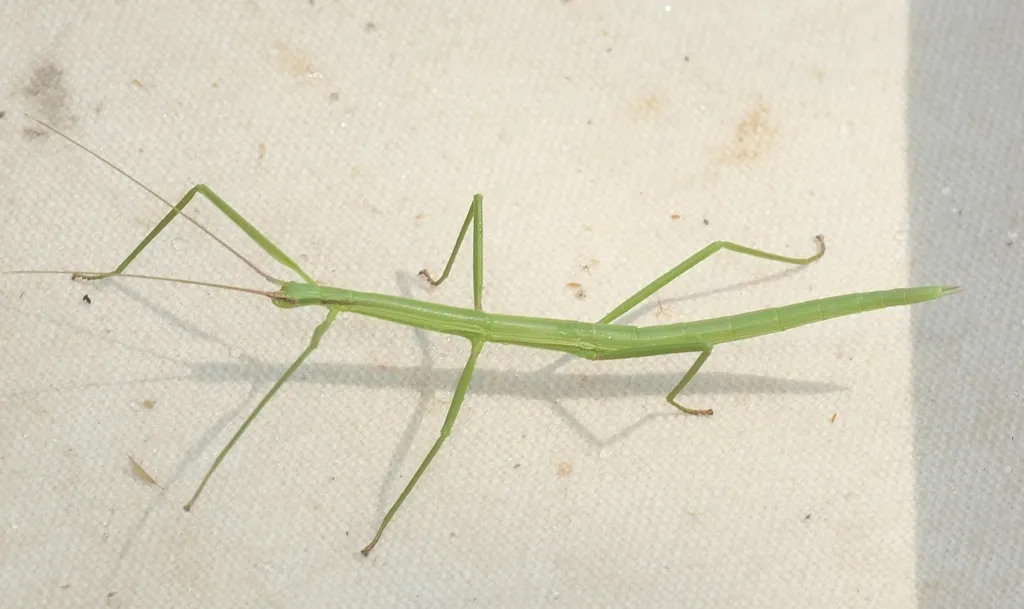
Blatchley Walkingstick
Manomera blatchleyi
Identification: Green and tan color pattern usually distinct in adult females. Long slender head (noticeably longer than wide) and lack of spines under the hind femora will separate this species from Diapheromera spp.
Short-Rumped Walkingstick
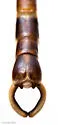
Manomera brachypyga
Identification: Nearly identical to M. tenuescens, but note differences in the end of the abdomen of mature males:
Slender-bodied Walkingstick
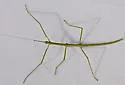
Manomera tenuescens
Identification: Nearly identical to M. brachypyga, but note differences in the end of the abdomen of mature males: . The terminal segments in M. brachypyga (left) are proportionately shorter in length than M. tenuescens (right).
Catalina Walkingstick
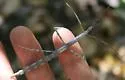
Pseudosermyle catalinae
Identification: Antennae not over twice as long as front femora. Only known from Santa Catalina Island, California.
Mexican Walkingstick
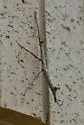
Sermyle mexicana
Identification: Middle femur and fifth abdominal segment conspicuously lobed. Known only from females , it could be parthenogenic. (comment per Paul Lenhart, 2010)
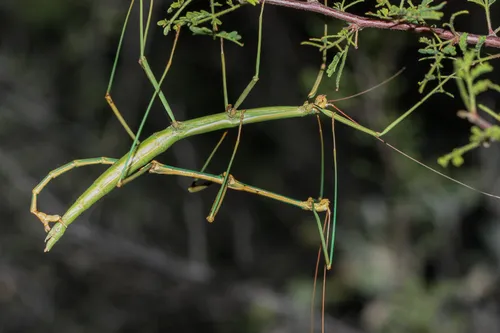
Arizona Walkingstick
Diapheromera arizonensis
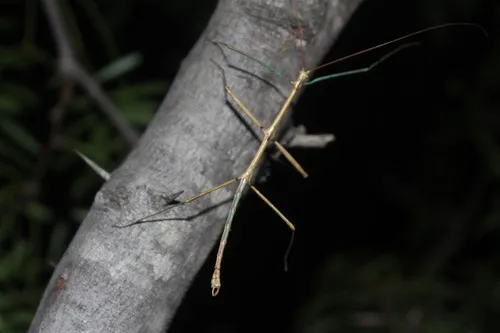
Creosote Bush Walkingstick
Diapheromera covilleae
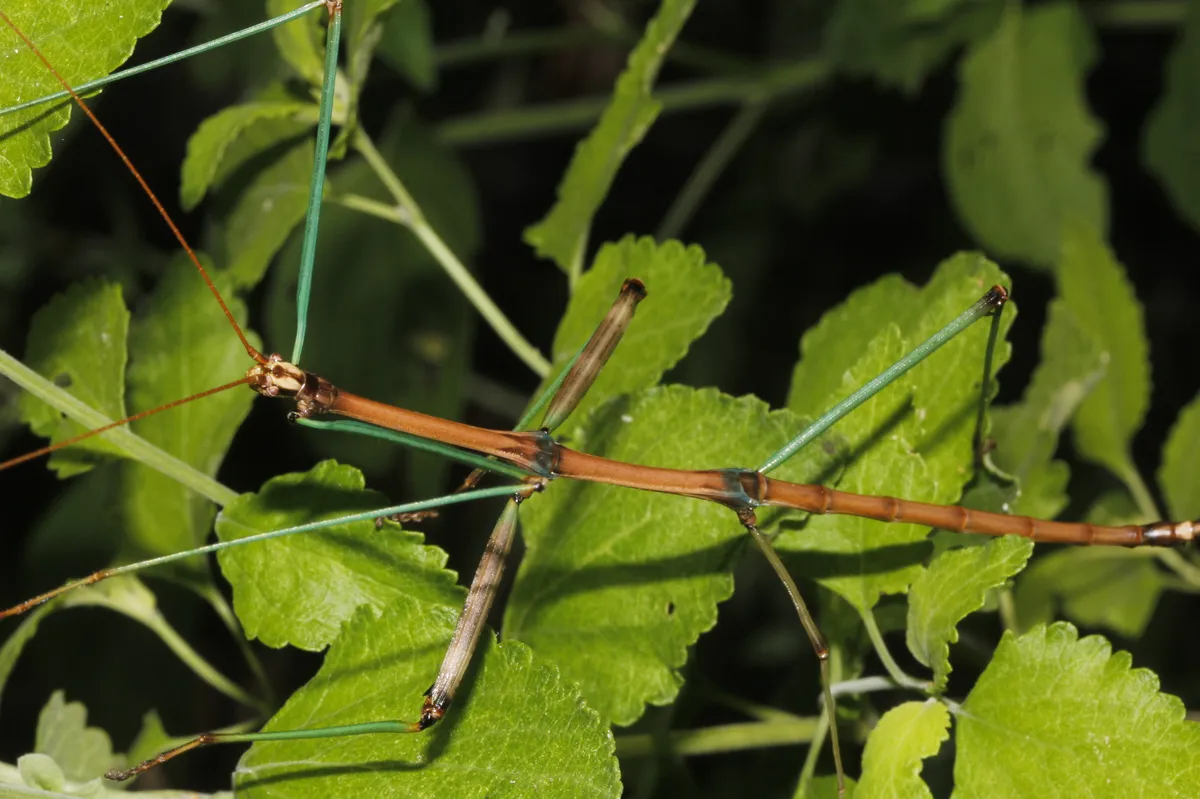
Tamaulipan Walkingstick
Diapheromera tamaulipensis
Diapheromera torquata
Diapheromera torquata
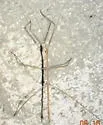
Straw-colored Walkingstick
Pseudosermyle straminea
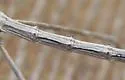
Striped Walkingstick
Pseudosermyle strigata