
Carolina Walkingstick
Diapheromera carolina
This record describes Diapheromera carolina (species). Recorded family: Diapheromeridae. Recorded order: Phasmida.
Identification and Appearance
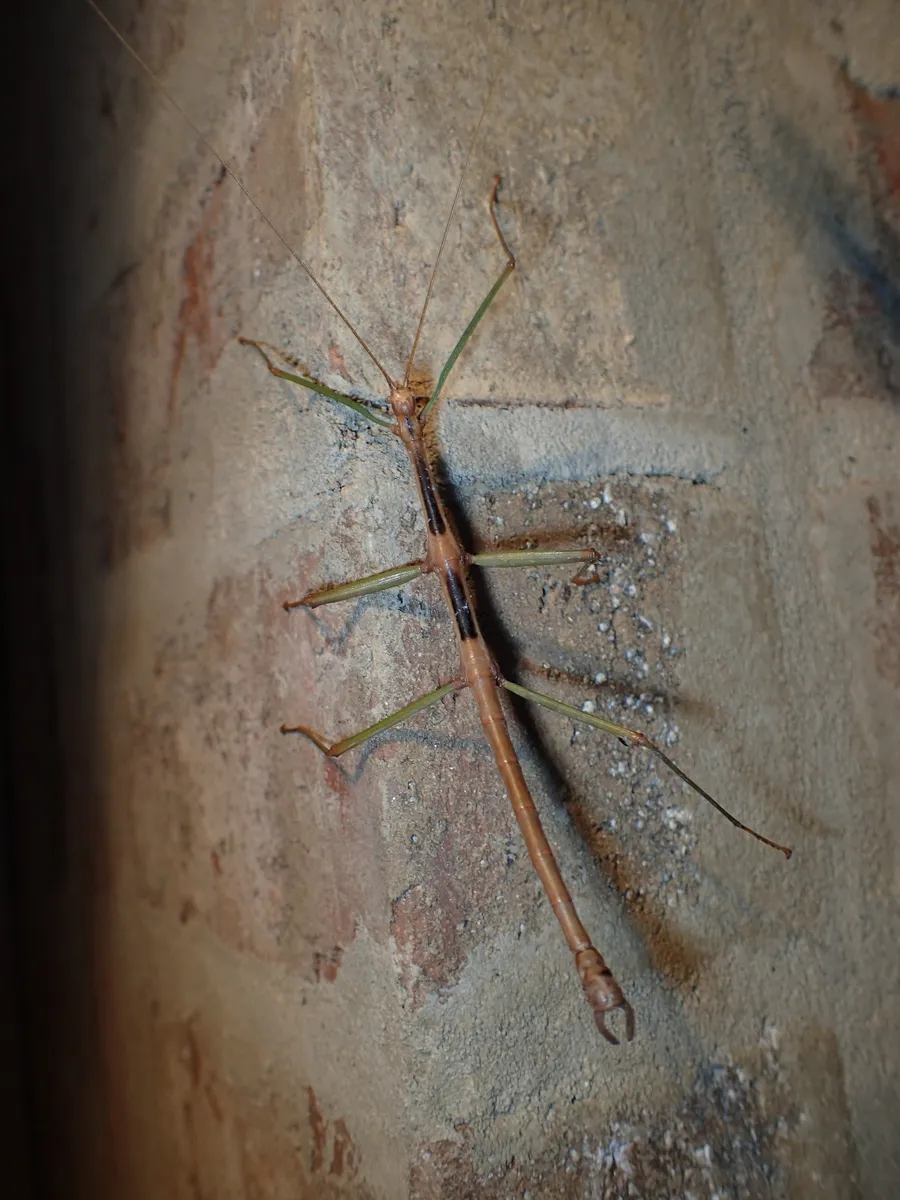
Described from a male specimen from North Carolina, and a second specimen was reported by Blatchley (in 1920) from Lake Toxaway, North Carolina. As of 2011, one additional male specimen from northern Georgia appears to have been posted here on BugGuide. Females were only recently described in the literature. Males are shiny brown with a dark median stripe along the top of the thorax that is narrow on the pronotum, wider behind, interrupted or weak toward rear of mesonotum, and not reaching (or weaker) toward rear of metanotum. There is a curved black stripe on the sides of the seventh and the eighth abdominal segments (the small segments just before the last - ninth segement). Legs are greenish to pale brownish and nearly plain in color except for black spine near tip below middle and hind femora (middle femur may be faintly banded darker on inner side). Females apparently are more plain, usually with indications of the same stripe above (???). Apparently a rare species, but perhaps just not often noticed because it is similar to other species.
Wikipedia reference for Diapheromera carolina: http://en.wikipedia.org/wiki/Diapheromera_carolina.
Classification
- Kingdom
- Animalia
- Phylum
- Arthropoda
- Class
- Insecta
- Order
- Phasmida (Walkingsticks)
- Family
- Diapheromeridae
- Genus
- Diapheromera
Imported taxonomy record. Source availability varies; see the source references and editorial policy below.
Habitat and Range
Geographic Range
Probably upland regions associated with the southern Appalachians. Should be looked for in adjacent portions of North Carolina, South Carolina, Georgia, and Tennessee.
About Walkingsticks: the wider group
Order-level background for Phasmida, the group containing Diapheromera carolina. Species-specific details appear above.
Group overview
Phasmida (stick insects and leaf insects) includes ~3,000 described species. The longest insect ever discovered is a stick insect - Phryganistria chinensis Zhao - measuring 64 cm (25.2 inches) found in China in 2016.
Ecological role of the group
Many stick insect species can reproduce without mating (parthenogenesis) - entire populations can consist of only females. Their eggs often mimic plant seeds and are dispersed by ants, which carry them to their nests.
Economic and practical significance of the group
Stick insects are among the most popular pet insects worldwide. The Indian stick insect (Carausius morosus) is widely used in schools and laboratories for biology education and genetic research.
Recorded sources for this group: Guinness World Records, entomology research. Imported estimates may describe particular regions or reporting periods.
Photos of Carolina Walkingstick (3)
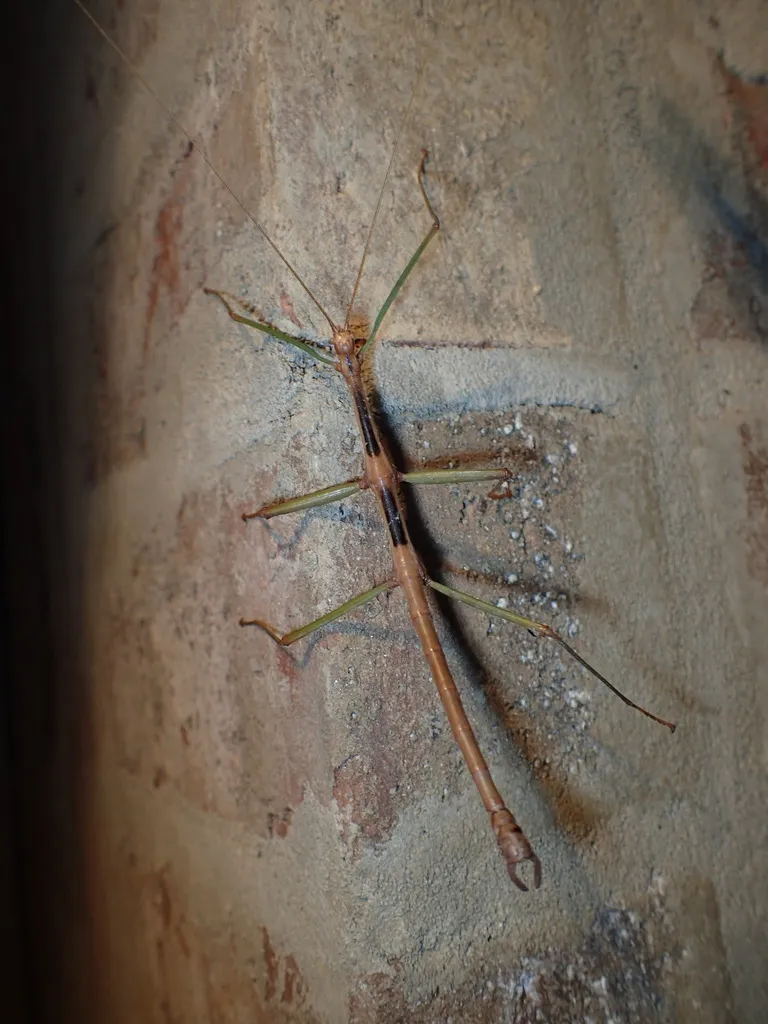
Photo credits: Contributed by David J. Ferguson; Additional contributions by metrioptera
Frequently Asked Questions About Carolina Walkingstick
What is Carolina Walkingstick?
Carolina Walkingstick (Diapheromera carolina) is a species in the family Diapheromeridae, within the order Phasmida.
How do you identify Carolina Walkingstick?
Described from a male specimen from North Carolina, and a second specimen was reported by Blatchley (in 1920) from Lake Toxaway, North Carolina. As of 2011, one additional male specimen from northern Georgia appears to have been posted here on BugGuide. Females were only recently described in the literature. Males are shiny brown with a dark median stripe along the top of the thorax that is narrow on the pronotum, wider behind, interrupted or weak toward rear of mesonotum, and not reaching (or weaker) toward rear of metanotum. There is a curved black stripe on the sides of the seventh and the eighth abdominal segments (the small segments just before the last - ninth segement). Legs are greenish to pale brownish and nearly plain in color except for black spine near tip below middle and hind femora (middle femur may be faintly banded darker on inner side). Females apparently are more plain, usually with indications of the same stripe above (???).
Where is Carolina Walkingstick found?
Range: Probably upland regions associated with the southern Appalachians. Should be looked for in adjacent portions of North Carolina, South Carolina, Georgia, and Tennessee.