
Stone Centipedes
Order Lithobiomorpha
The Stone Centipedes (Order Lithobiomorpha) includes 27 species across 2 families and 15 genera in our directory.
About Stone Centipedes
Lithobiomorpha (stone centipedes) includes ~1,500 described species. They are the most common centipedes in temperate regions, frequently found under stones, logs, and leaf litter in gardens.
Economic Impact
Stone centipedes are beneficial garden predators that help control pest insects, slugs, and other invertebrates. They are harmless to humans despite their venomous bite capability.
Ecological Role
Stone centipedes are important soil predators that regulate populations of springtails, mites, and other small arthropods. Unlike many centipedes, females guard their eggs until hatching - a form of maternal care.
Families in Lithobiomorpha (2)
Species in Lithobiomorpha (27)
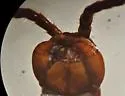
Arenobius manegitus
Arenobius manegitus
Identification: Prosternal teeth 2+2, small, with large porodonts; posterior angles of 9th, 11th, and 13th tergites produced; 20 antennomeres; tibia of penultimate legs of males with a deep mesal furrow and distally with a lobe bearing a brush of hai
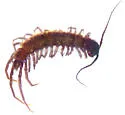
Gonibius rex
Gonibius rex
Identification: Posterior angles of fourth, sixth, seventh, ninth, eleventh, and thirteenth dorsal plates produced; ventral spines of anal legs 0,1, 3, 3, 2; dorsal spines of penult legs 1, 0, 3. 2, 2. The other North American species seems to be les
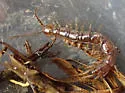
Gosibius montereus
Gosibius montereus
Identification: Gosibius montereus Chamberlin, 1917
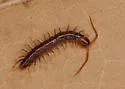
Lamyctes emarginatus
Lamyctes emarginatus
Identification: L. pius is similar but has 28 antennal segments.
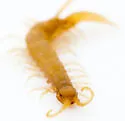
Lithobius microps
Lithobius microps
Identification: The most similar common species is Lamyctes emarginatus , which is the same size and also has 25 antennal segments. However, Lamyctes doesn't have spines on its legs like Lithobius , and has only a single ocellus on each side of the h
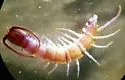
Paitobius zinus
Paitobius zinus
Identification: Males distinguished by their greatly enlarged forcipules. Prosternal teeth 2+2. Only the males have the greatly enlarged forcipules, but this distinguishes the species from others in the eastern US

Zygethobius pontis
Zygethobius pontis
Identification: Legs lack any spurs (separating from Lithobiidae); antennae with 43 articles; 3+3 prosternal teeth; tergites 6, 7, 9, 11, 13 produced. Posterior legs long and thin, especially 15th pair.
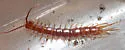
Arebius diplonyx
Arebius diplonyx
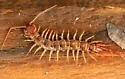
Bothropolys multidentatus
Bothropolys multidentatus
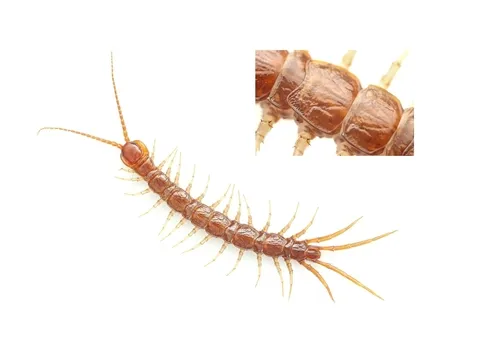
Bothropolys xanti
Bothropolys xanti
Brown Centipede
Lithobius forficatus
Ethopolys positivus
Ethopolys positivus
Gosibius angelicus
Gosibius angelicus
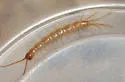
Gosibius intermedius
Gosibius intermedius
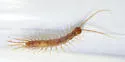
Gosibius monicus
Gosibius monicus
Gosibius paucidens
Gosibius paucidens
Lamyctes africanus
Lamyctes africanus
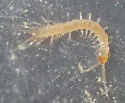
Lamyctes caeculus
Lamyctes caeculus
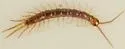
Lithobius melanops
Lithobius melanops
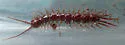
Lithobius peregrinus
Lithobius peregrinus
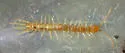
Nothembius aberrans
Nothembius aberrans
Nothembius insulae
Nothembius insulae
Pokabius clavigerens
Pokabius clavigerens
Pokabius disantus
Pokabius disantus
Tigobius paralus
Tigobius paralus
Typhlobius kebus
Typhlobius kebus
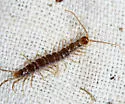
Zygethobius ecologus
Zygethobius ecologus