
Reticulated Decantha Moth - Hodges#1042
Decantha boreasella
This record describes Decantha boreasella (species). Recorded family: Oecophoridae. Recorded order: Lepidoptera.
Identification and Appearance
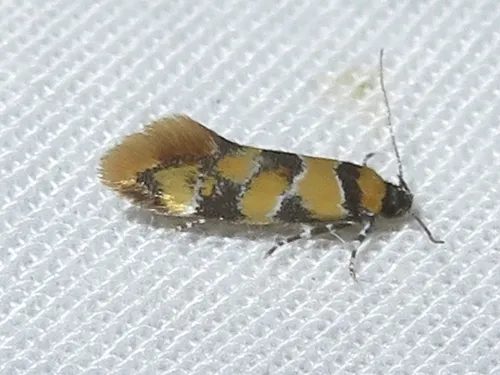
| Feature | Details |
|---|---|
| Head | Dark brown, face smooth; two tufts on top of head. Palpi reddish-brown, curved up over head, underside scaled, last segment brown and white. Antenna: Brown with white rings. |
| Thorax | Golden yellow, slightly scaled. Sides brown, collar has line of brown. Wings: Dark brown background, with 4 large golden patches outlined with white on each side and connecting to lower center patch. Fringe long, golden yellow. Hindwings brown. Fringe yellowish-brown. |
| Legs | Dark brown with white tips on each segment. |
| Abdomen | Grayish-brown. Decantha boreasella may turn out to be a complex of more than one species. There are currently three BINs at BOLD with specimens identified as boreasella, BOLD:AAB6765 , BOLD:ADH4810 and BOLD:AAB6766 and they are each other's nearest neighbors. All are from east from TX and OK and east. - Steve Nanz, 12/26/2018 |
Classification
- Kingdom
- Animalia
- Phylum
- Arthropoda
- Class
- Insecta
- Order
- Lepidoptera (Butterflies and Moths)
- Superfamily
- Gelechioidea
- Family
- Oecophoridae (Concealer Moths)
- Subfamily
- Oecophorinae
- Tribe
- Oecophorini
- Genus
- Decantha
Imported taxonomy record. Source availability varies; see the source references and editorial policy below.
Habitat and Range
Habitat
Forests, preferring pine.
Geographic Range
Only found east of the Rockies MA south to FL and west to AR Lectotype as Oecophora boreasella male by Chambers, 1873. #189; MCZ#1553. Locality: Kentucky. In Museum of Comparative Zoology, Cambridge, Mass. Lectotype designated by Hodges in 1974.
Seasonal Activity
May to August, earlier in the south.
Diet and Behavior
Diet: Larvae possibly feed on fungus in dead wood.
Life History
Caterpillar translucent white, with yellow-brown head and cervical shield. Found under pine bark.
Additional species information
Species notes from the sources
Etymology: Decantha borkhausenii (Zeller, 1839) is a European species formerly treated as a senior synonym of Decantha boreasella by Busck (1904), Dyar (1904), Forbes (1923) and others.
About Butterflies and Moths: the wider group
Order-level background for Lepidoptera, the group containing Decantha boreasella. Species-specific details appear above.
Group overview
Lepidoptera includes approximately 180,000 described species of butterflies and moths. Moths outnumber butterflies roughly 10:1. The monarch butterfly's eastern population has declined by more than 80% since the mid-1990s, and the western population by over 95% since the 1980s. The IUCN lists the migratory monarch as Vulnerable.
Ecological role of the group
Butterflies and moths are essential indicators of ecosystem health. As caterpillars, they are a primary food source for birds - a single nest of blue tit chicks requires ~10,000 caterpillars. Adult moths pollinate many night-blooming plants.
Economic and practical significance of the group
Lepidoptera are critical pollinators. In Europe, grassland butterfly species have declined by almost 50% since the early 1990s. In the UK, three-quarters of butterflies are in decline. In the U.S., five butterfly species have gone extinct since 1950, with 29 listed as endangered.
Recorded sources for this group: IUCN Red List, Xerces Society, USFWS, PNAS, WWF. Imported estimates may describe particular regions or reporting periods.
Photos of Reticulated Decantha Moth - Hodges#1042 (5)
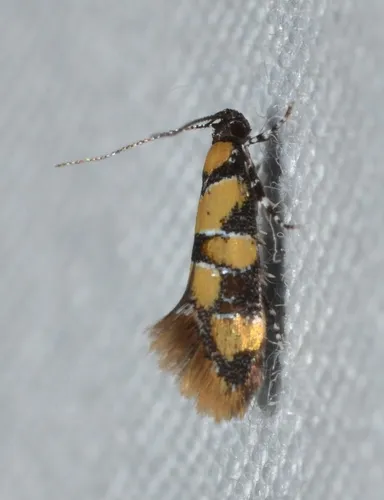
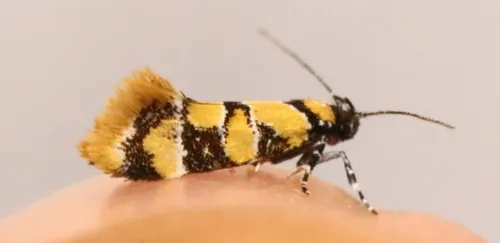
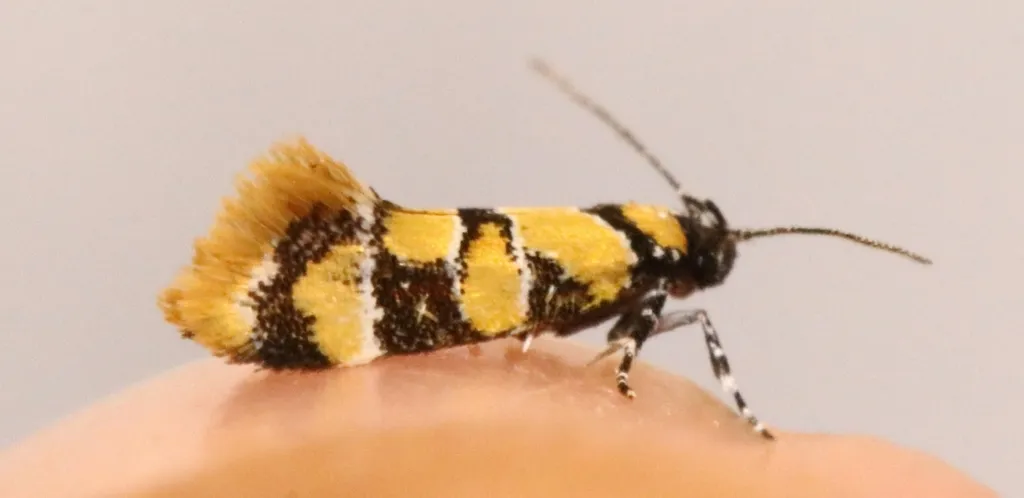
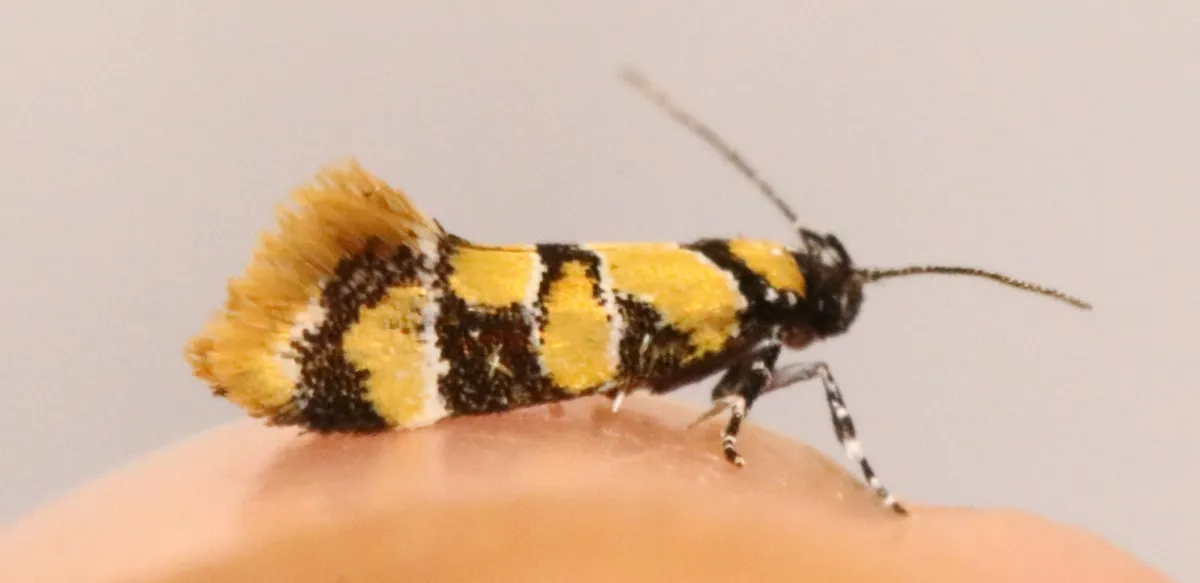
Photo credits: Contributed by john and jane balaban; Additional contributions by Steve Nanz , Tony-2 , Randy Hardy , lee_penner
Frequently Asked Questions About Reticulated Decantha Moth - Hodges#1042
What is Reticulated Decantha Moth - Hodges#1042?
Reticulated Decantha Moth - Hodges#1042 (Decantha boreasella) is a species in the family Oecophoridae, within the order Lepidoptera.
How big is Reticulated Decantha Moth - Hodges#1042?
4-5 mm
How do you identify Reticulated Decantha Moth - Hodges#1042?
| Feature | Details |
|---|---|
| Head | Dark brown, face smooth; two tufts on top of head. Palpi reddish-brown, curved up over head, underside scaled, last segment brown and white. Antenna: Brown with white rings. |
| Thorax | Golden yellow, slightly scaled. Sides brown, collar has line of brown. Wings: Dark brown background, with 4 large golden patches outlined with white on each side and connecting to lower center patch. Fringe long, golden yellow. Hindwings brown. Fringe yellowish-brown. |
| Legs | Dark brown with white tips on each segment. |
| Abdomen | Grayish-brown. |
Where is Reticulated Decantha Moth - Hodges#1042 found?
| Feature | Details |
|---|---|
| Habitat | Forests, preferring pine. |
| Range | Only found east of the Rockies MA south to FL and west to AR Lectotype as Oecophora boreasella male by Chambers, 1873. #189; MCZ#1553. Locality: Kentucky. In Museum of Comparative Zoology, Cambridge, Mass. Lectotype designated by Hodges in 1974. |
What does Reticulated Decantha Moth - Hodges#1042 eat?
The diet of the Reticulated Decantha Moth - Hodges#1042 includes Larvae possibly feed on fungus in dead wood..
When is Reticulated Decantha Moth - Hodges#1042 active?
Reticulated Decantha Moth - Hodges#1042: seasonal activity - May to August, earlier in the south..
What is the life cycle of a Reticulated Decantha Moth - Hodges#1042?
Caterpillar translucent white, with yellow-brown head and cervical shield. Found under pine bark.