
Stigmella salicis
This record describes Stigmella salicis (species). Recorded family: Nepticulidae. Recorded order: Lepidoptera.
Identification and Appearance
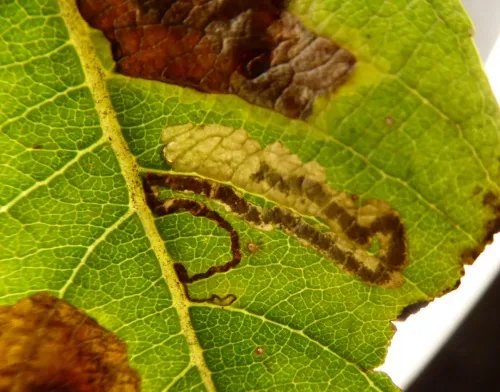
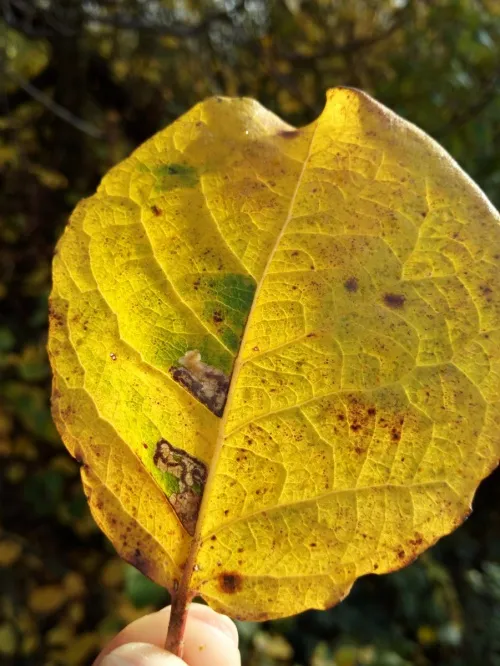
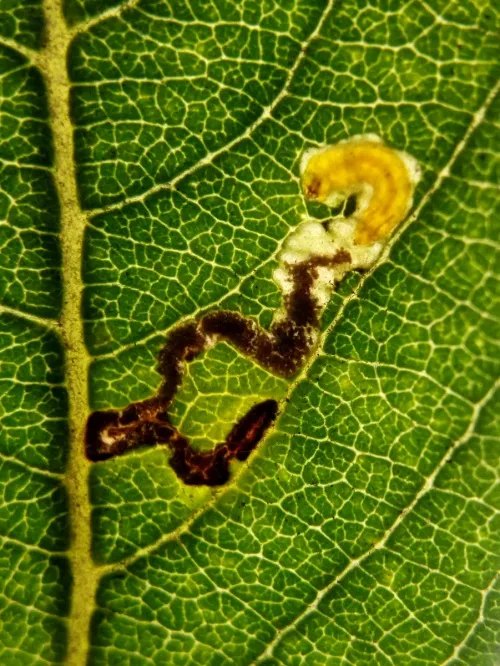
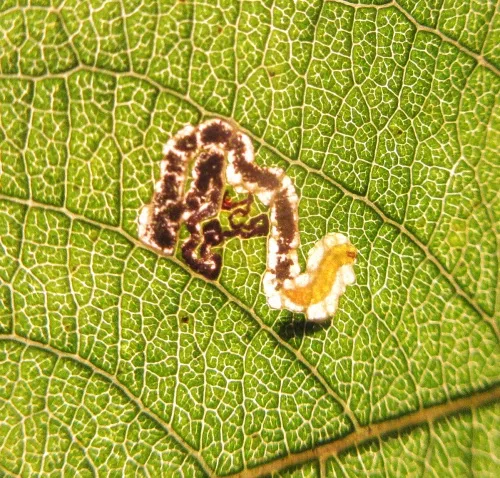
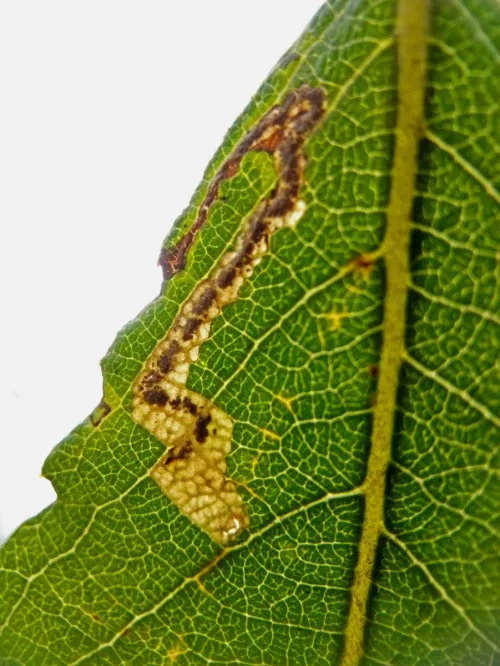
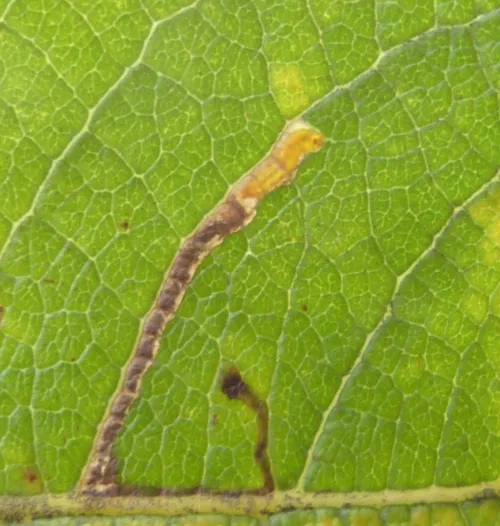
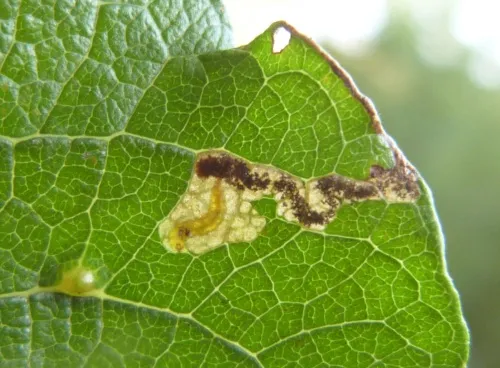
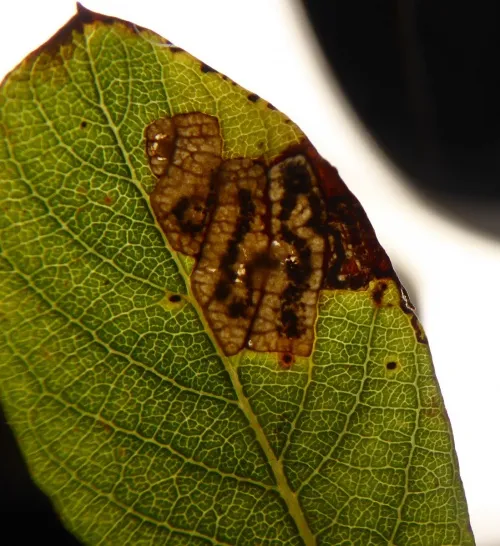
Wingspan 4 to 6 mm. The adults have dark forewings with a purplish sheen and an irregular yellowish fascia. The cilia are noticeably pale and the head is orange. The larva mines the leaves of coarse leaved willows such as Goat Willow and Grey Willow. The mine is usually short and broad with a thick dark frass-line. It is very variable - ranging from a contorted gallery to a short angular gallery that looks more like a blotch; egg position also varies between upper and lower surfaces. Photograph the mine with backlight; note host species or species group (e.g. 'Sallows') and if possible note egg position. The egg is a small shiny speck which can be hard to find on the leaf under-surface; it is often in a leaf axil or by a vein but may be hidden close up against the midrib and buried under the wooly leaf surface. On the wing in April and May and again in July and August. Larvae feed on sallow (Salix spp.). The mines can be found in June and July and from September into November. Widespread and fairly frequent in Britain. In the Butterfly Conservation's Microlepidoptera Report 2011 this species was classified as common. DNA analysis has revelaed a complex of species, of which 2 (as yet un-named) are found in the British Isles. Further research is needed, but egg position and apperance of larva may be critical in separating out the species complex. See Edmunds, R. (2017) The Stigmella salicis complex . Leafmines Newsletter 34 4. http://www.leafmines.co.uk/pdfs/newsletter34.pdf http://www.leafmines.co.uk/html/Lepidoptera/S.salicis.htm https://bladmineerders.nl/parasites/animalia/arthropoda/insecta/lepidoptera/monotrysia/nepticuloidea/nepticulidae/stigmella/stigmella-salicis/
Classification
- Kingdom
- Animalia
- Phylum
- Arthropoda
- Class
- Insecta
- Order
- Lepidoptera
- Family
- Nepticulidae
- Genus
- Stigmella
Imported taxonomy record. Source availability varies; see the source references and editorial policy below.
Habitat and Range
Habitat
Areas containing sallows
Seasonal Activity
On the wing in April and May and again in July and August.
Diet and Behavior
Life History
Larvae feed on sallow (Salix spp.). The mines can be found in June and July and from September into November.
Additional species information
Recorded status
Widespread and fairly frequent in Britain. In the Butterfly Conservation's Microlepidoptera Report 2011 this species was classified as common.
About Butterflies and Moths: the wider group
Order-level background for Lepidoptera, the group containing Stigmella salicis. Species-specific details appear above.
Group overview
Lepidoptera includes approximately 180,000 described species of butterflies and moths. Moths outnumber butterflies roughly 10:1. The monarch butterfly's eastern population has declined by more than 80% since the mid-1990s, and the western population by over 95% since the 1980s. The IUCN lists the migratory monarch as Vulnerable.
Ecological role of the group
Butterflies and moths are essential indicators of ecosystem health. As caterpillars, they are a primary food source for birds - a single nest of blue tit chicks requires ~10,000 caterpillars. Adult moths pollinate many night-blooming plants.
Economic and practical significance of the group
Lepidoptera are critical pollinators. In Europe, grassland butterfly species have declined by almost 50% since the early 1990s. In the UK, three-quarters of butterflies are in decline. In the U.S., five butterfly species have gone extinct since 1950, with 29 listed as endangered.
Recorded sources for this group: IUCN Red List, Xerces Society, USFWS, PNAS, WWF. Imported estimates may describe particular regions or reporting periods.
Photos of Stigmella salicis (10)
Frequently Asked Questions About Stigmella salicis
What is Stigmella salicis?
Stigmella salicis is a species in the family Nepticulidae, within the order Lepidoptera.
Where is Stigmella salicis found?
Habitat: Areas containing sallows
When is Stigmella salicis active?
Stigmella salicis: seasonal activity - On the wing in April and May and again in July and August..
What is the life cycle of a Stigmella salicis?
Larvae feed on sallow (Salix spp.). The mines can be found in June and July and from September into November.