
Allocosa absoluta
This record describes Allocosa absoluta (species). Recorded family: Lycosidae. Recorded order: Araneae.
Identification and Appearance
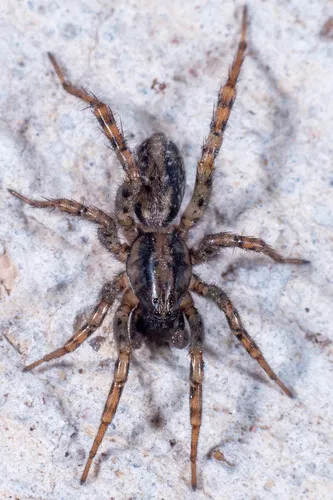
| Feature | Description |
|---|---|
| Carapace | Carapace dark red brown to black, usually mottled with dull yellow or orange yellow, sometimes with pale median band and submarginal rows of pale spots; pale median band sometimes enclosing paired, dark, longitudinal streaks anterior to dorsal groove; lateral margins dark; setae few. Sternum yellow orange. Chelicerae orange red. |
| Legs | Legs yellow orange, darkening to orange red distally; femora and tibiae each with 2 broad, dark rings. Abdominal dorsum dull yellow, with extensive black spotting, occasionally yellow mesally and dark laterally; venter dull yellow, with several scattered black spots....Specimens of A. absoluta are variable in carapace colour, though most have at least some yellow or orange-yellow mottling, and the leg femora and tibiae have dark rings. |
Classification
Habitat and Range
Habitat
"... collections of absoluta were made from grass and litter in swamps or at the edge of lakes, from pine forests, and from beaches and dunes."
Geographic Range
USA, Mexico ; Texas to Florida, north to North Carolina.; GA, FL, LA, MS, NC, SC, TX
Seasonal Activity
"Males were collected from March to September (one in December), and females from January to October."
Additional species information
Species notes from the sources
Etymology: (Gertsch, 1934)
About Spiders: the wider group
Order-level background for Araneae, the group containing Allocosa absoluta. Species-specific details appear above.
Group overview
As of 2023, 51,673 spider species in 136 families have been recorded, though an estimated 150,000 species exist. Spiders rank 7th in total species diversity among all organism orders. Only 0.5% of spider species pose any risk to human health.
Ecological role of the group
Spider venom contains complex peptides with diverse pharmacological activities, making them valuable for drug development research. Spiders produce up to 7 types of silk from specialized glands. Spider silk genes have been inserted into mammals and plants for biotech applications.
Economic and practical significance of the group
The global spider community kills an estimated 400-800 million tons of prey annually (2017 study). Spiders provide billions of dollars in natural pest control for agriculture. Spider silk is 5× stronger than steel of the same diameter, driving a biomaterials research industry.
Recorded sources for this group: World Spider Catalog, PNAS, Nature, ScienceDirect. Imported estimates may describe particular regions or reporting periods.
Photos of Allocosa absoluta (4)
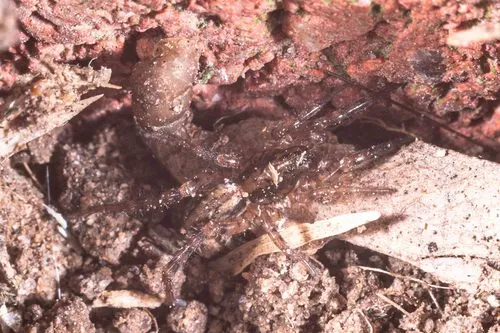
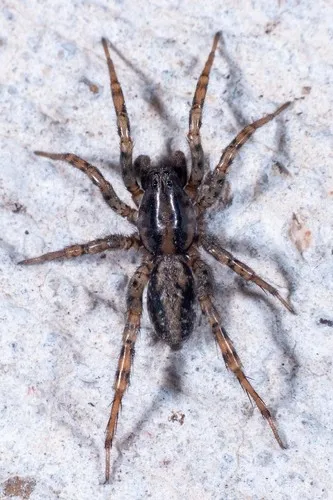
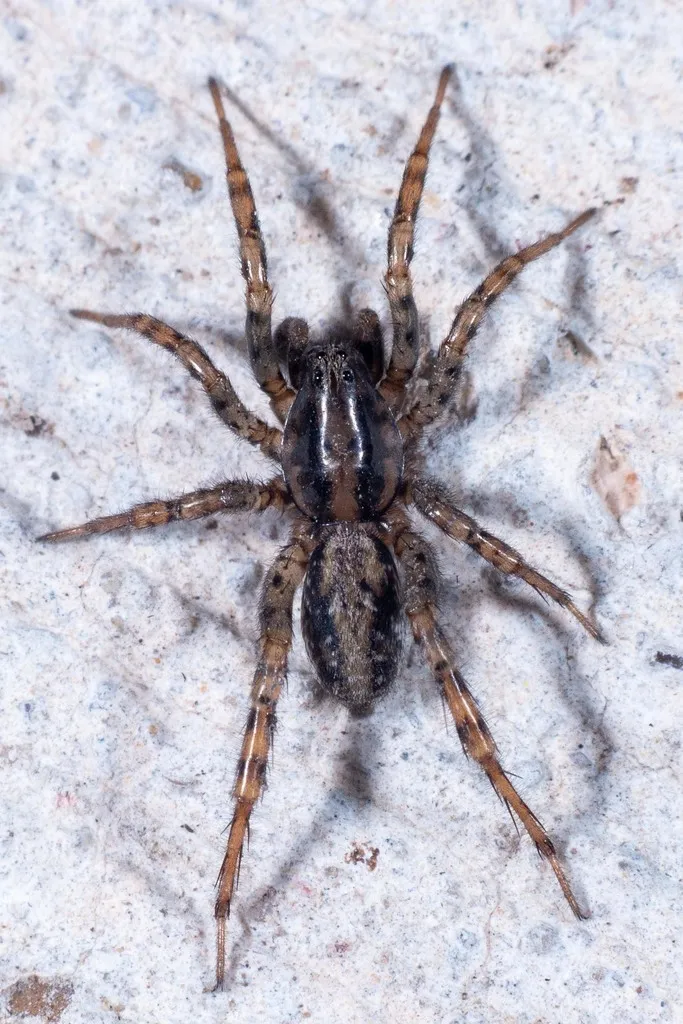
Photo credits: (c) DinGo OcTavious, all rights reserved, uploaded by DinGo OcTavious | Contributed by Laura P.; Additional contributions by cheins
Frequently Asked Questions About Allocosa absoluta
What is Allocosa absoluta?
Allocosa absoluta is a species in the family Lycosidae, within the order Araneae.
How big is Allocosa absoluta?
| Feature | Details |
|---|---|
| Male | 2.8-4.6mm |
| Female | 3.4-6.8mm |
How do you identify Allocosa absoluta?
| Feature | Description |
|---|---|
| Carapace | Carapace dark red brown to black, usually mottled with dull yellow or orange yellow, sometimes with pale median band and submarginal rows of pale spots; pale median band sometimes enclosing paired, dark, longitudinal streaks anterior to dorsal groove; lateral margins dark; setae few. Sternum yellow orange. Chelicerae orange red. |
| Legs | Legs yellow orange, darkening to orange red distally; femora and tibiae each with 2 broad, dark rings. Abdominal dorsum dull yellow, with extensive black spotting, occasionally yellow mesally and dark laterally; venter dull yellow, with several scattered black spots....Specimens of A. absoluta are variable in carapace colour, though most have at least some yellow or orange-yellow mottling, and the leg femora and tibiae have dark rings. |
Where is Allocosa absoluta found?
| Feature | Details |
|---|---|
| Habitat | ... collections of absoluta were made from grass and litter in swamps or at the edge of lakes, from pine forests, and from beaches and dunes. |
| Range | USA, Mexico ; Texas to Florida, north to North Carolina.; GA, FL, LA, MS, NC, SC, TX |
When is Allocosa absoluta active?
Allocosa absoluta: seasonal activity - Males were collected from March to September (one in December), and females from January to October..