
Coniatus splendidulus
This record describes Coniatus splendidulus (species). Recorded family: Curculionidae. Recorded order: Coleoptera.
Identification and Appearance
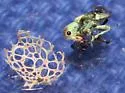
A hyperine weevil which was under consideration for release as a biocontrol agent against tamarisk. However the release was not authorized due to conflict of interest between ranchers who want the tree controlled and the conservationists (in this case birders) who want to protect the preferred nesting site of the yellow-bellied flycatcher. The USDA claims not to have released it from strict quarantine so it must have come in some other way. The tamarisk suck up the water to a great depth and kill off the other riparian trees, willow and cottonwoods for example, which are essential to the birds as they seek food among the latter. The problem is that the bird is endangered and prefers to nest in tamarisk which is not a natural community and which provides little food for the birds. It is a Catch 22", but chance may have solved the dilemma. –C.W. O'Brien, pers. comm. to =v=
Classification
- Kingdom
- Animalia
- Phylum
- Arthropoda
- Class
- Insecta
- Order
- Coleoptera (Beetles)
- Suborder
- Polyphaga
- Superfamily
- Curculionoidea
- Family
- Curculionidae (Snout and Bark Beetles)
- Subfamily
- Hyperinae
- Genus
- Coniatus
Imported taxonomy record. Source availability varies; see the source references and editorial policy below.
Habitat and Range
Habitat
Riparian Saltcedar groves
Geographic Range
native to the Mediterranean (east to Kazakhstan), accidentally introduced in AZ (ca. 2006) and has spread across sw.US (CA to OK–TX) and to Baja
Diet and Behavior
Diet: host: Tamarix (Tamaricaceae)
Life History
pupates in an open silk cage on a leaf/stem of the host
Additional species information
Species notes from the sources
Etymology: Coniatus (Bagoides) splendidulus (Fabricius 1781)
About Primitive Winged Insects: the wider group
Order-level background for Coleoptera, the group containing Coniatus splendidulus. Species-specific details appear above.
Group overview
Coleoptera is the largest order of insects with over 400,000 described species, representing ~25% of all known animal species and ~40% of all insects. In the U.S. alone, nearly 30,000 beetle species have been identified.
Ecological role of the group
Beetles are prominent decomposers, especially in forests, breaking down dead wood and recycling nutrients. As predators, they reduce populations of pest insects. Many species are also important pollinators of flowering plants.
Economic and practical significance of the group
Beetles have major economic significance: leaf beetles (Chrysomelidae) and weevils (Curculionoidea) are among the most destructive agricultural pests globally, costing billions annually, while predatory species like ladybugs provide natural pest control.
Recorded sources for this group: Britannica, Smithsonian, NCSU Entomology. Imported estimates may describe particular regions or reporting periods.
Photos of Coniatus splendidulus (5)
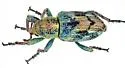
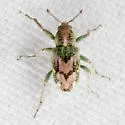
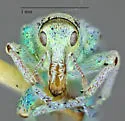
Photo credits: Contributed by margarethe brummermann; Additional contributions by Beatriz Moisset , Mike Quinn , John Schneider , v belov
Frequently Asked Questions About Coniatus splendidulus
What is Coniatus splendidulus?
Coniatus splendidulus is a species in the family Curculionidae, within the order Coleoptera.
How big is Coniatus splendidulus?
2.5–3.5 mm
Where is Coniatus splendidulus found?
| Feature | Details |
|---|---|
| Habitat | Riparian Saltcedar groves |
| Range | native to the Mediterranean (east to Kazakhstan), accidentally introduced in AZ (ca. 2006) and has spread across sw.US (CA to OK–TX) and to Baja |
What does Coniatus splendidulus eat?
The diet of the Coniatus splendidulus includes host: Tamarix (Tamaricaceae).
What is the life cycle of a Coniatus splendidulus?
pupates in an open silk cage on a leaf/stem of the host