
Stamnodes fergusoni - Hodges#7355.1
Stamnodes fergusoni
This record describes Stamnodes fergusoni (species). Recorded family: Geometridae. Recorded order: Lepidoptera.
Identification and Appearance
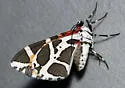
Adults can be immediately separated from most Stamnodes by its orange ground color and pattern of lead-gray patches across the forewing and hindwing. North of Mexico, Stamnodes fergusoni may only be confused with Stamnodes deceptiva or Stamnodes fervefactaria, neither of these species occur in southwest Texas. Although superficially close (and sometimes confused in collections), S. fergusoni can be quickly distinguished from the other two species. Stamnodes fergusoni can be reliably determined by the bright, white reticulate pattern of the underside of the hindwing and costal area of the forewing. In the other two species, the reticulate pattern of fore- and hindwing is cream to dull orange in color. The frons of S. fergusoni is immediately diagnostic: the dorsal scarlet scales and ventral white scales are separated by a band of black scales. Stamnodes fergusoni also differs from S. deceptiva and S. fervefactaria by its slightly larger size, lighter orange ground color, brighter scarlet scales at forewing base, and mostly scarlet tegula.
Classification
- Kingdom
- Animalia
- Phylum
- Arthropoda
- Class
- Insecta
- Order
- Lepidoptera (Butterflies and Moths)
- Superfamily
- Geometroidea
- Family
- Geometridae (Geometrid Moths)
- Subfamily
- Larentiinae
- Tribe
- Stamnodini
- Genus
- Stamnodes
Imported taxonomy record. Source availability varies; see the source references and editorial policy below.
Habitat and Range
Geographic Range
Southwest Hill Country (Uvalde, Kinney, Edwards, and Val Verde counties); Franklin Mountains (Franklin County); and Guadalupe Mountains (Culberson County) of Texas (Knudson and Bordelon 2002, and this paper). Carrizozo Malpais lava flow (Lincoln County), New Mexico (where it is abdundant); also Gila National Forest (Catron County), New Mexico (https://southwesternmoths.com). Mule Mountains (Cochise County) of extreme southeastern Arizona. Range into Mexico remains unclarified; we have examined several collections from the north Coahuilan hill country near Ciudad Acuña.
Seasonal Activity
Adults have a single late-summer generation that appears to be tied to the flowering time of its preferred host. The moth is locally common in New Mexico and southwestern Hill Country of Texas with peak adult activity in September and October. Adults fly earlier (first weeks of September) in New Mexico. Several worn individuals were taken in March (2002) from the Guadalupe Mountains, by Roy Kendall. Knudson and Bordelon (2002) believed this collection represented overwintering adults. Mature larvae pupate in leaf litter or over soil. Over most of the species’ range, the pupa is believed to overwinter and remain in diapause until the following fall.
Diet and Behavior
Diet: The larvae are believed to be specialists on woody Salvia (Lamiaceae)
About Butterflies and Moths: the wider group
Order-level background for Lepidoptera, the group containing Stamnodes fergusoni. Species-specific details appear above.
Group overview
Lepidoptera includes approximately 180,000 described species of butterflies and moths. Moths outnumber butterflies roughly 10:1. The monarch butterfly's eastern population has declined by more than 80% since the mid-1990s, and the western population by over 95% since the 1980s. The IUCN lists the migratory monarch as Vulnerable.
Ecological role of the group
Butterflies and moths are essential indicators of ecosystem health. As caterpillars, they are a primary food source for birds - a single nest of blue tit chicks requires ~10,000 caterpillars. Adult moths pollinate many night-blooming plants.
Economic and practical significance of the group
Lepidoptera are critical pollinators. In Europe, grassland butterfly species have declined by almost 50% since the early 1990s. In the UK, three-quarters of butterflies are in decline. In the U.S., five butterfly species have gone extinct since 1950, with 29 listed as endangered.
Recorded sources for this group: IUCN Red List, Xerces Society, USFWS, PNAS, WWF. Imported estimates may describe particular regions or reporting periods.
Photos of Stamnodes fergusoni - Hodges#7355.1 (5)
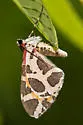
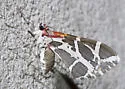
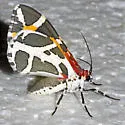
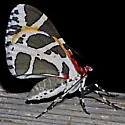
Photo credits: Contributed by JoAnneRusso; Additional contributions by Steve Nanz
Frequently Asked Questions About Stamnodes fergusoni - Hodges#7355.1
What is Stamnodes fergusoni - Hodges#7355.1?
Stamnodes fergusoni - Hodges#7355.1 (Stamnodes fergusoni) is a species in the family Geometridae, within the order Lepidoptera.
How do you identify Stamnodes fergusoni - Hodges#7355.1?
Adults can be immediately separated from most Stamnodes by its orange ground color and pattern of lead-gray patches across the forewing and hindwing. North of Mexico, Stamnodes fergusoni may only be confused with Stamnodes deceptiva or Stamnodes fervefactaria, neither of these species occur in southwest Texas. Although superficially close (and sometimes confused in collections), S. fergusoni can be quickly distinguished from the other two species. Stamnodes fergusoni can be reliably determined by the bright, white reticulate pattern of the underside of the hindwing and costal area of the forewing. In the other two species, the reticulate pattern of fore- and hindwing is cream to dull orange in color. The frons of S. fergusoni is immediately diagnostic: the dorsal scarlet scales and ventral white scales are separated by a band of black scales. Stamnodes fergusoni also differs from S. deceptiva and S. fervefactaria by its slightly larger size, lighter orange ground color, brighter scarlet scales at forewing base, and mostly scarlet tegula.
Where is Stamnodes fergusoni - Hodges#7355.1 found?
Range: Southwest Hill Country (Uvalde, Kinney, Edwards, and Val Verde counties); Franklin Mountains (Franklin County); and Guadalupe Mountains (Culberson County) of Texas (Knudson and Bordelon 2002, and this paper). Carrizozo Malpais lava flow (Lincoln County), New Mexico (where it is abdundant); also Gila National Forest (Catron County), New Mexico (https://southwesternmoths.com). Mule Mountains (Cochise County) of extreme southeastern Arizona. Range into Mexico remains unclarified; we have examined several collections from the north Coahuilan hill country near Ciudad Acuña.
What does Stamnodes fergusoni - Hodges#7355.1 eat?
The diet of the Stamnodes fergusoni - Hodges#7355.1 includes The larvae are believed to be specialists on woody Salvia (Lamiaceae).
When is Stamnodes fergusoni - Hodges#7355.1 active?
Stamnodes fergusoni - Hodges#7355.1: seasonal activity - Adults have a single late-summer generation that appears to be tied to the flowering time of its preferred host. The moth is locally common in New Mexico and southwestern Hill Country of Texas with peak adult activity in September and October. Adults fly earlier (first weeks of September) in New Mexico. Several worn individuals were taken in March (2002) from the Guadalupe Mountains, by Roy Kendall. Knudson and Bordelon (2002) believed this collection represented overwintering adults. Mature larvae pupate in leaf litter or over soil. Over most of the species’ range, the pupa is believed to overwinter and remain in diapause until the following fall..