
Confusing Petrophila - Hodges#4780
Petrophila confusalis
This record describes Petrophila confusalis (species). Recorded family: Crambidae. Recorded order: Lepidoptera.
Identification and Appearance
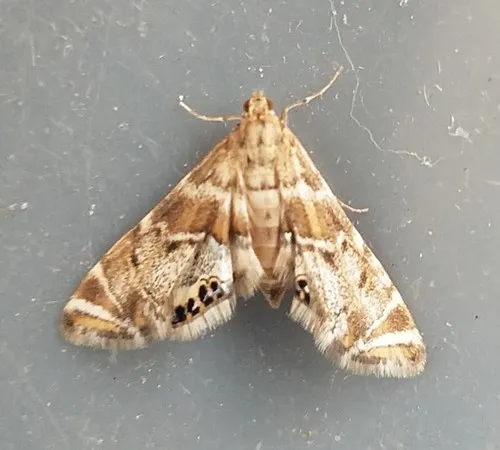
Very similar and closely related to Feather-edged Petrophila, but their ranges are widely disjunct. ( 3 ) Confusing Petrophila differs in the following subtle ways ( 3 ) : -- Center of the discal bar on the forewing (two short dark lines in the postmedian area) is white or pale buff instead of orange. -- Thin black and white lines just in front of the orange tornal wedge are more prominent than on fulicalis . -- More often than not, the thin dark capline of the hindwing marginal spots arches over the second spot high enough to touch or blend into the PM speckled area. ( 3 )
Classification
- Kingdom
- Animalia
- Phylum
- Arthropoda
- Class
- Insecta
- Order
- Lepidoptera (Butterflies and Moths)
- Superfamily
- Pyraloidea
- Family
- Crambidae (Crambid Snout Moths)
- Subfamily
- Acentropinae
- Tribe
- Argyractini
- Genus
- Petrophila
Imported taxonomy record. Source availability varies; see the source references and editorial policy below.
Habitat and Range
Geographic Range
California to southern British Columbia and east to Nevada, Idaho, and Montana. Previous descriptions of the range which included eastern North America are in error and are based on the name confusalis being "applied vaguely to one or another of the eastern species". Powell and Opler's statement that the species was described from "eastern" North America seems to be in error. The type locality in Walker's description is just "North America".
Diet and Behavior
Diet: Larvae feed on algae on rocks in fast moving streams. See "An introduction to the aquatic insects of North America" in internet references below)
Life History
Adult females enter the water, up to 4 meters deep, to oviposit (200 - 300 eggs), carrying a plastronlike layer of air as a source of oxygen that sustains them from 4 to 12 hours. After ovipositing they die in the water. Some females only submerge partially, without fully breaking the water tension, and deposit eggs shallowly over several days.
About Butterflies and Moths: the wider group
Order-level background for Lepidoptera, the group containing Petrophila confusalis. Species-specific details appear above.
Group overview
Lepidoptera includes approximately 180,000 described species of butterflies and moths. Moths outnumber butterflies roughly 10:1. The monarch butterfly's eastern population has declined by more than 80% since the mid-1990s, and the western population by over 95% since the 1980s. The IUCN lists the migratory monarch as Vulnerable.
Ecological role of the group
Butterflies and moths are essential indicators of ecosystem health. As caterpillars, they are a primary food source for birds - a single nest of blue tit chicks requires ~10,000 caterpillars. Adult moths pollinate many night-blooming plants.
Economic and practical significance of the group
Lepidoptera are critical pollinators. In Europe, grassland butterfly species have declined by almost 50% since the early 1990s. In the UK, three-quarters of butterflies are in decline. In the U.S., five butterfly species have gone extinct since 1950, with 29 listed as endangered.
Recorded sources for this group: IUCN Red List, Xerces Society, USFWS, PNAS, WWF. Imported estimates may describe particular regions or reporting periods.
Photos of Confusing Petrophila - Hodges#4780 (2)
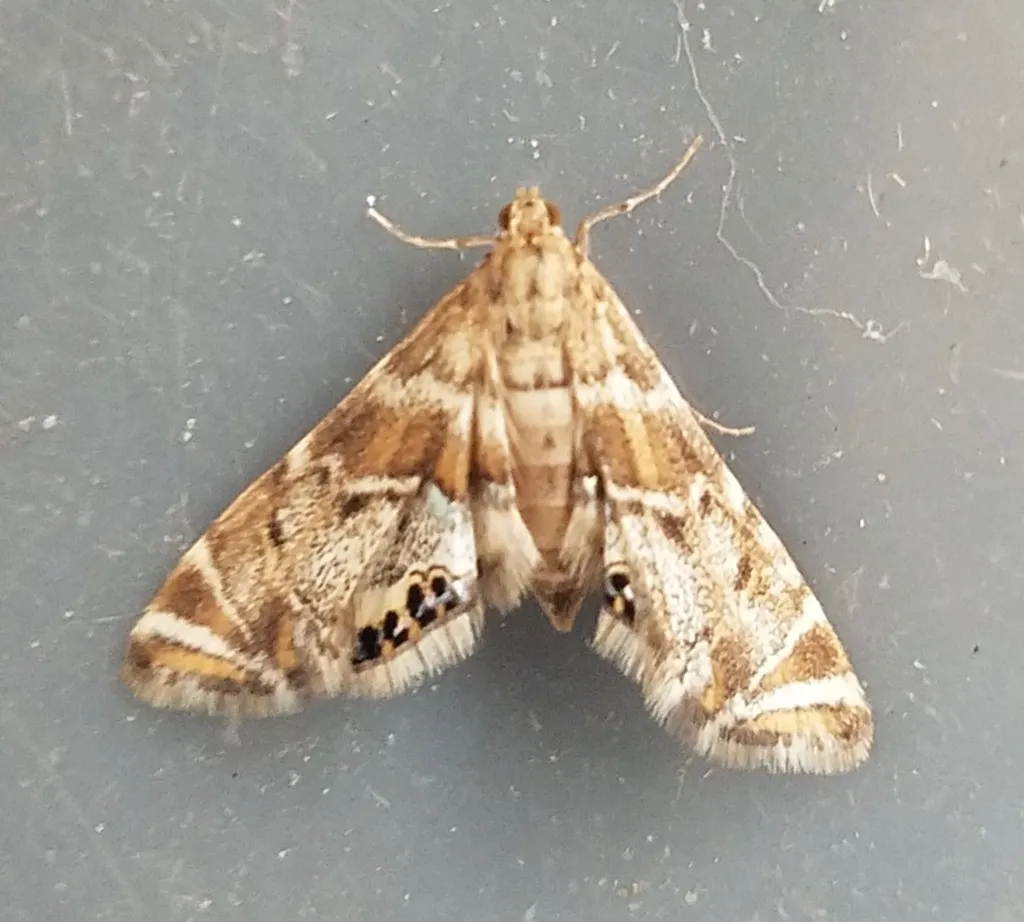
Photo credits: Contributed by Lynette Elliott; Additional contributions by Steve Nanz , Jason D. Roberts , Maury Heiman , Chuck Sexton , Randy Hardy
Frequently Asked Questions About Confusing Petrophila - Hodges#4780
What is Confusing Petrophila - Hodges#4780?
Confusing Petrophila - Hodges#4780 (Petrophila confusalis) is a species in the family Crambidae, within the order Lepidoptera.
How big is Confusing Petrophila - Hodges#4780?
forewing length 5-11 mm. Adults have considerable size variation.
How do you identify Confusing Petrophila - Hodges#4780?
Very similar and closely related to Feather-edged Petrophila, but their ranges are widely disjunct. ( 3 ) Confusing Petrophila differs in the following subtle ways ( 3 ) : -- Center of the discal bar on the forewing (two short dark lines in the postmedian area) is white or pale buff instead of orange. -- Thin black and white lines just in front of the orange tornal wedge are more prominent than on fulicalis . -- More often than not, the thin dark capline of the hindwing marginal spots arches over the second spot high enough to touch or blend into the PM speckled area. ( 3 )
Where is Confusing Petrophila - Hodges#4780 found?
Range: California to southern British Columbia and east to Nevada, Idaho, and Montana. Previous descriptions of the range which included eastern North America are in error and are based on the name confusalis being applied vaguely to one or another of the eastern species. Powell and Opler's statement that the species was described from eastern North America seems to be in error. The type locality in Walker's description is just North America.
What does Confusing Petrophila - Hodges#4780 eat?
The diet of the Confusing Petrophila - Hodges#4780 includes Larvae feed on algae on rocks in fast moving streams. See An introduction to the aquatic insects of North America in internet references below).
What is the life cycle of a Confusing Petrophila - Hodges#4780?
Adult females enter the water, up to 4 meters deep, to oviposit (200 - 300 eggs), carrying a plastronlike layer of air as a source of oxygen that sustains them from 4 to 12 hours. After ovipositing they die in the water. Some females only submerge partially, without fully breaking the water tension, and deposit eggs shallowly over several days.