
Heppner's Petrophila - Hodges#4784.1
Petrophila heppneri
This record describes Petrophila heppneri (species). Recorded family: Crambidae. Recorded order: Lepidoptera.
Identification and Appearance
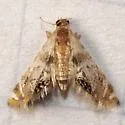
Distinguished from other species of Petrophila in Texas and Oklahoma by the thin dark line over the submarginal eyespots on the HW. The postmedian area of the HW is speckled with black. The white medial line on the FW is notably zigzag as it approaches the costal margin. There is also a discal bar in the postmedian area of the FW consisting of two thin dark lines sandwiched around a thin orange line. The color patches on the FWs are yellow-orange, in contrast to those of Jalisco Petrophila which are various reddish hues. Very similar in pattern to Feather-edged Petrophila which also occurs in Texas but the ranges barely overlap if at all. Not easily separated from Hodges', Confusing, or Santa Fe Petrophila, but the ranges of these species don't overlap (see below). Heppner's Petrophila is the Texas/Oklahoma regional representative of the fulicalis -species group in the genus Petrophila . This species group includes: Separating any of the species *within* this group is a major challenge, thus range should be a primary consideration.
Classification
- Kingdom
- Animalia
- Phylum
- Arthropoda
- Class
- Insecta
- Order
- Lepidoptera (Butterflies and Moths)
- Superfamily
- Pyraloidea
- Family
- Crambidae (Crambid Snout Moths)
- Subfamily
- Acentropinae
- Tribe
- Argyractini
- Genus
- Petrophila
Imported taxonomy record. Source availability varies; see the source references and editorial policy below.
Habitat and Range
Habitat
Typically found only a short distance from perennial Hill Country waterways; adults nectar on streamside flowers and are attracted to lights.
Geographic Range
Texas Hill Country endemic, documented in the following counties: Bandera, Blanco, Colorado, Edwards, Kendall, Kerr, Kimble, Real, Uvalde, and Val Verde (BugGuide, iNaturalist). The Colorado County record (from Blanchard & Knudson 1983 ) is well to the east of the Hill Country and may be in error.
About Butterflies and Moths: the wider group
Order-level background for Lepidoptera, the group containing Petrophila heppneri. Species-specific details appear above.
Group overview
Lepidoptera includes approximately 180,000 described species of butterflies and moths. Moths outnumber butterflies roughly 10:1. The monarch butterfly's eastern population has declined by more than 80% since the mid-1990s, and the western population by over 95% since the 1980s. The IUCN lists the migratory monarch as Vulnerable.
Ecological role of the group
Butterflies and moths are essential indicators of ecosystem health. As caterpillars, they are a primary food source for birds - a single nest of blue tit chicks requires ~10,000 caterpillars. Adult moths pollinate many night-blooming plants.
Economic and practical significance of the group
Lepidoptera are critical pollinators. In Europe, grassland butterfly species have declined by almost 50% since the early 1990s. In the UK, three-quarters of butterflies are in decline. In the U.S., five butterfly species have gone extinct since 1950, with 29 listed as endangered.
Recorded sources for this group: IUCN Red List, Xerces Society, USFWS, PNAS, WWF. Imported estimates may describe particular regions or reporting periods.
Photos of Heppner's Petrophila - Hodges#4784.1 (5)
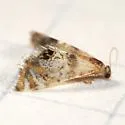
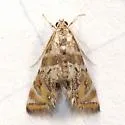
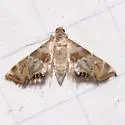
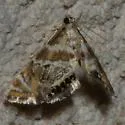
Photo credits: Contributed by Kyhl Austin; Additional contributions by Steve Nanz , Chuck Sexton , A. Hendrickson
Frequently Asked Questions About Heppner's Petrophila - Hodges#4784.1
What is Heppner's Petrophila - Hodges#4784.1?
Heppner's Petrophila - Hodges#4784.1 (Petrophila heppneri) is a species in the family Crambidae, within the order Lepidoptera.
How do you identify Heppner's Petrophila - Hodges#4784.1?
Distinguished from other species of Petrophila in Texas and Oklahoma by the thin dark line over the submarginal eyespots on the HW. The postmedian area of the HW is speckled with black. The white medial line on the FW is notably zigzag as it approaches the costal margin. There is also a discal bar in the postmedian area of the FW consisting of two thin dark lines sandwiched around a thin orange line. The color patches on the FWs are yellow-orange, in contrast to those of Jalisco Petrophila which are various reddish hues. Very similar in pattern to Feather-edged Petrophila which also occurs in Texas but the ranges barely overlap if at all. Not easily separated from Hodges', Confusing, or Santa Fe Petrophila, but the ranges of these species don't overlap (see below).
Where is Heppner's Petrophila - Hodges#4784.1 found?
| Feature | Details |
|---|---|
| Habitat | Typically found only a short distance from perennial Hill Country waterways; adults nectar on streamside flowers and are attracted to lights. |
| Range | Texas Hill Country endemic, documented in the following counties: Bandera, Blanco, Colorado, Edwards, Kendall, Kerr, Kimble, Real, Uvalde, and Val Verde (BugGuide, iNaturalist). The Colorado County record (from Blanchard & Knudson 1983 ) is well to the east of the Hill Country and may be in error. |