
Long-jawed Shore-crawler
Pachymerium ferrugineum
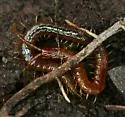
This record describes Pachymerium ferrugineum (species). Recorded family: Geophilidae. Recorded order: Geophilomorpha.
Identification and Appearance
Classification
- Kingdom
- Animalia
- Phylum
- Arthropoda
- Class
- Chilopoda
- Order
- Geophilomorpha (Soil Centipedes)
- Family
- Geophilidae
- Genus
- Pachymerium
Imported taxonomy record. Source availability varies; see the source references and editorial policy below.
Habitat and Range
Habitat
In soil, beneath rocks and debris, often in moist areas. This species is well-known for often inhabiting the intertidal zone where it can tolerate long periods of immersion in salt water.
Geographic Range
widespread in w. Palaearctic ; also Japan, Alaska, Mexico [info from Wikipedia, not checked. =v=]
Diet and Behavior
Diet: Small invertebrates. In the intertidal zone they eat barnacles, amphipods, polychaete worms, etc.
Additional species information
Species notes from the sources
Etymology: Pachymerium ferrugineum (C.L. Koch 1835)
About Soil Centipedes: the wider group
Order-level background for Geophilomorpha, the group containing Pachymerium ferrugineum. Species-specific details appear above.
Group overview
Geophilomorpha (soil centipedes) includes ~1,300 described species. They have the most leg pairs of any centipede - up to 191 pairs, always an odd number. They are elongated, eyeless burrowers adapted to life in soil.
Ecological role of the group
Geophilomorphs are important predators in deeper soil layers where most other centipedes cannot reach. Their burrowing activity helps aerate soil and create channels for water infiltration.
Economic and practical significance of the group
Soil centipedes are beneficial soil organisms that prey on insect larvae, earthworms, and other invertebrates. Some species are bioluminescent, producing a greenish glow that may startle predators.
Recorded sources for this group: Myriapod research, soil biology. Imported estimates may describe particular regions or reporting periods.