
Boreal Yellow-headed Soil Centipede
Geophilus flavus
This record describes Geophilus flavus (species). Recorded family: Geophilidae. Recorded order: Geophilomorpha.
Identification and Appearance
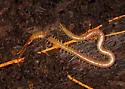
49-57 pairs of legs, tarsal claws present, and prosternal chitin lines that run parallel to the lateral margin of the prosternum (visible only under a microscope).
Classification
- Kingdom
- Animalia
- Phylum
- Arthropoda
- Class
- Chilopoda
- Order
- Geophilomorpha (Soil Centipedes)
- Family
- Geophilidae
- Genus
- Geophilus
Imported taxonomy record. Source availability varies; see the source references and editorial policy below.
Habitat and Range
Habitat
In soil and beneath rocks and logs. Occassionally seen in the intertidal zone.
Geographic Range
From Europe, only sparsely recorded in the US. It appears to be most common in the northeast, possible replacing G. vittatus in the garden.
Diet and Behavior
Diet: Small invertebrates. In the intertidal zone they probably prey on amphipods and other small crustaceans.
Additional species information
Species notes from the sources
Etymology: Geophilus flavus (De Geer 1778)
About Soil Centipedes: the wider group
Order-level background for Geophilomorpha, the group containing Geophilus flavus. Species-specific details appear above.
Group overview
Geophilomorpha (soil centipedes) includes ~1,300 described species. They have the most leg pairs of any centipede - up to 191 pairs, always an odd number. They are elongated, eyeless burrowers adapted to life in soil.
Ecological role of the group
Geophilomorphs are important predators in deeper soil layers where most other centipedes cannot reach. Their burrowing activity helps aerate soil and create channels for water infiltration.
Economic and practical significance of the group
Soil centipedes are beneficial soil organisms that prey on insect larvae, earthworms, and other invertebrates. Some species are bioluminescent, producing a greenish glow that may startle predators.
Recorded sources for this group: Myriapod research, soil biology. Imported estimates may describe particular regions or reporting periods.
Frequently Asked Questions About Boreal Yellow-headed Soil Centipede
What is Boreal Yellow-headed Soil Centipede?
Boreal Yellow-headed Soil Centipede (Geophilus flavus) is a species in the family Geophilidae, within the order Geophilomorpha.
How do you identify Boreal Yellow-headed Soil Centipede?
49-57 pairs of legs, tarsal claws present, and prosternal chitin lines that run parallel to the lateral margin of the prosternum (visible only under a microscope).
Where is Boreal Yellow-headed Soil Centipede found?
| Feature | Details |
|---|---|
| Habitat | In soil and beneath rocks and logs. Occassionally seen in the intertidal zone. |
| Range | From Europe, only sparsely recorded in the US. It appears to be most common in the northeast, possible replacing G. vittatus in the garden. |
What does Boreal Yellow-headed Soil Centipede eat?
The diet of the Boreal Yellow-headed Soil Centipede includes Small invertebrates. In the intertidal zone they probably prey on amphipods and other small crustaceans..