
Damp-loving Field Cricket
Gryllus alogus
This record describes Gryllus alogus (species). Recorded family: Gryllidae. Recorded order: Orthoptera.
Identification and Appearance
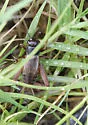
Somewhat more brownish than most Gryllus species (still overall blackish though); not strongly patterned. Short or long-winged, and often flying to lights. The most distinctive feature is the rapid short chirps of the male song , which is distinctly different from related species found in the same region. This particularl recording was made in my (David Ferguson's) yard. Gryllus vernalis has a similar songs, but is eastern in distribution. G. fultoni , also eastern, has a similar but usually much slower song. It is not unusual to hear this species above all others when travelling in the southwest. It seems to have a propensity for occuring near the edges of towns where motels are often situated! Commonly heard in desert cities such as Albuquerque, El Paso, Las Vegas, Phoenix, Tucson, Yuma, etc.
Classification
- Kingdom
- Animalia
- Phylum
- Arthropoda
- Class
- Insecta
- Order
- Orthoptera (Grasshoppers, Crickets, Katydids)
- Suborder
- Ensifera
- Family
- Gryllidae (True Crickets)
- Subfamily
- Gryllinae
- Genus
- Gryllus (Field Crickets)
Imported taxonomy record. Source availability varies; see the source references and editorial policy below.
Habitat and Range
Habitat
Often near irrigated areas in valleys, also along steam valleys, and other places a bit less deserty than the general surroundings. However they do not actually favor truly damp areas as implied by the name and habitat, but rather tend to be associated with these areas in rather dry situations under rocks, debris, in soil cracks, etc. Rarely enter houses.
Geographic Range
Desert regions in southern and western Arizona, southern Nevada, southern and central New Mexico, extreme west Texas, and almost certainly into adjacent states.
Seasonal Activity
Adults can be found year-round, depending upon the year and locality, but they are most common in spring.
About Grasshoppers, Crickets, Katydids: the wider group
Order-level background for Orthoptera, the group containing Gryllus alogus. Species-specific details appear above.
Group overview
Orthoptera includes ~28,000 described species of grasshoppers, crickets, and katydids. Desert locusts can form swarms covering 460 square miles containing up to 80 million individuals per square kilometer.
Ecological role of the group
Grasshoppers and crickets are a primary food source for birds, reptiles, and small mammals. Cricket farming is a growing industry - crickets require 12× less feed than cattle to produce the same amount of protein, using 2,000× less water.
Economic and practical significance of the group
A single large locust swarm can consume the same amount of food in one day as 35,000 people. The 2019-2021 East Africa locust crisis affected food security for 42 million people across multiple countries. Global crop losses from locusts can reach billions annually.
Recorded sources for this group: FAO, UN World Food Programme, research publications. Imported estimates may describe particular regions or reporting periods.
Photos of Damp-loving Field Cricket (2)
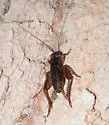
Photo credits: Contributed by David J. Ferguson; Additional contributions by metrioptera
Frequently Asked Questions About Damp-loving Field Cricket
What is Damp-loving Field Cricket?
Damp-loving Field Cricket (Gryllus alogus) is a species in the family Gryllidae, within the order Orthoptera.
How do you identify Damp-loving Field Cricket?
Somewhat more brownish than most Gryllus species (still overall blackish though); not strongly patterned. Short or long-winged, and often flying to lights. The most distinctive feature is the rapid short chirps of the male song , which is distinctly different from related species found in the same region. This particularl recording was made in my (David Ferguson's) yard. Gryllus vernalis has a similar songs, but is eastern in distribution. G. fultoni , also eastern, has a similar but usually much slower song.
Where is Damp-loving Field Cricket found?
| Feature | Details |
|---|---|
| Habitat | Often near irrigated areas in valleys, also along steam valleys, and other places a bit less deserty than the general surroundings. However they do not actually favor truly damp areas as implied by the name and habitat, but rather tend to be associated with these areas in rather dry situations under rocks, debris, in soil cracks, etc. Rarely enter houses. |
| Range | Desert regions in southern and western Arizona, southern Nevada, southern and central New Mexico, extreme west Texas, and almost certainly into adjacent states. |
When is Damp-loving Field Cricket active?
Damp-loving Field Cricket: seasonal activity - Adults can be found year-round, depending upon the year and locality, but they are most common in spring..