
Ellis Bog Crangonyctid
Crangonyx richmondensis
This record describes Crangonyx richmondensis (species). Recorded family: Crangonyctidae. Recorded order: Amphipoda.
Identification and Appearance
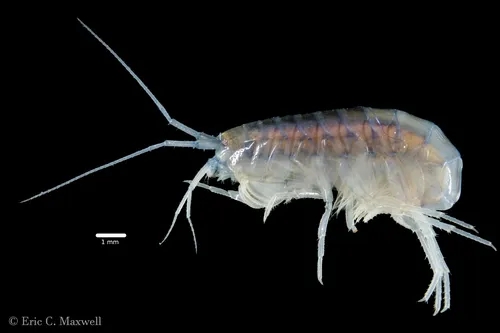
Crangonyx richmondensis is presumed native to three broad areas in North America, northern California to Alaska, the Great Lakes and eastern Canada, and the Atlantic Coastal Plain, from Maine to Florida (Holisinger 1972; Bousfield 1973; Graening et al. 2012).
Classification
- Kingdom
- Animalia
- Phylum
- Arthropoda
- Class
- Malacostraca
- Order
- Amphipoda (Amphipods)
- Suborder
- Senticaudata
- Family
- Crangonyctidae
- Genus
- Crangonyx
Imported taxonomy record. Source availability varies; see the source references and editorial policy below.
About Amphipods: the wider group
Order-level background for Amphipoda, the group containing Crangonyx richmondensis. Species-specific details appear above.
Group overview
Amphipoda includes ~10,000 described species of scuds, sand hoppers, and whale lice. While mostly aquatic, some species like sand hoppers (Talitrus saltator) are fully terrestrial, living on beaches above the tide line.
Ecological role of the group
Amphipods are critical detritivores in aquatic ecosystems, shredding leaf litter and recycling nutrients. Deep-sea amphipods have been found at the bottom of the Mariana Trench (10,994m), making them among the deepest-living animals on Earth.
Economic and practical significance of the group
Amphipods are standard test organisms in aquatic toxicology - Hyalella azteca is the EPA's primary freshwater sediment toxicity test species. They are also important food for fish in both freshwater and marine ecosystems.
Recorded sources for this group: EPA ecotoxicology, deep-sea biology, marine research. Imported estimates may describe particular regions or reporting periods.
Photos of Ellis Bog Crangonyctid (5)
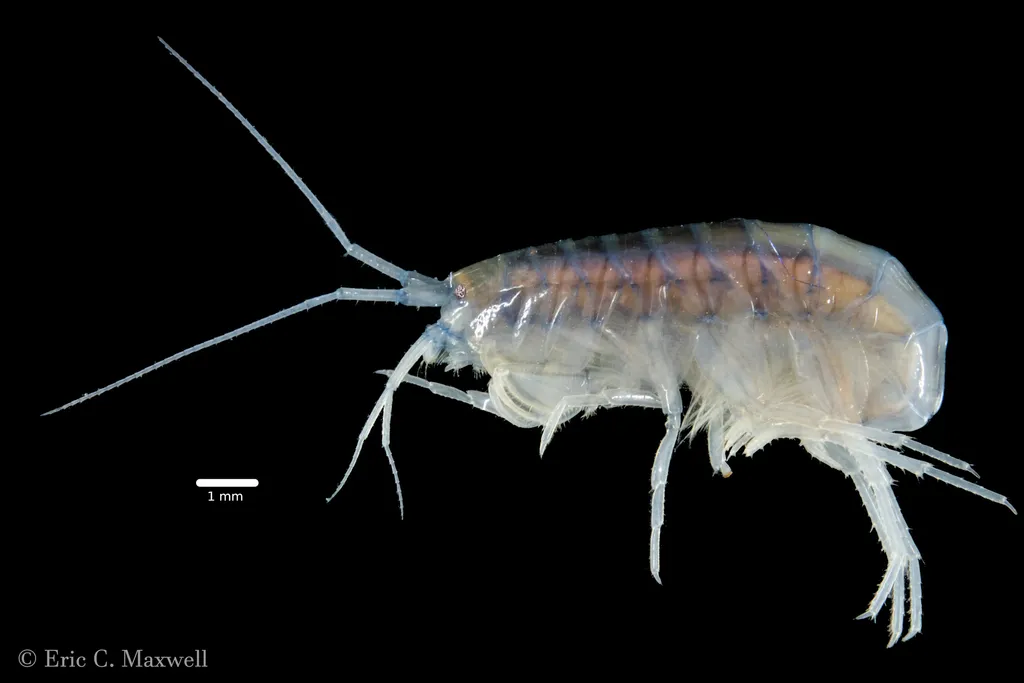
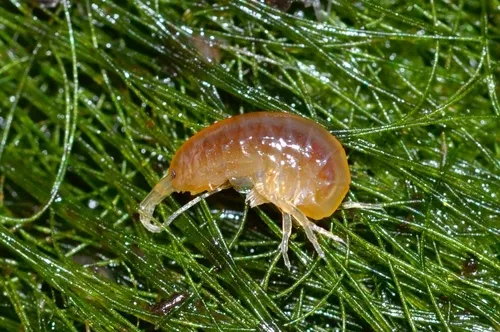
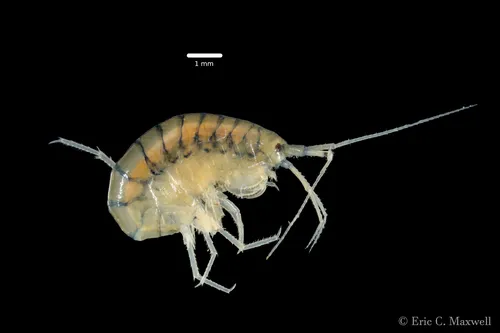
Photo credits: (c) Eric C. Maxwell, some rights reserved (CC BY-NC-ND), uploaded by Eric C. Maxwell | (c) Leah Ramsay, some rights reserved (CC BY-NC), uploaded by Leah Ramsay | Contributed by Maury J. Heiman