
Mexican Grass-carrying Wasp
Isodontia mexicana
This record describes Isodontia mexicana (species). Recorded family: Sphecidae. Recorded order: Hymenoptera.
Identification and Appearance
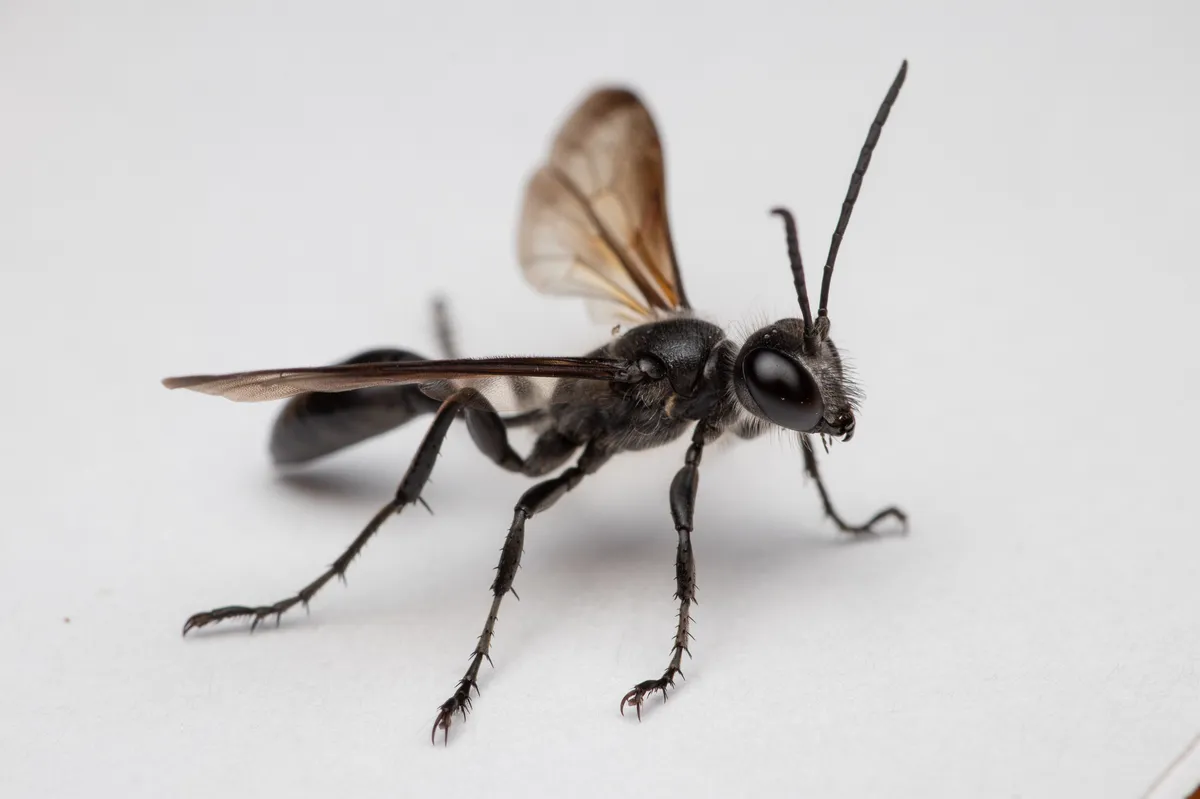
| Feature | Description |
|---|---|
| Body | Body with pale instead of black hair (unlike philadelphica). |
| Legs | Legs black (with reddish in auripes, exornata and elegans). Very similar to apicalis. The characters used in identification keys (3 vs. 2 mandibular teeth) are almost never visible on images. The two species can be differentiated by the following subtle characters (for experienced users - added by Matthias Buck): Males (7 visible abdominal segments, 11 flagellomeres): - Abdomen ventrally with pale hair brushes (sparse hairing in apicalis) - Posterior terga of abdomen with significant silvery reflections (under certain lighting) due to appressed pale hair (less so in apicalis) - Posterior terga of abdomen with scattered short erect pale hair (absent in apicalis) - First flagellomere long and slender (shorter in apicalis) Male, showing abdominal hairing Females (6 visible abdominal segments, 10 flagellomeres): - Head short behind eyes (long in apicalis, 'block head') - Ocellar triangle separated from hind margin of head by about 1-1.5x its width (2x in apicalis) - Females from southern and western locations (e.g., Texas) often have wings tinted yellowish (dark brown in apicalis throughout its range) Females, mexicana on left, apicalis is on right, difference in head shape Mexicana females with yellow-tinged wings Both sexes: - Base of tergum 1 next to petiole often with a small brown spot (uniformly black in apicalis) - this character requires further testing but seems very reliable Showing brown spot at base of tergum 1 |
Wikipedia reference for Isodontia mexicana: http://en.wikipedia.org/wiki/Isodontia_mexicana.
Classification
- Kingdom
- Animalia
- Phylum
- Arthropoda
- Class
- Insecta
- Order
- Hymenoptera (Ants, Bees, Wasps and Sawflies)
- Superfamily
- Trigonaloidea
- Family
- Sphecidae (Thread-waisted Wasps)
- Subfamily
- Sphecinae
- Tribe
- Sphecini
- Genus
- Isodontia (Grass-carrying Wasps)
Imported taxonomy record. Source availability varies; see the source references and editorial policy below.
Habitat and Range
Seasonal Activity
May-October (North Carolina)
About Flies: the wider group
Order-level background for Hymenoptera, the group containing Isodontia mexicana. Species-specific details appear above.
Group overview
Hymenoptera includes over 150,000 described species of ants, bees, wasps, and sawflies. Earth harbors approximately 20 quadrillion (20×10^15) ants, with a combined biomass of ~12 megatons of dry carbon - exceeding the combined biomass of all wild birds and mammals (PNAS, 2022).
Ecological role of the group
About 35% of the world's food crops depend on animal pollinators. The chocolate industry, valued at over $100 billion, depends on pollinating flies and midges. Ants are the dominant soil engineers in most terrestrial ecosystems, turning more soil than earthworms in many habitats.
Economic and practical significance of the group
Pollinators contribute $235-577 billion worth of annual global food production (FAO). In the U.S., bee pollination alone benefits crops valued at $18 billion annually, and honey bees are responsible for $5.4 billion in agricultural productivity. Between April 2023-2024, 55.1% of managed honey bee colonies were lost. The U.S. bee population dropped from 5 million to 2.5 million.
Recorded sources for this group: FAO, USDA, EPA, PNAS (2022), US Fish & Wildlife Service. Imported estimates may describe particular regions or reporting periods.
Photos of Mexican Grass-carrying Wasp (3)
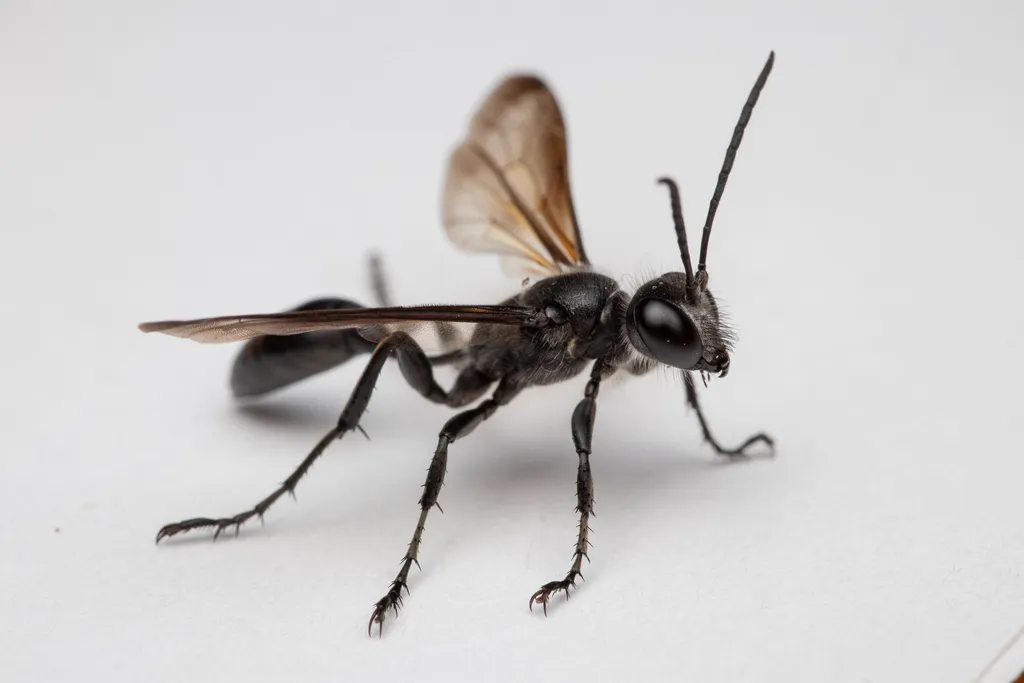
Photo credits: Contributed by Eric R. Eaton; Additional contributions by cotinis , Beatriz Moisset , Matthias Buck , PaleoJon
Frequently Asked Questions About Mexican Grass-carrying Wasp
What is Mexican Grass-carrying Wasp?
Mexican Grass-carrying Wasp (Isodontia mexicana) is a species in the family Sphecidae, within the order Hymenoptera.
How big is Mexican Grass-carrying Wasp?
| Feature | Details |
|---|---|
| Female | 17mm. |
| Male | 16 mm. |
How do you identify Mexican Grass-carrying Wasp?
| Feature | Description |
|---|---|
| Body | Body with pale instead of black hair (unlike philadelphica). |
| Legs | Legs black (with reddish in auripes, exornata and elegans). Very similar to apicalis. The characters used in identification keys (3 vs. 2 mandibular teeth) are almost never visible on images. The two species can be differentiated by the following subtle characters (for experienced users - added by Matthias Buck): Males (7 visible abdominal segments, 11 flagellomeres): - Abdomen ventrally with pale hair brushes (sparse hairing in apicalis) - Posterior terga of abdomen with significant silvery reflections (under certain lighting) due to appressed pale hair (less so in apicalis) - Posterior terga of abdomen with scattered short erect pale hair (absent in apicalis) - First flagellomere long and slender (shorter in apicalis) Male, showing abdominal hairing Females (6 visible abdominal segments, 10 flagellomeres): - Head short behind eyes (long in apicalis, 'block head') - Ocellar triangle separated from hind margin of head by about 1-1.5x its width (2x in apicalis) - Females from southern and western locations (e.g., Texas) often have wings tinted yellowish (dark brown in apicalis throughout its range) Females, mexicana on left, apicalis is on right, difference in head shape Mexicana females with yellow-tinged wings Both sexes: - Base of tergum 1 next to petiole often with a small brown spot (uniformly black in apicalis) - this character requires further testing but seems very reliable Showing brown spot at base of tergum 1 |
When is Mexican Grass-carrying Wasp active?
Mexican Grass-carrying Wasp: seasonal activity - May-October (North Carolina).