
Dytiscus circumflexus
This record describes Dytiscus circumflexus (species). Recorded family: Dytiscidae. Recorded order: Coleoptera.
Identification and Appearance
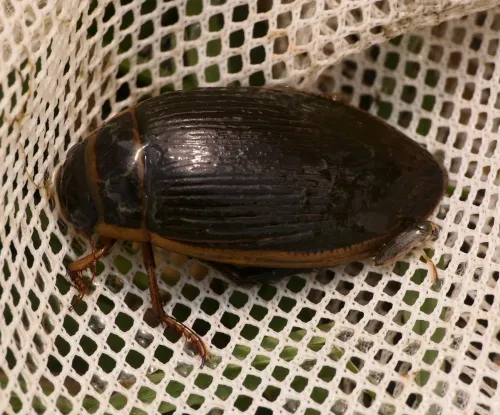
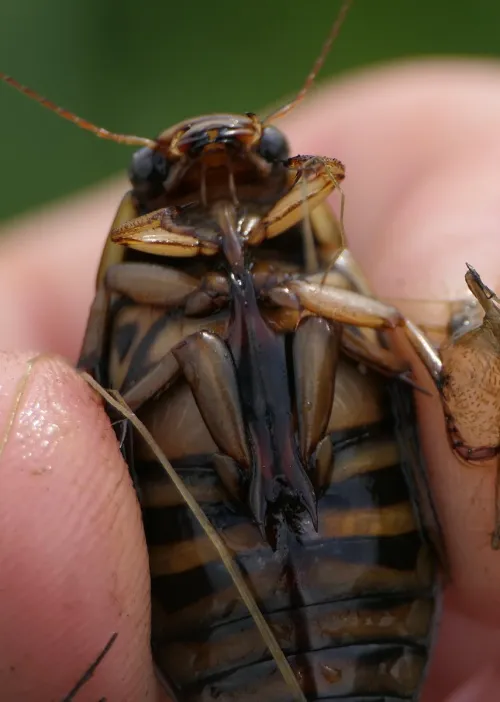
In this species the metacoxal plates are sharply pointed. It is 30 mm or more in length and the pronotum has narrow yellow borders front and back with the sides being only a little wider. Other distinguishing features are the underside of the beetle which is straw-yellowish with wide dark edges, the metacoxae & the last sternite are dark; the eyes have no pale rim and the scutellum has a yellow centre. The scutellum is usually dark in this species. Unless identified by a recognised expert, photos are required from above and below. If the photo doesn't show the key ID features then in the comments box describe the size and identifying characters you have observed. Freshwater ponds and lakes and canals. It flies well and may also be attracted to light. Widespread in England and Wales, but seems to be rather local. Larger water beetles - a Dutch key but with very useful photos No additional images available for this species.
Classification
- Kingdom
- Animalia
- Phylum
- Arthropoda
- Class
- Insecta
- Order
- Coleoptera
- Family
- Dytiscidae
- Genus
- Dytiscus
Imported taxonomy record. Source availability varies; see the source references and editorial policy below.
Habitat and Range
Habitat
Freshwater ponds and lakes and canals. It flies well and may also be attracted to light.
Seasonal Activity
All year round.
Additional species information
Recorded status
Widespread in England and Wales, but seems to be rather local.
About Primitive Winged Insects: the wider group
Order-level background for Coleoptera, the group containing Dytiscus circumflexus. Species-specific details appear above.
Group overview
Coleoptera is the largest order of insects with over 400,000 described species, representing ~25% of all known animal species and ~40% of all insects. In the U.S. alone, nearly 30,000 beetle species have been identified.
Ecological role of the group
Beetles are prominent decomposers, especially in forests, breaking down dead wood and recycling nutrients. As predators, they reduce populations of pest insects. Many species are also important pollinators of flowering plants.
Economic and practical significance of the group
Beetles have major economic significance: leaf beetles (Chrysomelidae) and weevils (Curculionoidea) are among the most destructive agricultural pests globally, costing billions annually, while predatory species like ladybugs provide natural pest control.
Recorded sources for this group: Britannica, Smithsonian, NCSU Entomology. Imported estimates may describe particular regions or reporting periods.
Photos of Dytiscus circumflexus (2)
Frequently Asked Questions About Dytiscus circumflexus
What is Dytiscus circumflexus?
Dytiscus circumflexus is a species in the family Dytiscidae, within the order Coleoptera.
Where is Dytiscus circumflexus found?
Habitat: Freshwater ponds and lakes and canals. It flies well and may also be attracted to light.
When is Dytiscus circumflexus active?
Dytiscus circumflexus: seasonal activity - All year round..