
Xestophanes potentillae
This record describes Xestophanes potentillae (species). Recorded family: Cynipidae. Recorded order: Hymenoptera.
Identification and Appearance
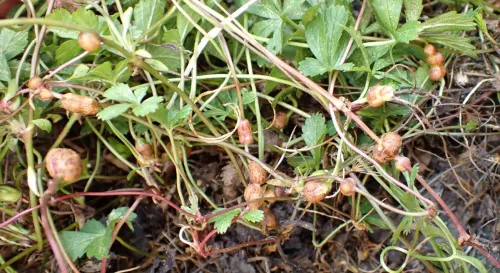
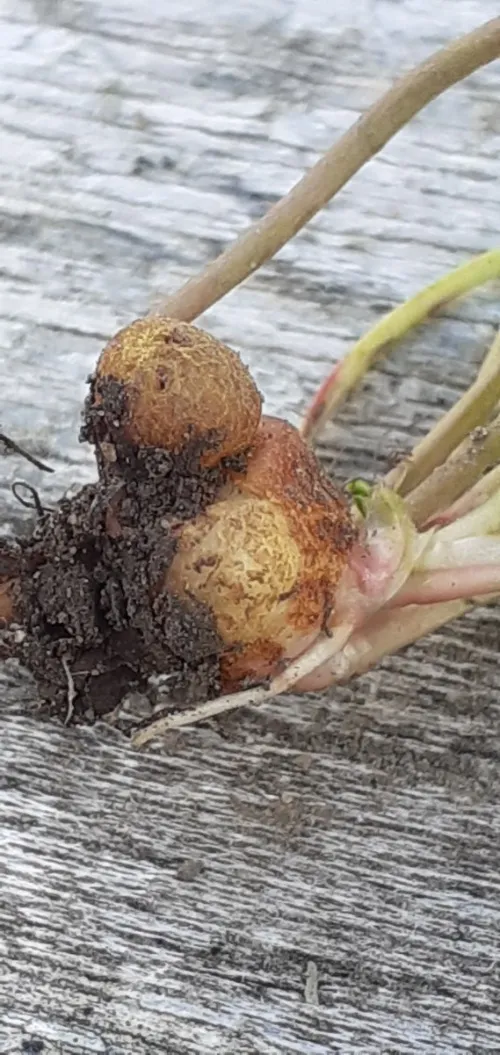
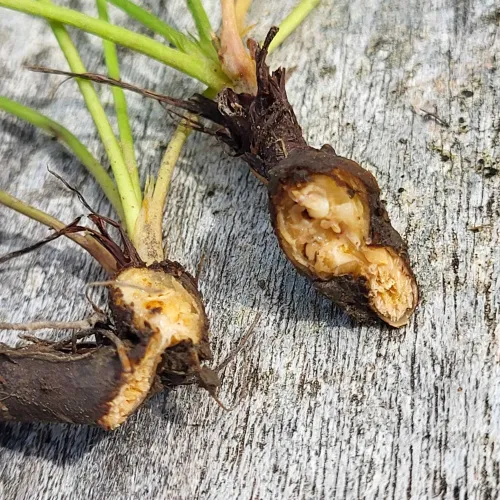
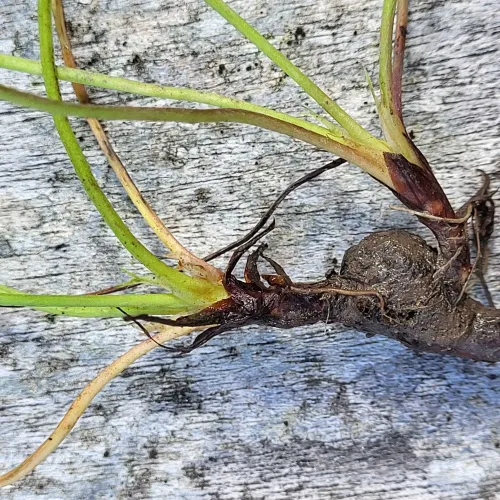
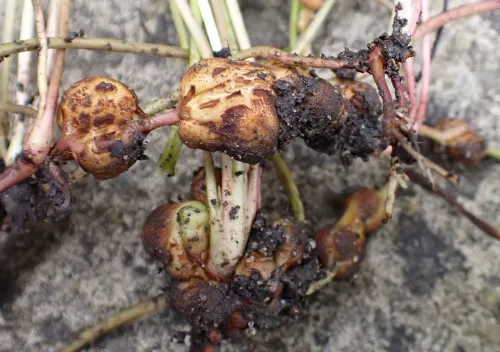
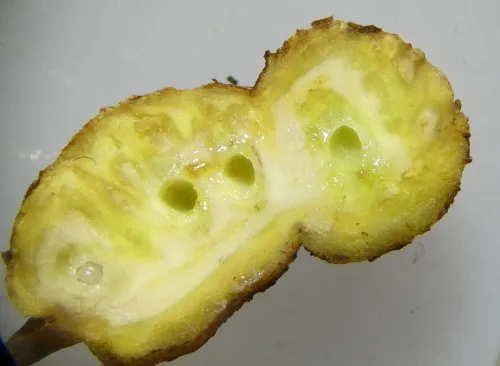
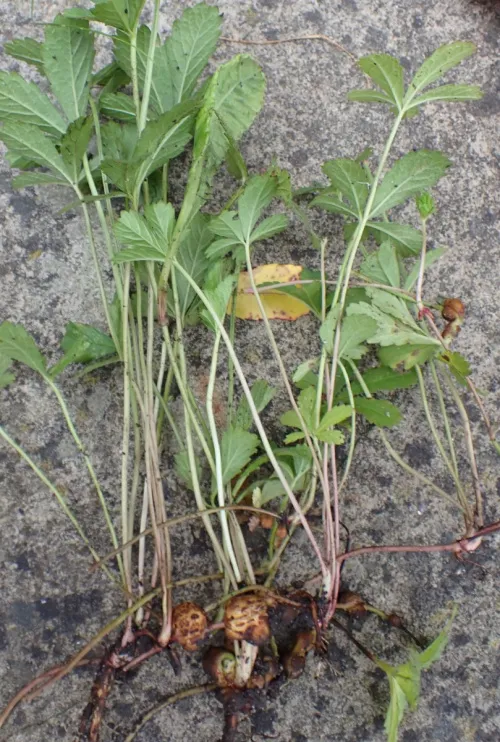
The larvae of the gall wasp Xestophanes potentillae causes galls on the stem or petioles of Creeping Cinquefoil (Potentillia reptans) . The galls can be found very low down close to, or below soil level. Several galls can often been seen on the same shoot, and sometimes fuse together. The galls are a reddish-brown colour when mature. Adult: Detailed examination of the specimen is needed to identify the species (a photograph alone is not normally sufficient because key features are too small or hidden) and/or there are one or more similar species and confusion is common. Gall: Please provide photographs of the gall to support your record, and state the host plant (different Xestophanes species gall other Potentilla species ). A photograph of the host plant would also be useful. Rather than grubbing up plants from established grassland, look where the plant grows against walls, kerbs, paths etc. where there is often a mat of trailing stems. Particularly associated with Creeping Cinquefoil (Potentillia reptans) and found in gardens, churchyards, on roadsides and waste places There are one or two generations of larval galls, the first appearing in July and the second generation of larvae overwintering inside the gall, and pupating within the gall. It seems to be widespread in England but true status is difficult to determine due to the paucity of records.
Classification
- Kingdom
- Animalia
- Phylum
- Arthropoda
- Class
- Insecta
- Order
- Hymenoptera
- Family
- Cynipidae
- Genus
- Xestophanes
Imported taxonomy record. Source availability varies; see the source references and editorial policy below.
Habitat and Range
Habitat
Particularly associated with Creeping Cinquefoil
Seasonal Activity
There are one or two generations of larval galls, the first appearing in July and the second generation of larvae overwintering inside the gall, and pupating within the gall.
Additional species information
Recorded status
It seems to be widespread in England but true status is difficult to determine due to the paucity of records.
About Flies: the wider group
Order-level background for Hymenoptera, the group containing Xestophanes potentillae. Species-specific details appear above.
Group overview
Hymenoptera includes over 150,000 described species of ants, bees, wasps, and sawflies. Earth harbors approximately 20 quadrillion (20×10^15) ants, with a combined biomass of ~12 megatons of dry carbon - exceeding the combined biomass of all wild birds and mammals (PNAS, 2022).
Ecological role of the group
About 35% of the world's food crops depend on animal pollinators. The chocolate industry, valued at over $100 billion, depends on pollinating flies and midges. Ants are the dominant soil engineers in most terrestrial ecosystems, turning more soil than earthworms in many habitats.
Economic and practical significance of the group
Pollinators contribute $235-577 billion worth of annual global food production (FAO). In the U.S., bee pollination alone benefits crops valued at $18 billion annually, and honey bees are responsible for $5.4 billion in agricultural productivity. Between April 2023-2024, 55.1% of managed honey bee colonies were lost. The U.S. bee population dropped from 5 million to 2.5 million.
Recorded sources for this group: FAO, USDA, EPA, PNAS (2022), US Fish & Wildlife Service. Imported estimates may describe particular regions or reporting periods.
Photos of Xestophanes potentillae (7)
Frequently Asked Questions About Xestophanes potentillae
What is Xestophanes potentillae?
Xestophanes potentillae is a species in the family Cynipidae, within the order Hymenoptera.
Where is Xestophanes potentillae found?
Habitat: Particularly associated with Creeping Cinquefoil
When is Xestophanes potentillae active?
Xestophanes potentillae: seasonal activity - There are one or two generations of larval galls, the first appearing in July and the second generation of larvae overwintering inside the gall, and pupating within the gall..