
Praevia Dart - Hodges#10968.1
Xestia praevia
This record describes Xestia praevia (species). Recorded family: Noctuidae. Recorded order: Lepidoptera.
Identification and Appearance
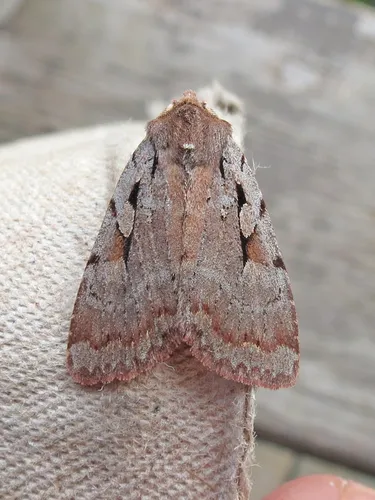
Adult: forewing medium brown with slightly paler double AM and PM lines, and slightly darker diffuse ST line; reniform, orbicular, and claviform spots slightly paler than ground color; conspicuous triangular black spot basal to orbicular spot; rectangular black spot between orbicular and reniform spots; three black markings along basal half of costa; black basal dash may be present, reduced, or absent; blackish shading often present where AM and PM lines meet inner margin; hindwing pale yellowish basally, shading to dark grayish-brown distally; fringe dull yellowish Larva: two color morphs (green and brown); more common green morph has green head with black spots; body green with white middorsal and subdorsal stripes, and broad greenish-white spiracular stripe; less common brown morph has creamy brown head with black bars on top; body brown with broken grayish middorsal and subdorsal stripes, and broad brownish-white spiracular stripe [adapted from description by Canadian Forest Service] a recently described species (by Don Lafontaine in 1998) CBIF data gives a Canadian distribution of BC to Manitoba, plus Quebec and New Brunswick, but not Ontario. However, NatureServe Explorer (see link below) lists it in Ontario, and my hard copy of a Checklist of Moths of Algonquin Park, Ontario lists it as present but uncommon in the Park. [RM]
Classification
- Kingdom
- Animalia
- Phylum
- Arthropoda
- Class
- Insecta
- Order
- Lepidoptera (Butterflies and Moths)
- Superfamily
- Noctuoidea
- Family
- Noctuidae (Owlet Moths)
- Subfamily
- Noctuinae
- Tribe
- Noctuini
- Genus
- Xestia
Imported taxonomy record. Source availability varies; see the source references and editorial policy below.
Habitat and Range
Habitat
pine forests and mixed forests containing pine (the larval foodplant)
Geographic Range
much of United States and southern Canada: New Brunswick to Georgia, west to California, north to British Columbia
Seasonal Activity
adults fly from late June through August, but are most numerous in July. Occasional very worn stragglers may be found in early September. larvae present from May to July
Diet and Behavior
Diet: larvae feed on needles of pine ( Pinus spp.)
Life History
larvae appear in May; pupation occurs in July; adults emerge in July and August; overwinters as a partly-grown larva
About Butterflies and Moths: the wider group
Order-level background for Lepidoptera, the group containing Xestia praevia. Species-specific details appear above.
Group overview
Lepidoptera includes approximately 180,000 described species of butterflies and moths. Moths outnumber butterflies roughly 10:1. The monarch butterfly's eastern population has declined by more than 80% since the mid-1990s, and the western population by over 95% since the 1980s. The IUCN lists the migratory monarch as Vulnerable.
Ecological role of the group
Butterflies and moths are essential indicators of ecosystem health. As caterpillars, they are a primary food source for birds - a single nest of blue tit chicks requires ~10,000 caterpillars. Adult moths pollinate many night-blooming plants.
Economic and practical significance of the group
Lepidoptera are critical pollinators. In Europe, grassland butterfly species have declined by almost 50% since the early 1990s. In the UK, three-quarters of butterflies are in decline. In the U.S., five butterfly species have gone extinct since 1950, with 29 listed as endangered.
Recorded sources for this group: IUCN Red List, Xerces Society, USFWS, PNAS, WWF. Imported estimates may describe particular regions or reporting periods.
Photos of Praevia Dart - Hodges#10968.1 (2)
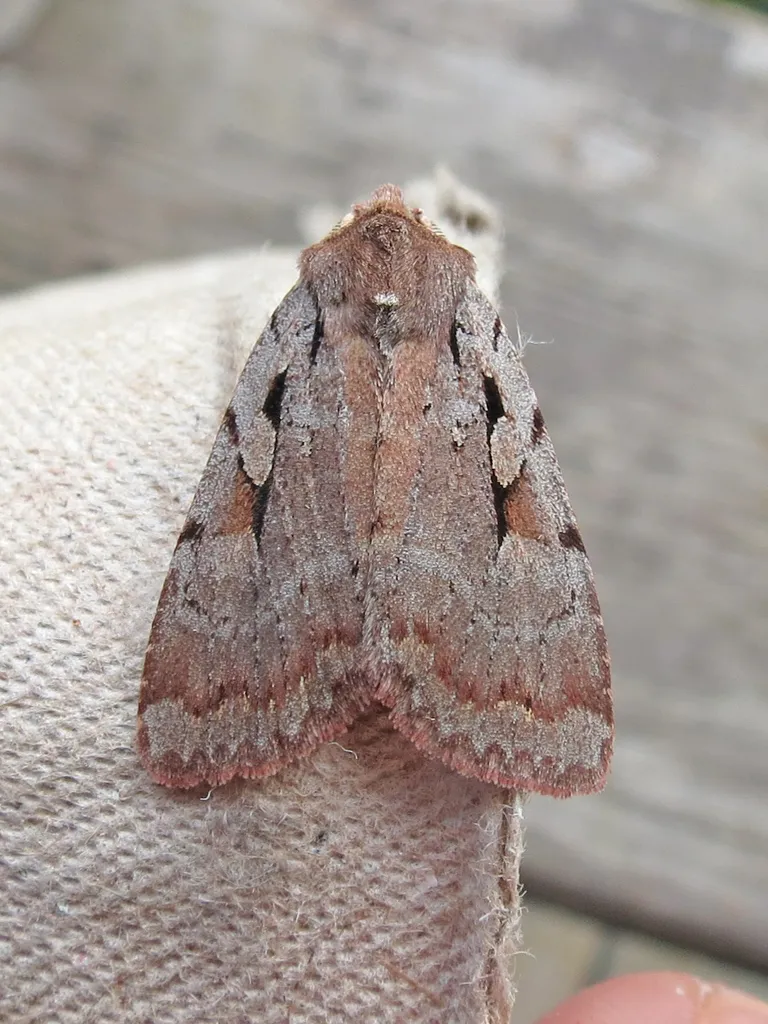
Photo credits: Contributed by Robin McLeod; Additional contributions by Tony-2 , marcie oconnor , dennepj10 , Steve Morris
Frequently Asked Questions About Praevia Dart - Hodges#10968.1
What is Praevia Dart - Hodges#10968.1?
Praevia Dart - Hodges#10968.1 (Xestia praevia) is a species in the family Noctuidae, within the order Lepidoptera.
How big is Praevia Dart - Hodges#10968.1?
wingspan about 32 mm, based on photo by Jim Vargo at MPG larva length to 27 mm
How do you identify Praevia Dart - Hodges#10968.1?
Adult: forewing medium brown with slightly paler double AM and PM lines, and slightly darker diffuse ST line; reniform, orbicular, and claviform spots slightly paler than ground color; conspicuous triangular black spot basal to orbicular spot; rectangular black spot between orbicular and reniform spots; three black markings along basal half of costa; black basal dash may be present, reduced, or absent; blackish shading often present where AM and PM lines meet inner margin; hindwing pale yellowish basally, shading to dark grayish-brown distally; fringe dull yellowish Larva: two color morphs (green and brown); more common green morph has green head with black spots; body green with white middorsal and subdorsal stripes, and broad greenish-white spiracular stripe; less common brown morph has creamy brown head with black bars on top; body brown with broken grayish middorsal and subdorsal stripes, and broad brownish-white spiracular stripe [adapted from description by Canadian Forest Service]
Where is Praevia Dart - Hodges#10968.1 found?
| Feature | Details |
|---|---|
| Habitat | pine forests and mixed forests containing pine (the larval foodplant) |
| Range | much of United States and southern Canada: New Brunswick to Georgia, west to California, north to British Columbia |
What does Praevia Dart - Hodges#10968.1 eat?
The diet of the Praevia Dart - Hodges#10968.1 includes larvae feed on needles of pine ( Pinus spp.).
When is Praevia Dart - Hodges#10968.1 active?
Praevia Dart - Hodges#10968.1: seasonal activity - adults fly from late June through August, but are most numerous in July. Occasional very worn stragglers may be found in early September. larvae present from May to July.
What is the life cycle of a Praevia Dart - Hodges#10968.1?
larvae appear in May; pupation occurs in July; adults emerge in July and August; overwinters as a partly-grown larva