
Xanthonia marquai
This record describes Xanthonia marquai (species). Recorded family: Chrysomelidae. Recorded order: Coleoptera.
Identification and Appearance
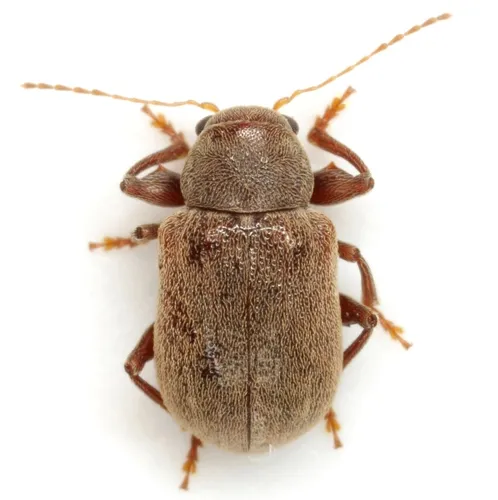
Elytra of uniform brownish coloration, hairs uniformly pale brownish and integument of uniform medium brown color ground color of dorsum uniformly medium brownish, elytral hairs uniformly light yellow-brown, venter medium brown; ventral tooth of profemur large; lateral margins of all ventrites entire; median lobe of male genitalia long and narrow, evenly tapered to non-incised apex Type Locality: TEXAS: Jeff Davis Co., Davis Mts. Resort, 5,800 ft., (Marqua residence), 30.62842°N, 104.08360°W, VI-26–27-2010, E. G. Riley, beating Juniperus sp.
Classification
- Kingdom
- Animalia
- Phylum
- Arthropoda
- Class
- Insecta
- Order
- Coleoptera (Beetles)
- Suborder
- Polyphaga
- Superfamily
- Chrysomeloidea
- Family
- Chrysomelidae (Leaf Beetles)
- Subfamily
- Eumolpinae
- Tribe
- Adoxini
- Genus
- Xanthonia
Imported taxonomy record. Source availability varies; see the source references and editorial policy below.
Habitat and Range
Geographic Range
known only from the Davis Mountains of w. Texas, specifically from Dave Marqua's former residence and the Madera Canyon rest stop, 30.70613°N, 104.10484°W.
Seasonal Activity
June, July and September.
Diet and Behavior
Diet: likely a juniper specialist. Most of the type specimens were beaten from a single unidentified juniper tree having the general habitus of Juniperus ashei . One specimen was beaten from Juniperus deppeana
Additional species information
Species notes from the sources
Etymology: Xanthonia marquai Riley & Quinn, 2019 named to honor of David G. Marqua (1924–2017), beetle collector and Davis Mountains’ resident. Dave’s former residence at 5,800 ft. in the Davis Mountains is likely the best entomologically-known locale in the Davis Mountains, due to his personal collecting efforts, his warm friendly nature, and his long-standing invitation to countless insect collectors.
About Primitive Winged Insects: the wider group
Order-level background for Coleoptera, the group containing Xanthonia marquai. Species-specific details appear above.
Group overview
Coleoptera is the largest order of insects with over 400,000 described species, representing ~25% of all known animal species and ~40% of all insects. In the U.S. alone, nearly 30,000 beetle species have been identified.
Ecological role of the group
Beetles are prominent decomposers, especially in forests, breaking down dead wood and recycling nutrients. As predators, they reduce populations of pest insects. Many species are also important pollinators of flowering plants.
Economic and practical significance of the group
Beetles have major economic significance: leaf beetles (Chrysomelidae) and weevils (Curculionoidea) are among the most destructive agricultural pests globally, costing billions annually, while predatory species like ladybugs provide natural pest control.
Recorded sources for this group: Britannica, Smithsonian, NCSU Entomology. Imported estimates may describe particular regions or reporting periods.
Photos of Xanthonia marquai (2)
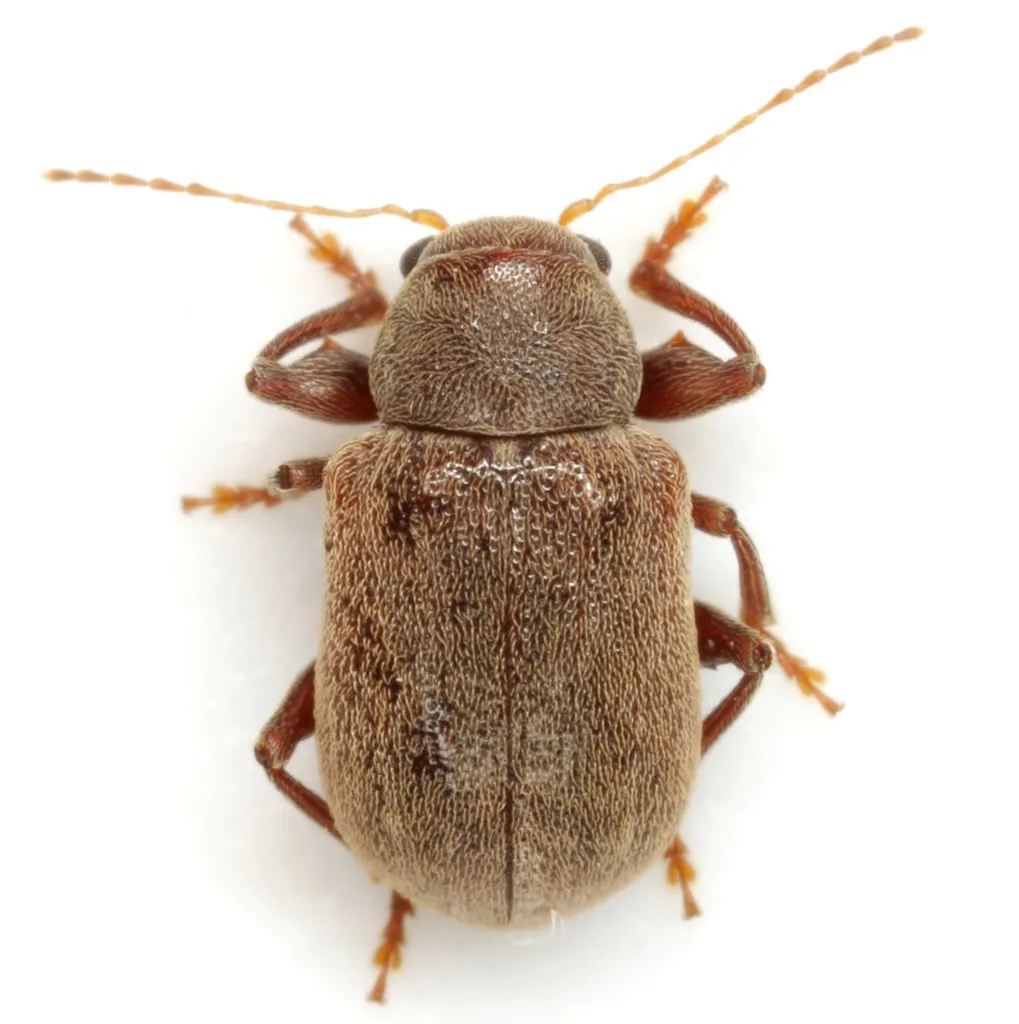
Photo credits: Contributed by Mike Quinn
Frequently Asked Questions About Xanthonia marquai
What is Xanthonia marquai?
Xanthonia marquai is a species in the family Chrysomelidae, within the order Coleoptera.
How big is Xanthonia marquai?
large, length 3.9–4.9 mm
How do you identify Xanthonia marquai?
Elytra of uniform brownish coloration, hairs uniformly pale brownish and integument of uniform medium brown color ground color of dorsum uniformly medium brownish, elytral hairs uniformly light yellow-brown, venter medium brown; ventral tooth of profemur large; lateral margins of all ventrites entire; median lobe of male genitalia long and narrow, evenly tapered to non-incised apex
Where is Xanthonia marquai found?
Range: known only from the Davis Mountains of w. Texas, specifically from Dave Marqua's former residence and the Madera Canyon rest stop, 30.70613°N, 104.10484°W.
What does Xanthonia marquai eat?
The diet of the Xanthonia marquai includes likely a juniper specialist. Most of the type specimens were beaten from a single unidentified juniper tree having the general habitus of Juniperus ashei . One specimen was beaten from Juniperus deppeana.
When is Xanthonia marquai active?
Xanthonia marquai: seasonal activity - June, July and September..