
Varroa destructor
This record describes Varroa destructor (species). Recorded family: Varroidae. Recorded order: Mesostigmata.
Identification and Appearance
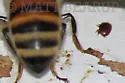
Adult females reddish-brown to dark brown, oval in shape. Adult males yellowish with lightly tanned legs, spherical body shape Introduced throughout the world (except Australia) from its native range in SE Asia (original host Apis cerana ). Got to the US in the 1980s and had a profound impact. This is the only species in the US. Transmits several bee viruses.
Classification
- Kingdom
- Animalia
- Phylum
- Arthropoda
- Class
- Arachnida
- Order
- Mesostigmata (Mesostigs)
- Suborder
- Dermanyssina
- Superfamily
- Dermanyssoidea
- Family
- Varroidae
- Genus
- Varroa
Imported taxonomy record. Source availability varies; see the source references and editorial policy below.
Habitat and Range
Habitat
Beehives
Geographic Range
Worldwide, except Australia, parts of Africa, and the Antarctic
Diet and Behavior
Diet: Feeds on fat of honey bees through external digestion. Previously thought to feed on the hemolymph ( Ramsey et al. 2019 )
Additional species information
Species notes from the sources
Etymology: Varroa destructor Anderson & Trueman 2000
About Mesostigs: the wider group
Order-level background for Mesostigmata, the group containing Varroa destructor. Species-specific details appear above.
Group overview
Mesostigmata includes ~11,500 described species of predatory and parasitic mites. Many species are voracious predators of other mites, springtails, and small insects in soil and leaf litter.
Ecological role of the group
Mesostigmatid mites are key regulators of soil arthropod communities. Some species are phoretic - they hitch rides on beetles and other insects to disperse to new habitats. Parasitic species include the varroa mite, the most devastating parasite of honey bees.
Economic and practical significance of the group
Predatory mesostigmatid mites are commercially produced for biological pest control. Phytoseiulus persimilis is one of the most widely sold biocontrol agents, used against spider mites in greenhouses worldwide - the market is worth hundreds of millions annually.
Recorded sources for this group: Biological control industry, bee health research. Imported estimates may describe particular regions or reporting periods.
Photos of Varroa destructor (5)
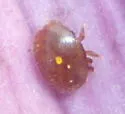
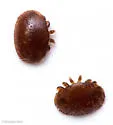
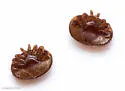
Photo credits: Contributed by Beatriz Moisset; Additional contributions by v belov , Nathaniel Green
Frequently Asked Questions About Varroa destructor
What is Varroa destructor?
Varroa destructor is a species in the family Varroidae, within the order Mesostigmata.
How big is Varroa destructor?
♀♀ 1.0‒1.8 mm long, 1.5‒2.0 mm wide • ♂♂ 0.75‒1.0 × 0.7‒0.9 mm
How do you identify Varroa destructor?
Adult females reddish-brown to dark brown, oval in shape. Adult males yellowish with lightly tanned legs, spherical body shape
Where is Varroa destructor found?
| Feature | Details |
|---|---|
| Habitat | Beehives |
| Range | Worldwide, except Australia, parts of Africa, and the Antarctic |
What does Varroa destructor eat?
The diet of the Varroa destructor includes Feeds on fat of honey bees through external digestion. Previously thought to feed on the hemolymph ( Ramsey et al. 2019 ).