
Sminthurides bifidus
This record describes Sminthurides bifidus (species). Recorded family: Sminthurididae. Recorded order: Symphypleona.
Identification and Appearance
Classification
- Kingdom
- Animalia
- Phylum
- Arthropoda
- Class
- Collembola
- Order
- Symphypleona (Globular Springtails)
- Family
- Sminthurididae
- Genus
- Sminthurides
Imported taxonomy record. Source availability varies; see the source references and editorial policy below.
Additional species information
Species notes from the sources
Etymology: Sminthurides bifidus Mills, 1934
About Globular Springtails: the wider group
Order-level background for Symphypleona, the group containing Sminthurides bifidus. Species-specific details appear above.
Group overview
Symphypleona (globular springtails) includes ~1,200 described species. These round-bodied springtails are found on vegetation surfaces, in soil, and even on water surfaces where they can skate using surface tension.
Ecological role of the group
Symphypleona feed on fungal spores, pollen, algae, and decaying plant material. They play critical roles in nutrient cycling and are among the first colonizers of disturbed or newly formed soils.
Economic and practical significance of the group
Globular springtails are important bioindicator species used in ecotoxicology testing for soil contamination. ISO standard soil toxicity tests use springtail species like Folsomia candida.
Recorded sources for this group: ISO ecotoxicology standards, soil biology research. Imported estimates may describe particular regions or reporting periods.
Photos of Sminthurides bifidus (5)
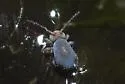
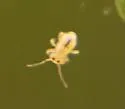
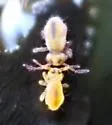
Photo credits: Contributed by Ken Wolgemuth