
Water springtail
Sminthurides aquaticus
This record describes Sminthurides aquaticus (species). Recorded family: Sminthurididae. Recorded order: Symphypleona.
Identification and Appearance
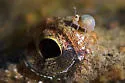
Very small globular springtails with dimorphic sexes. The males are half the size of the females and have modified clasping antennae with which they can grab the bases of the antennae of a female. Look out for such head-to-head interconnected couples in the colony! ─Frans Janssens
Classification
- Kingdom
- Animalia
- Phylum
- Arthropoda
- Class
- Collembola
- Order
- Symphypleona (Globular Springtails)
- Family
- Sminthurididae
- Genus
- Sminthurides
Imported taxonomy record. Source availability varies; see the source references and editorial policy below.
Habitat and Range
Geographic Range
holarctic, probably introduced in NA
Diet and Behavior
Life History
The male, using his prehensile antennae, can hold onto the female's antennae and be carried around for days.
Additional species information
Species notes from the sources
Etymology: Sminthurides aquaticus (Bourlet 1842)
About Globular Springtails: the wider group
Order-level background for Symphypleona, the group containing Sminthurides aquaticus. Species-specific details appear above.
Group overview
Symphypleona (globular springtails) includes ~1,200 described species. These round-bodied springtails are found on vegetation surfaces, in soil, and even on water surfaces where they can skate using surface tension.
Ecological role of the group
Symphypleona feed on fungal spores, pollen, algae, and decaying plant material. They play critical roles in nutrient cycling and are among the first colonizers of disturbed or newly formed soils.
Economic and practical significance of the group
Globular springtails are important bioindicator species used in ecotoxicology testing for soil contamination. ISO standard soil toxicity tests use springtail species like Folsomia candida.
Recorded sources for this group: ISO ecotoxicology standards, soil biology research. Imported estimates may describe particular regions or reporting periods.
Photos of Water springtail (5)
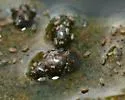
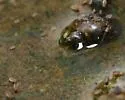
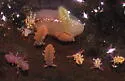
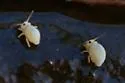
Photo credits: Contributed by Chuck Entz; Additional contributions by Beatriz Moisset , ceiseman , v belov , Harsi S. Parker , Marci Hess , antarctica
Frequently Asked Questions About Water springtail
What is Water springtail?
Water springtail (Sminthurides aquaticus) is a species in the family Sminthurididae, within the order Symphypleona.
How big is Water springtail?
♂♂ to 0.5 mm, ♀♀ to 1.0 mm
Where is Water springtail found?
Range: holarctic, probably introduced in NA
What is the life cycle of a Water springtail?
The male, using his prehensile antennae, can hold onto the female's antennae and be carried around for days.