
Sennius lebasi
This record describes Sennius lebasi (species). Recorded family: Chrysomelidae. Recorded order: Coleoptera.
Identification and Appearance
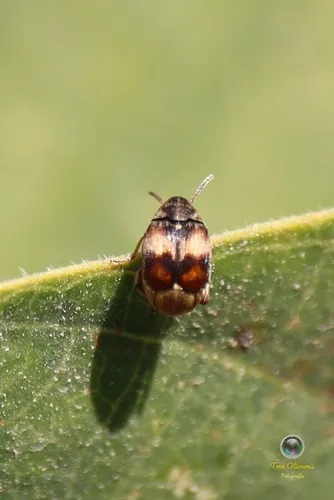
Body reddish yellow to black, most often dark red; head black, pronotum red to black, often with paler red median line; elytra reddish yellow to dark brown, each elytron with broad, oblique, paler band usually extending from side to side, separated from base by narrow black border extending briefly along suture, apical onehalf dark brown with light brown median macula, apical border usually black (figure 868); antennae and legs red... The pygidium of this species is red or reddish brown, usually with darker, arcuate maculae. The elytral pattern is variable. In some specimens, the color is nearly all yellowish red; but variation ranges from that to dark brown or even black, darker specimens with a chevron-shaped transverse band across the elytra slightly above the middle. The pronotum is usually much darker than the elytra. Type locality: Colombia, Carthagena [sic]
Wikipedia reference for Sennius lebasi: https://en.wikipedia.org/wiki/Sennius lebasi.
Classification
- Kingdom
- Animalia
- Phylum
- Arthropoda
- Class
- Insecta
- Order
- Coleoptera (Beetles)
- Suborder
- Polyphaga
- Superfamily
- Chrysomeloidea
- Family
- Chrysomelidae (Leaf Beetles)
- Subfamily
- Bruchinae
- Tribe
- Bruchini
- Genus
- Sennius
Imported taxonomy record. Source availability varies; see the source references and editorial policy below.
Habitat and Range
Geographic Range
southmost TX (Cameron Co.) to Brazil, Trinidad - Map
Diet and Behavior
Diet: Senna bicapsularis bicapsularis . Six additional host plants are recorded from Mexico south
Additional species information
Species notes from the sources
Etymology: Louis LeBas was a prominent 19th-century French traveler and commercial naturalist who played a foundational role in documenting the biodiversity of northern South America. Operating primarily in "Nova Granada" (modern-day Colombia) during the 1830s and 1840s, his extensive fieldwork supplied European museums and elite collectors with highly prized zoological specimens.
About Primitive Winged Insects: the wider group
Order-level background for Coleoptera, the group containing Sennius lebasi. Species-specific details appear above.
Group overview
Coleoptera is the largest order of insects with over 400,000 described species, representing ~25% of all known animal species and ~40% of all insects. In the U.S. alone, nearly 30,000 beetle species have been identified.
Ecological role of the group
Beetles are prominent decomposers, especially in forests, breaking down dead wood and recycling nutrients. As predators, they reduce populations of pest insects. Many species are also important pollinators of flowering plants.
Economic and practical significance of the group
Beetles have major economic significance: leaf beetles (Chrysomelidae) and weevils (Curculionoidea) are among the most destructive agricultural pests globally, costing billions annually, while predatory species like ladybugs provide natural pest control.
Recorded sources for this group: Britannica, Smithsonian, NCSU Entomology. Imported estimates may describe particular regions or reporting periods.
Photos of Sennius lebasi (5)
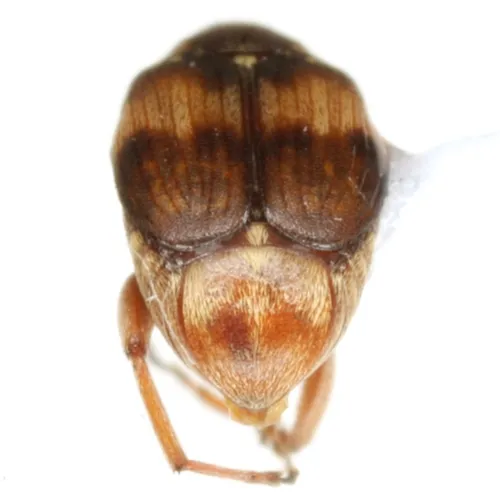
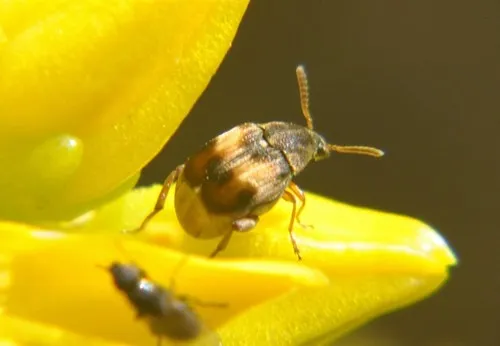
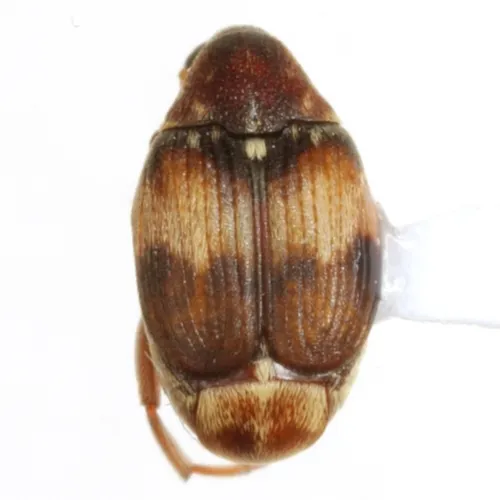
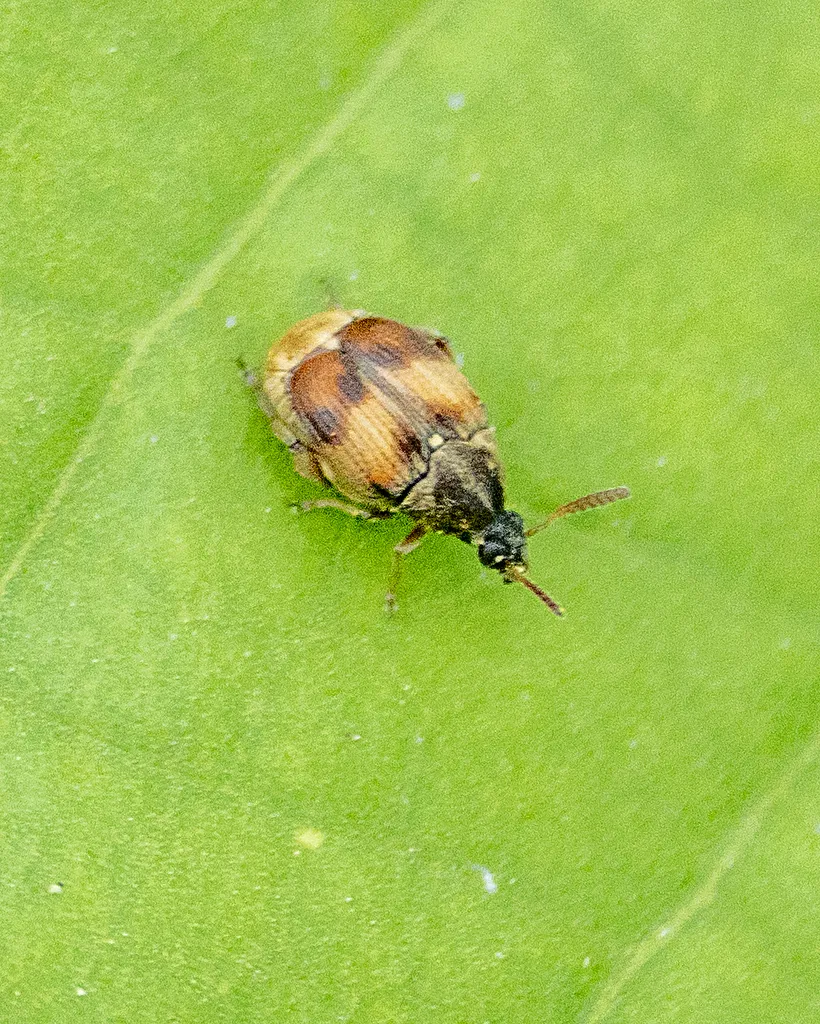
Photo credits: (c) Marco Polo amarillas vargas, some rights reserved (CC BY-NC), uploaded by Marco Polo amarillas vargas | (c) Mike Quinn, San Marcos, some rights reserved (CC BY-NC), uploaded by Mike Quinn, San Marcos | (c) troi_olivares, some rights reserved (CC BY-NC), uploaded by troi_olivares | (c) Coronado Govaerts, some rights reserved (CC BY-NC), uploaded by Coronado Govaerts | Contributed by Mike Quinn; Additional contributions by v belov
Frequently Asked Questions About Sennius lebasi
What is Sennius lebasi?
Sennius lebasi is a species in the family Chrysomelidae, within the order Coleoptera.
How big is Sennius lebasi?
1.5–2.9 mm
How do you identify Sennius lebasi?
Body reddish yellow to black, most often dark red; head black, pronotum red to black, often with paler red median line; elytra reddish yellow to dark brown, each elytron with broad, oblique, paler band usually extending from side to side, separated from base by narrow black border extending briefly along suture, apical onehalf dark brown with light brown median macula, apical border usually black (figure 868); antennae and legs red... The pygidium of this species is red or reddish brown, usually with darker, arcuate maculae. The elytral pattern is variable. In some specimens, the color is nearly all yellowish red; but variation ranges from that to dark brown or even black, darker specimens with a chevron-shaped transverse band across the elytra slightly above the middle. The pronotum is usually much darker than the elytra.
Where is Sennius lebasi found?
Range: southmost TX (Cameron Co.) to Brazil, Trinidad - Map
What does Sennius lebasi eat?
The diet of the Sennius lebasi includes Senna bicapsularis bicapsularis . Six additional host plants are recorded from Mexico south.