
Ruddy Darter
Sympetrum sanguineum
This record describes Sympetrum sanguineum (species). Recorded family: Libellulidae. Recorded order: Odonata.
Identification and Appearance
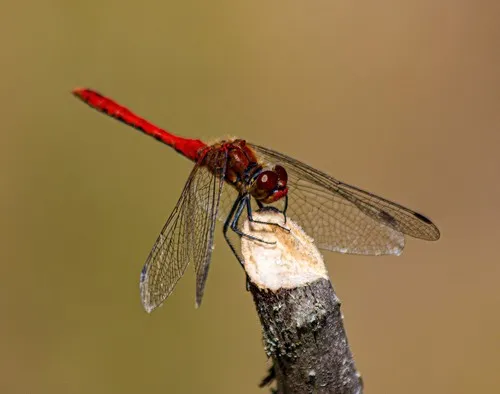
A medium-sized dragonfly. Males are crimson red, females are ochre. The abdomen is slightly 'waisted'. Both sexes have all black legs (other red darters have a yellow stripe). The Ruddy Darter is slightly smaller than the Common Darter with a 'waisted' abdomen and club-shaped tip. Males are bright red. Females are very similar to female Common Darters but have all black legs. It favours shallow water with lots of emergent vegetation. Away from the water both sexes usually perch in a tree or bush facing out over open space where they can scan for prey. They will usually return to the same perch after chasing prey or seeing off a rival. Most British records come from central and southern England Like the Emerald Damselfly, this species favours shallow water sites with dense stands of emergent vegetation and consequently the two species often occur side-by-side. Similarly, such a specific habitat preference means that this species has a rather local and scattered distribution within VC 55. Historically this species seems to have had an even more local distribution than at present. Mendel (1980) cites just a handful of recorded occurrences, though Robertson (1953) recorded the Ruddy Darter as being 'numerous along several hundred yards of the Grand Union Canal in the Wigston and Kilby district'.
Wikipedia reference for Sympetrum sanguineum: http://en.wikipedia.org/wiki/Ruddy_darter.
Classification
- Kingdom
- Animalia
- Phylum
- Arthropoda
- Class
- Insecta
- Order
- Odonata
- Family
- Libellulidae
- Genus
- Sympetrum
Imported taxonomy record. Source availability varies; see the source references and editorial policy below.
Habitat and Range
Habitat
It favours shallow water with lots of emergent vegetation.
Seasonal Activity
July to October.
Diet and Behavior
Life History
Away from the water both sexes usually perch in a tree or bush facing out over open space where they can scan for prey. They will usually return to the same perch after chasing prey or seeing off a rival.
Additional species information
Recorded status
Most British records come from central and southern England
About Dragonflies and Damselflies: the wider group
Order-level background for Odonata, the group containing Sympetrum sanguineum. Species-specific details appear above.
Group overview
Odonata includes ~6,000 described species of dragonflies and damselflies. Dragonflies are among the fastest flying insects, reaching 36 mph (58 km/h). They can fly in any direction including backward, and hover in place - each wing operates independently.
Ecological role of the group
Dragonflies predate dinosaurs by nearly 100 million years - fossils date to 325 million years ago. The largest dragonfly ancestor, Meganeuropsis permiana (285 mya), had a 75cm wingspan, enabled by atmospheric oxygen levels of 31-35% compared to today's 21%. Dragonflies have a 95% hunting success rate - the highest of any predator.
Economic and practical significance of the group
Dragonflies are voracious predators that consume hundreds of mosquitoes daily, providing natural pest control worth millions in reduced mosquito-borne disease risk. A single dragonfly can eat 30 to hundreds of mosquitoes per day.
Recorded sources for this group: Natural History Museum London, Britannica, fossil record research. Imported estimates may describe particular regions or reporting periods.
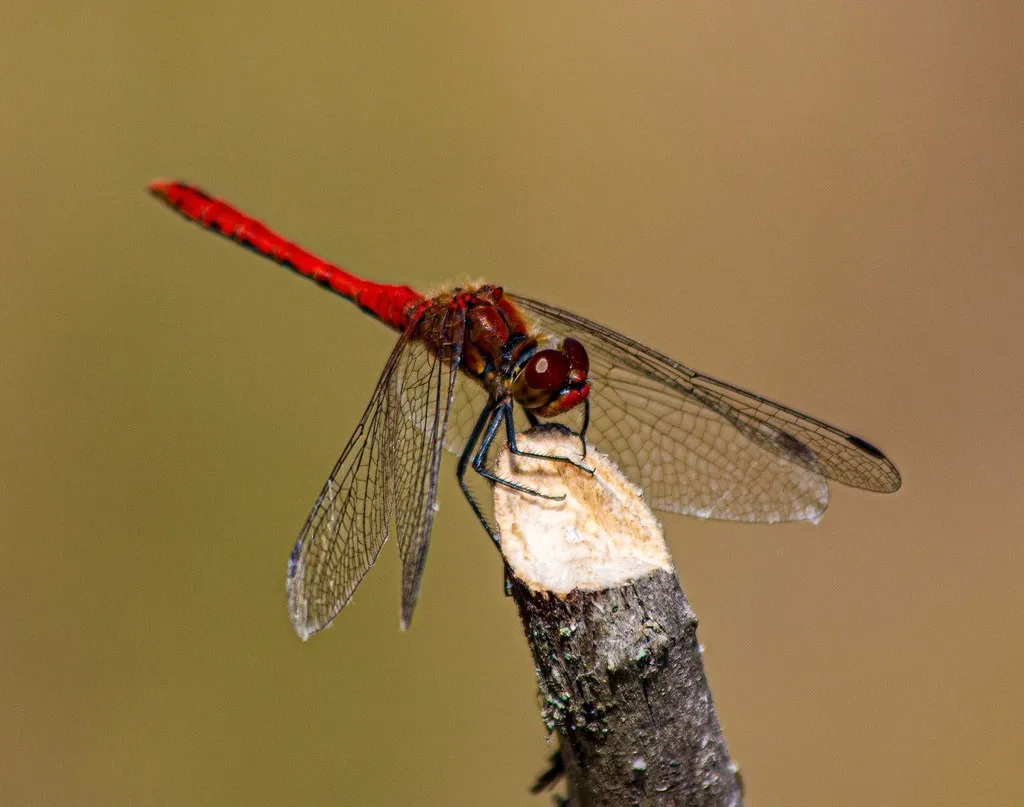
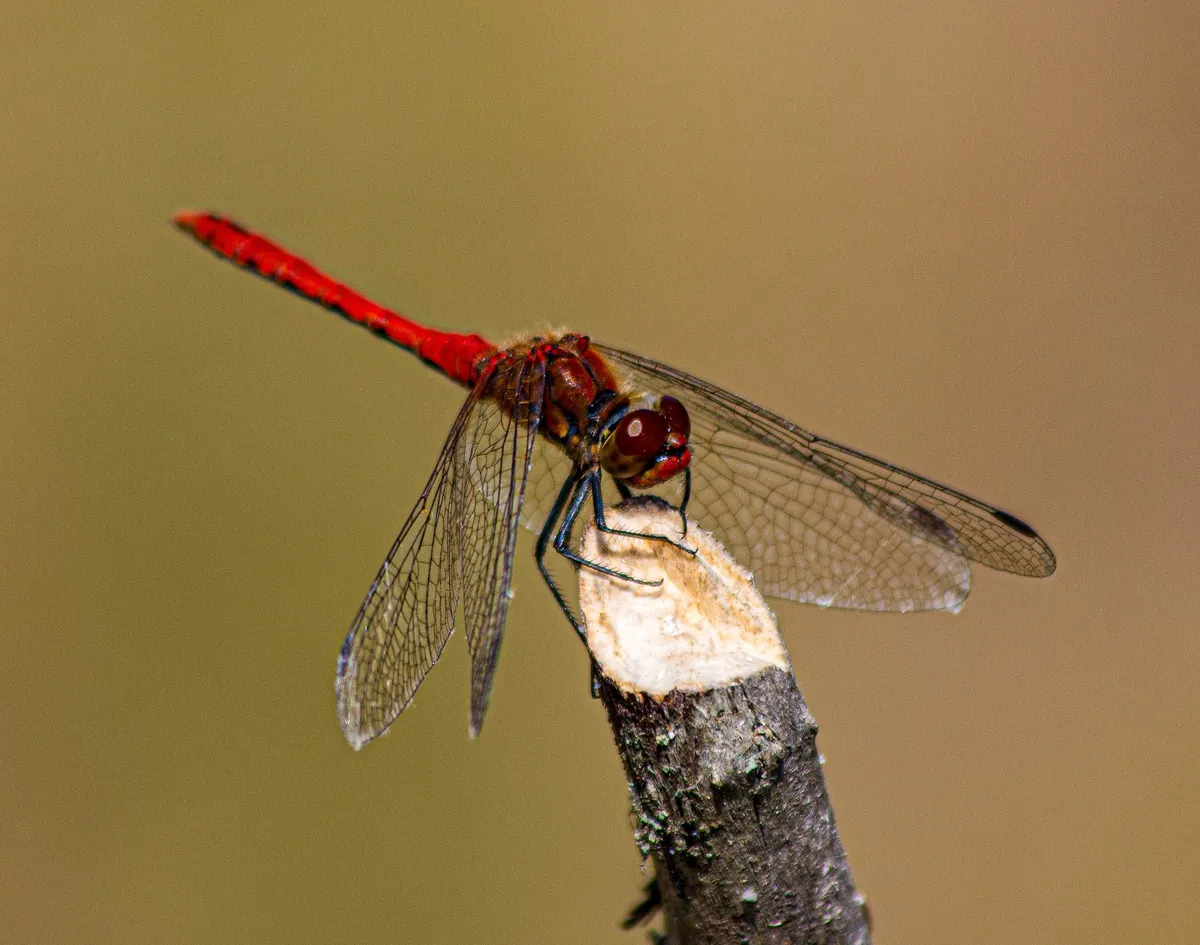
Photos of Ruddy Darter (3)
Frequently Asked Questions About Ruddy Darter
What is Ruddy Darter?
Ruddy Darter (Sympetrum sanguineum) is a species in the family Libellulidae, within the order Odonata.
Where is Ruddy Darter found?
Habitat: It favours shallow water with lots of emergent vegetation.
When is Ruddy Darter active?
Ruddy Darter: seasonal activity - July to October..
What is the life cycle of a Ruddy Darter?
Away from the water both sexes usually perch in a tree or bush facing out over open space where they can scan for prey. They will usually return to the same perch after chasing prey or seeing off a rival.