
Adana Tip Moth - Hodges#2877
Rhyacionia adana
This record describes Rhyacionia adana (species). Recorded family: Tortricidae. Recorded order: Lepidoptera.
Identification and Appearance
Classification
- Kingdom
- Animalia
- Phylum
- Arthropoda
- Class
- Insecta
- Order
- Lepidoptera (Butterflies and Moths)
- Superfamily
- Tortricoidea
- Family
- Tortricidae (Tortricid Moths)
- Subfamily
- Olethreutinae
- Tribe
- Eucosmini
- Genus
- Rhyacionia (Pine Tip Moths)
Imported taxonomy record. Source availability varies; see the source references and editorial policy below.
Habitat and Range
Geographic Range
Massachusetts south to Virginia, west to Ontario and Mississippi. Type locality: Forest Hills, Massachusetts (William Raff).
Diet and Behavior
Diet: Larval hosts include: Pinus resinosa Pinus banksiana Pinus sylvestris
Life History
This tip moth mines the current year's shoots of red, jack and Scots pine seedlings and saplings (it attacks the lower halves of trees up to 25 feet tall). Serious damage has been recorded in red and Scots pine plantations in Massachusetts, Pennsylvania, Virginia, Michigan, Wisconsin, and Ontario. The female lays her eggs between needles just above the sheath of the needle fascicle. Newly hatched larvae spin silken cases between two old needles just above the needle sheath; they then enter the needles and mine toward the tip. After new needle growth has started, larvae enter and mine developing shoots. Several larvae may inhabit a single shoot, moving toward the buds and causing shoot death. In mid-June to late July, mature larvae move down the main stem of the tree and pupate in cocoons cemented to the stem 1 inch below the soil surface. Shoot death becomes apparent after the insect has pupated. A single generation occurs each year. USDA Forest Service. 1979. A guide to common insects and diseases of forest trees in the northeastern United States. Northeast. Area State Priv. For., For. Insect and Disease Management., Broomall, PA. p. 123, illus.
Additional species information
Species notes from the sources
Etymology: Specific epithet in honor of Ada F. Kneale of the Bureau of Entomology (USDA) who collected one of the first specimens and "supplied very careful genitalia drawings accompanying this paper."
About Butterflies and Moths: the wider group
Order-level background for Lepidoptera, the group containing Rhyacionia adana. Species-specific details appear above.
Group overview
Lepidoptera includes approximately 180,000 described species of butterflies and moths. Moths outnumber butterflies roughly 10:1. The monarch butterfly's eastern population has declined by more than 80% since the mid-1990s, and the western population by over 95% since the 1980s. The IUCN lists the migratory monarch as Vulnerable.
Ecological role of the group
Butterflies and moths are essential indicators of ecosystem health. As caterpillars, they are a primary food source for birds - a single nest of blue tit chicks requires ~10,000 caterpillars. Adult moths pollinate many night-blooming plants.
Economic and practical significance of the group
Lepidoptera are critical pollinators. In Europe, grassland butterfly species have declined by almost 50% since the early 1990s. In the UK, three-quarters of butterflies are in decline. In the U.S., five butterfly species have gone extinct since 1950, with 29 listed as endangered.
Recorded sources for this group: IUCN Red List, Xerces Society, USFWS, PNAS, WWF. Imported estimates may describe particular regions or reporting periods.
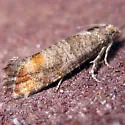
Photos of Adana Tip Moth - Hodges#2877 (5)
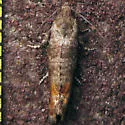
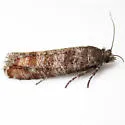
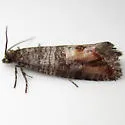
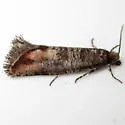
Photo credits: Contributed by John R. Maxwell; Additional contributions by Randy Hardy
Frequently Asked Questions About Adana Tip Moth - Hodges#2877
How big is Adana Tip Moth - Hodges#2877?
| Feature | Description |
|---|---|
| Wingspan | Wingspan 16-17.5 mm. |
| Forewing | Forewing length 5.5-9.0 mm. |
Where is Adana Tip Moth - Hodges#2877 found?
Range: Massachusetts south to Virginia, west to Ontario and Mississippi. Type locality: Forest Hills, Massachusetts (William Raff).
What does Adana Tip Moth - Hodges#2877 eat?
The diet of the Adana Tip Moth - Hodges#2877 includes Larval hosts include: Pinus resinosa Pinus banksiana Pinus sylvestris.
What is the life cycle of a Adana Tip Moth - Hodges#2877?
This tip moth mines the current year's shoots of red, jack and Scots pine seedlings and saplings (it attacks the lower halves of trees up to 25 feet tall). Serious damage has been recorded in red and Scots pine plantations in Massachusetts, Pennsylvania, Virginia, Michigan, Wisconsin, and Ontario. The female lays her eggs between needles just above the sheath of the needle fascicle. Newly hatched larvae spin silken cases between two old needles just above the needle sheath; they then enter the needles and mine toward the tip. After new needle growth has started, larvae enter and mine developing shoots. Several larvae may inhabit a single shoot, moving toward the buds and causing shoot death. In mid-June to late July, mature larvae move down the main stem of the tree and pupate in cocoons cemented to the stem 1 inch below the soil surface. Shoot death becomes apparent after the insect has pupated. A single generation occurs each year. USDA Forest Service. 1979. A guide to common insects and diseases of forest trees in the northeastern United States. Northeast. Area State Priv. For., For. Insect and Disease Management., Broomall, PA. p. 123, illus.