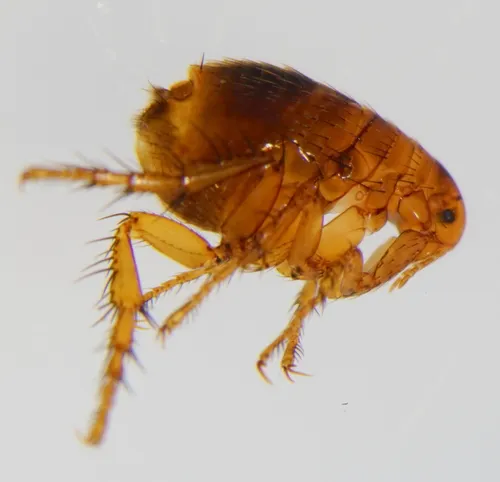
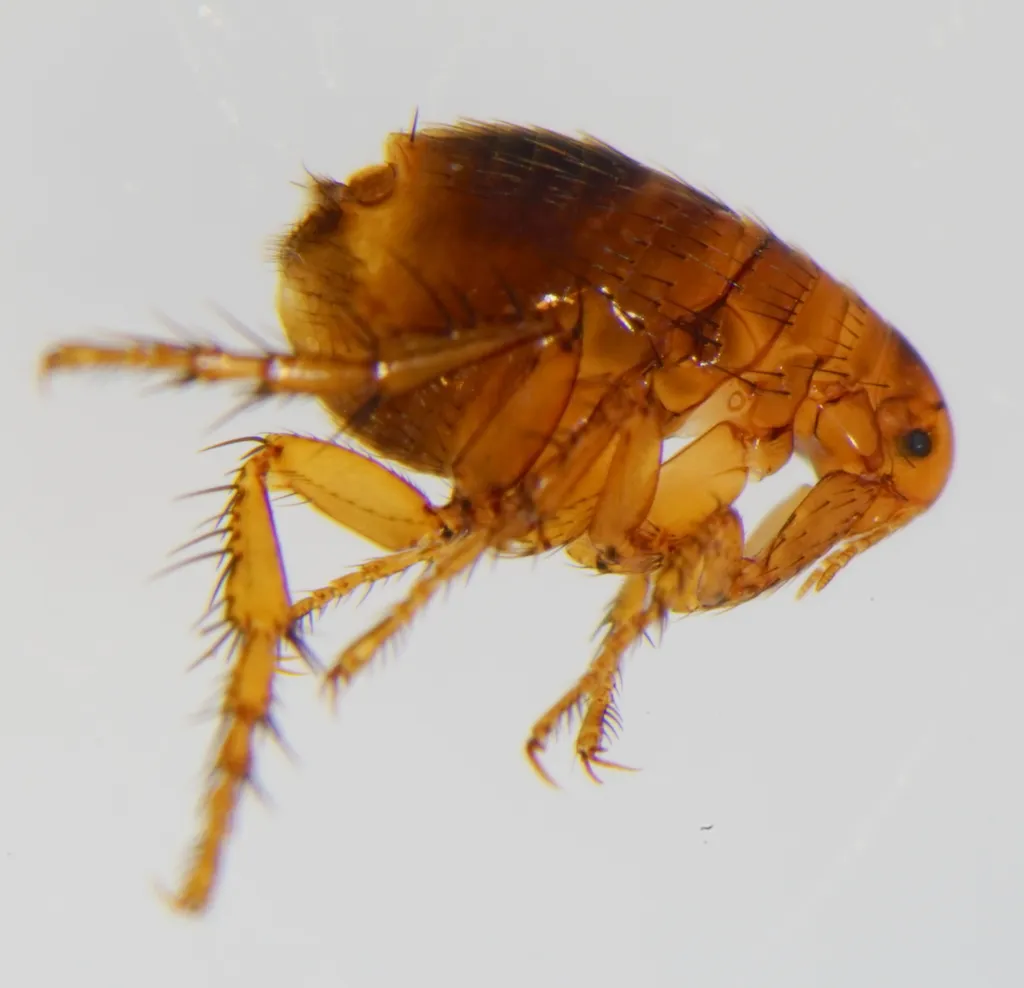
Common Fleas
Pulicidae
This record describes Pulicidae (family). Recorded order: Siphonaptera.
Identification and Appearance
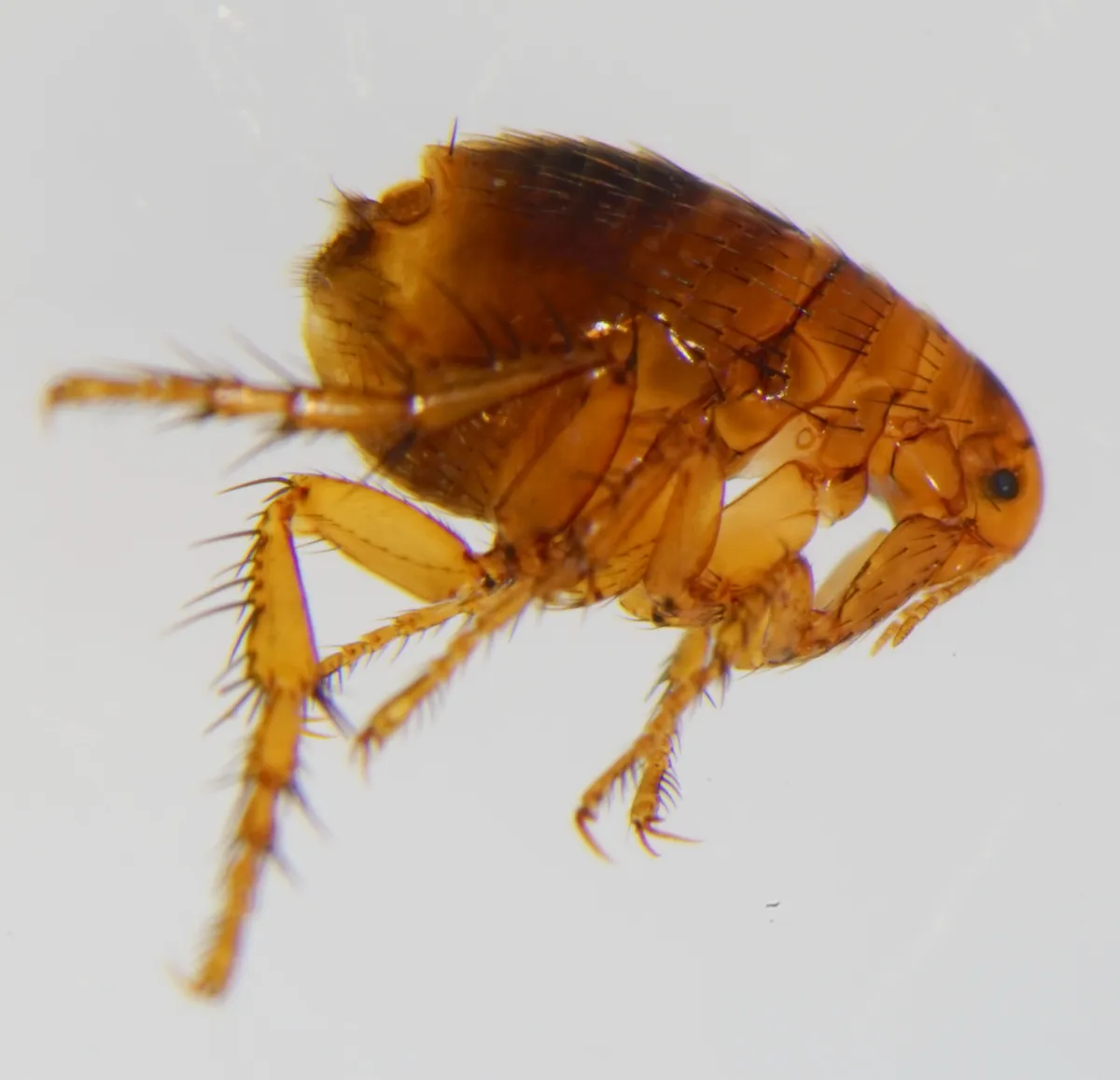
Wikipedia reference for Pulicidae: http://en.wikipedia.org/wiki/Pulicidae.
Classification
- Kingdom
- Animalia
- Phylum
- Arthropoda
- Class
- Insecta
- Order
- Siphonaptera (Fleas)
- Family
- Pulicidae
Imported taxonomy record. Source availability varies; see the source references and editorial policy below.
About Fleas: the wider group
Order-level background for Siphonaptera, the group containing Pulicidae. Species-specific details appear above.
Group overview
Siphonaptera (fleas) includes ~2,500 described species. Fleas can jump up to 150 times their own body length - equivalent to a human jumping over a 75-story building. This makes them the best jumpers relative to body size of any animal.
Ecological role of the group
Fleas have been parasitizing mammals for at least 165 million years based on fossil evidence. They can transmit diseases including plague, murine typhus, and tapeworms. A single female flea can lay up to 50 eggs per day.
Economic and practical significance of the group
The U.S. pet flea treatment market is worth over $4.4 billion annually. Historically, rat fleas transmitted the bubonic plague (Black Death), which killed an estimated 75-200 million people in the 14th century - roughly 30-60% of Europe's population.
Recorded sources for this group: CDC, WHO, pet industry market research. Imported estimates may describe particular regions or reporting periods.