
Brown Spider Beetle
Ptinus latro
This record describes Ptinus latro (species). Recorded family: Ptinidae. Recorded order: Coleoptera.
Identification and Appearance
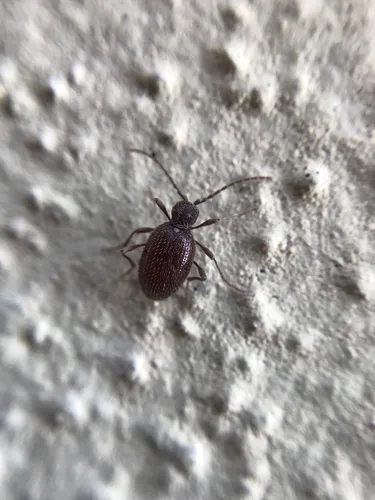
Brown Spider Beetle (Ptinus latro) is a species in the family Ptinidae, commonly known as death-watch and spider beetles, belonging to the order Coleoptera (Beetles). It is classified within the subfamily Ptininae, tribe Ptinini, suborder Polyphaga, superfamily Bostrichoidea. This species belongs to the genus Ptinus. As a member of class Insecta, phylum Arthropoda, it is part of the kingdom Animalia. Size: 3.0–3.7 mm. It is found in The diploid form is found under natural conditions in the nests of wasps, birds, and rats, as well as in warehouses; the triploid form has been found mainly in warehouses, where it lives in close association with the bisexual form.
Classification
- Kingdom
- Animalia
- Phylum
- Arthropoda
- Class
- Insecta
- Order
- Coleoptera (Beetles)
- Suborder
- Polyphaga
- Superfamily
- Bostrichoidea
- Family
- Ptinidae (Death-watch and Spider Beetles)
- Subfamily
- Ptininae
- Tribe
- Ptinini
- Genus
- Ptinus
Imported taxonomy record. Source availability varies; see the source references and editorial policy below.
Habitat and Range
Habitat
The diploid form is found under natural conditions in the nests of wasps, birds, and rats, as well as in warehouses; the triploid form has been found mainly in warehouses, where it lives in close association with the bisexual form ( 3 )
Geographic Range
Eurasia, Africa; spread with trade worldwide ; in Canada adults of the diploid form have been found in NS-ON & BC; triploid females, in Montreal and Toronto ; much of the US (NY-GA to WI-KS-CA)
Diet and Behavior
Life History
females of the parthenogenetic form must mate with males of the sexual form to reproduce or, less successfully, with males of P. pusillus or P. fur (sperm activates the egg but does not contribute any chromosomes) ( 3 )
Additional species information
Species notes from the sources
Etymology: Ptinus latro Fabricius 1775
About Primitive Winged Insects: the wider group
Order-level background for Coleoptera, the group containing Ptinus latro. Species-specific details appear above.
Group overview
Coleoptera is the largest order of insects with over 400,000 described species, representing ~25% of all known animal species and ~40% of all insects. In the U.S. alone, nearly 30,000 beetle species have been identified.
Ecological role of the group
Beetles are prominent decomposers, especially in forests, breaking down dead wood and recycling nutrients. As predators, they reduce populations of pest insects. Many species are also important pollinators of flowering plants.
Economic and practical significance of the group
Beetles have major economic significance: leaf beetles (Chrysomelidae) and weevils (Curculionoidea) are among the most destructive agricultural pests globally, costing billions annually, while predatory species like ladybugs provide natural pest control.
Recorded sources for this group: Britannica, Smithsonian, NCSU Entomology. Imported estimates may describe particular regions or reporting periods.
Photos of Brown Spider Beetle (2)
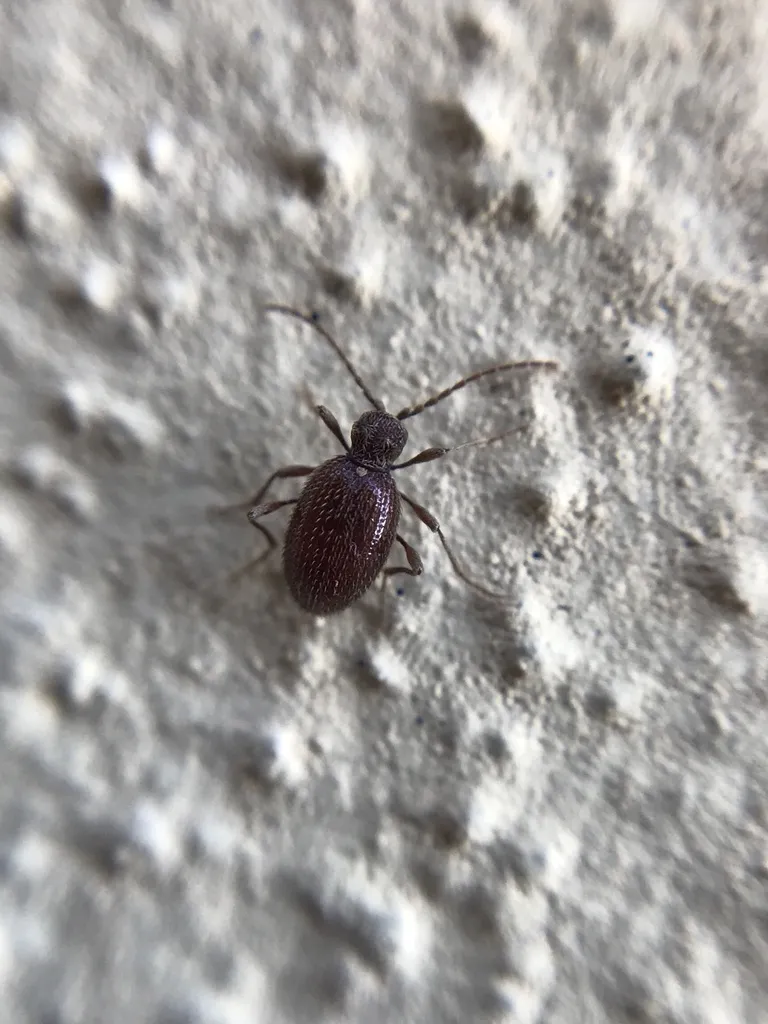
Photo credits: Contributed by v belov
Frequently Asked Questions About Brown Spider Beetle
What is Brown Spider Beetle?
Brown Spider Beetle (Ptinus latro) is a species in the family Ptinidae, within the order Coleoptera.
How big is Brown Spider Beetle?
3.0–3.7 mm
Where is Brown Spider Beetle found?
| Feature | Details |
|---|---|
| Habitat | The diploid form is found under natural conditions in the nests of wasps, birds, and rats, as well as in warehouses; the triploid form has been found mainly in warehouses, where it lives in close association with the bisexual form ( 3 ) |
| Range | Eurasia, Africa; spread with trade worldwide ; in Canada adults of the diploid form have been found in NS-ON & BC; triploid females, in Montreal and Toronto ; much of the US (NY-GA to WI-KS-CA) |
What is the life cycle of a Brown Spider Beetle?
females of the parthenogenetic form must mate with males of the sexual form to reproduce or, less successfully, with males of P. pusillus or P. fur (sperm activates the egg but does not contribute any chromosomes) ( 3 )