
Phytocoris coronadoi
This record describes Phytocoris coronadoi (species). Recorded family: Miridae. Recorded order: Hemiptera.
Identification and Appearance
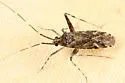
From Stonedahl, omitting references to figures: Recognized by the dark brown general coloration; small knoblike left genital tubercle; right basal lobe of vesica with small field of spinulae laterally; and left sclerotized process abruptly twisted beyond middle, without membranous region apically. It is further distinguished from the closely related species, aesculinus , by the more broadly expanded distal region of the shaft of the left paramere, and from yavapai by the smaller basal lobes of the vesica, left lobe with small spinulae laterally.
Classification
- Kingdom
- Animalia
- Phylum
- Arthropoda
- Class
- Insecta
- Order
- Hemiptera (True Bugs, Cicadas, Hoppers, Aphids and Allies)
- Suborder
- Heteroptera
- Superfamily
- Miroidea
- Family
- Miridae (Plant Bugs)
- Subfamily
- Mirinae
- Tribe
- Mirini
- Genus
- Phytocoris
Imported taxonomy record. Source availability varies; see the source references and editorial policy below.
Habitat and Range
Habitat
host plant unknown; taken at lights
Geographic Range
Known from Cochise and Santa Cruz Counties, AZ; and Grant County, NM
Seasonal Activity
June-September
Additional species information
Species notes from the sources
Etymology: "Named for its occurrence in the Coronado National Forest of southeastern Arizona."
About True Bugs, Cicadas, Hoppers, Aphids and Allies: the wider group
Order-level background for Hemiptera, the group containing Phytocoris coronadoi. Species-specific details appear above.
Group overview
Hemiptera (true bugs) includes over 80,000 described species across cicadas, aphids, leafhoppers, shield bugs, and bed bugs. Aphids alone cost global agriculture an estimated $2.5 billion annually in crop losses.
Ecological role of the group
Many Hemiptera are essential food sources for birds and predatory insects. Cicadas provide massive nutrient pulses during emergence events - a single Brood X emergence can involve trillions of individuals across 15 states.
Economic and practical significance of the group
The brown marmorated stink bug (Halyomorpha halys) caused $37 million in apple crop losses in a single year in the U.S. Mid-Atlantic region. Bed bug infestations in the U.S. increased by 500% between 2001-2010, costing the hotel industry hundreds of millions annually.
Recorded sources for this group: USDA, EPA, University research. Imported estimates may describe particular regions or reporting periods.
Photos of Phytocoris coronadoi (5)
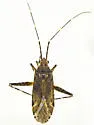
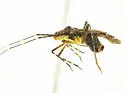
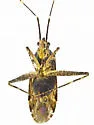
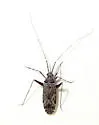
Photo credits: Contributed by Jason Botz
Frequently Asked Questions About Phytocoris coronadoi
What is Phytocoris coronadoi?
Phytocoris coronadoi is a species in the family Miridae, within the order Hemiptera.
How big is Phytocoris coronadoi?
| Feature | Details |
|---|---|
| Male | 5.29-5.78 mm |
| Female | 5.40-5.72 mm |
How do you identify Phytocoris coronadoi?
From Stonedahl, omitting references to figures: Recognized by the dark brown general coloration; small knoblike left genital tubercle; right basal lobe of vesica with small field of spinulae laterally; and left sclerotized process abruptly twisted beyond middle, without membranous region apically. It is further distinguished from the closely related species, aesculinus , by the more broadly expanded distal region of the shaft of the left paramere, and from yavapai by the smaller basal lobes of the vesica, left lobe with small spinulae laterally.
Where is Phytocoris coronadoi found?
| Feature | Details |
|---|---|
| Habitat | host plant unknown; taken at lights |
| Range | Known from Cochise and Santa Cruz Counties, AZ; and Grant County, NM |
When is Phytocoris coronadoi active?
Phytocoris coronadoi: seasonal activity - June-September.