
Parthenicus micans
This record describes Parthenicus micans (species). Recorded family: Miridae. Recorded order: Hemiptera.
Identification and Appearance
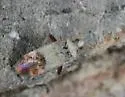
Suggestive of oreades , but size smaller, distinguished by the uniformly silvery white, scale-like pubescence on clavus and corium, with golden scale-like hairs only at inner apical angles of corium (Knight, 1925). The size difference is significant: males 2.7 mm, females 2.6 mm for micans compared to females 3.3 mm, males 3.7 mm for oreades . P. oreades has conspicuous red flecks on the disc of the clavus and corium, while such red flecking is limited to the humeral and cuneal areas in micans (Knight, 1925). The entire dorsal integument of oreades often has a sooty grey cast, while the base color of micans is snowy white, with grey tinge restricted to the anterior edge of the hemelytra and scutellum, and a small area around the posterior angle of the clavus (Botz, personal observation). Type Locality: Ariz.
Classification
- Kingdom
- Animalia
- Phylum
- Arthropoda
- Class
- Insecta
- Order
- Hemiptera (True Bugs, Cicadas, Hoppers, Aphids and Allies)
- Suborder
- Heteroptera
- Superfamily
- Miroidea
- Family
- Miridae (Plant Bugs)
- Subfamily
- Orthotylinae
- Tribe
- Orthotylini
- Genus
- Parthenicus
Imported taxonomy record. Source availability varies; see the source references and editorial policy below.
Habitat and Range
Geographic Range
AZ, w. TX - Map
Additional species information
Species notes from the sources
Etymology: Parthenicus micans Knight, 1925
About True Bugs, Cicadas, Hoppers, Aphids and Allies: the wider group
Order-level background for Hemiptera, the group containing Parthenicus micans. Species-specific details appear above.
Group overview
Hemiptera (true bugs) includes over 80,000 described species across cicadas, aphids, leafhoppers, shield bugs, and bed bugs. Aphids alone cost global agriculture an estimated $2.5 billion annually in crop losses.
Ecological role of the group
Many Hemiptera are essential food sources for birds and predatory insects. Cicadas provide massive nutrient pulses during emergence events - a single Brood X emergence can involve trillions of individuals across 15 states.
Economic and practical significance of the group
The brown marmorated stink bug (Halyomorpha halys) caused $37 million in apple crop losses in a single year in the U.S. Mid-Atlantic region. Bed bug infestations in the U.S. increased by 500% between 2001-2010, costing the hotel industry hundreds of millions annually.
Recorded sources for this group: USDA, EPA, University research. Imported estimates may describe particular regions or reporting periods.
Photos of Parthenicus micans (5)
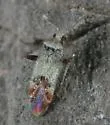
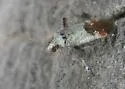
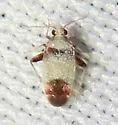
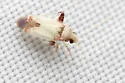
Photo credits: Contributed by Jason Botz; Additional contributions by Mike Quinn
Frequently Asked Questions About Parthenicus micans
What is Parthenicus micans?
Parthenicus micans is a species in the family Miridae, within the order Hemiptera.
How big is Parthenicus micans?
males 2.7 mm, females 2.6 mm
How do you identify Parthenicus micans?
Suggestive of oreades , but size smaller, distinguished by the uniformly silvery white, scale-like pubescence on clavus and corium, with golden scale-like hairs only at inner apical angles of corium (Knight, 1925). The size difference is significant: males 2.7 mm, females 2.6 mm for micans compared to females 3.3 mm, males 3.7 mm for oreades . P. oreades has conspicuous red flecks on the disc of the clavus and corium, while such red flecking is limited to the humeral and cuneal areas in micans (Knight, 1925). The entire dorsal integument of oreades often has a sooty grey cast, while the base color of micans is snowy white, with grey tinge restricted to the anterior edge of the hemelytra and scutellum, and a small area around the posterior angle of the clavus (Botz, personal observation).
Where is Parthenicus micans found?
Range: AZ, w. TX - Map