
Orchesella cincta
This record describes Orchesella cincta (species). Recorded family: Entomobryidae. Recorded order: Entomobryomorpha.
Identification and Appearance
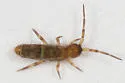
white band on body and basal part of antennae. The easiest character to distinguish celsa from cincta is the thin black middorsal line running from the metathoracic segment to the 3rd abdominal segment (present in celsa , absent in cincta ); in case the middorsal line is not visible, check the antennae: distinct white bands present in cincta , absent or indistinct in celsa . [comment by Frans Janssens]
Classification
- Kingdom
- Animalia
- Phylum
- Arthropoda
- Class
- Collembola
- Order
- Entomobryomorpha (Elongate-bodied Springtails)
- Superfamily
- Entomobryoidea
- Family
- Entomobryidae (Slender Springtails)
- Subfamily
- Orchesellinae
- Genus
- Orchesella
Imported taxonomy record. Source availability varies; see the source references and editorial policy below.
Habitat and Range
Geographic Range
holarctic; in NA, northeastern
Additional species information
Species notes from the sources
Etymology: Orchesella cincta (Linnæus 1758)
About Globular Springtails: the wider group
Order-level background for Entomobryomorpha, the group containing Orchesella cincta. Species-specific details appear above.
Group overview
Entomobryomorpha is a major order of springtails (Collembola) with ~4,000 described species. Springtails are among the most abundant land arthropods - a single square meter of soil can contain 100,000 individuals.
Ecological role of the group
Springtails are critical to soil food webs - they break down decaying organic matter, disperse fungal spores, and regulate soil microbial communities. They can jump up to 100× their body length using a fork-like structure (furcula) held under tension.
Economic and practical significance of the group
Springtails are mostly beneficial, playing essential roles in soil health and decomposition. Some species are minor pests in greenhouses and mushroom farms. They are increasingly used as bioindicators for soil contamination and pesticide impacts.
Recorded sources for this group: Soil ecology research, Collembola studies. Imported estimates may describe particular regions or reporting periods.
Photos of Orchesella cincta (5)
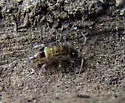
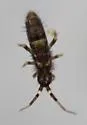
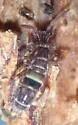
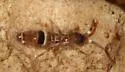
Photo credits: Contributed by Jim McClarin; Additional contributions by Vox Sciurorum , ceiseman , v belov
Frequently Asked Questions About Orchesella cincta
What is Orchesella cincta?
Orchesella cincta is a species in the family Entomobryidae, within the order Entomobryomorpha.
How do you identify Orchesella cincta?
white band on body and basal part of antennae. The easiest character to distinguish celsa from cincta is the thin black middorsal line running from the metathoracic segment to the 3rd abdominal segment (present in celsa , absent in cincta ); in case the middorsal line is not visible, check the antennae: distinct white bands present in cincta , absent or indistinct in celsa . [comment by Frans Janssens]
Where is Orchesella cincta found?
Range: holarctic; in NA, northeastern