
Red-washed Prominent - Hodges#8012
Oedemasia semirufescens
This record describes Oedemasia semirufescens (species). Recorded family: Notodontidae. Recorded order: Lepidoptera.
Identification and Appearance
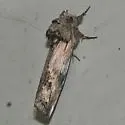
Variable grayish brown, FW variably streaked with yellowish, red, and black. Usually has a black basal dot, and reniform spot. HW light yellowish with gray shading. Caterpillar Yellow, pink or brown with extensive netwrk of brown mottling. A1 with fleshy, forward-projecting horn, cleft at its apex; last thoracic segment also drawn into sizable dorsal horn; and A5 humped. head usually with broad, brown stripe running from vertex to antenna. Pale chevron-shaped mark towards rear end of back.
Classification
- Kingdom
- Animalia
- Phylum
- Arthropoda
- Class
- Insecta
- Order
- Lepidoptera (Butterflies and Moths)
- Superfamily
- Noctuoidea
- Family
- Notodontidae (Prominent Moths)
- Subfamily
- Heterocampinae
- Genus
- Oedemasia
Imported taxonomy record. Source availability varies; see the source references and editorial policy below.
Habitat and Range
Habitat
Woodlands and forests.
Geographic Range
Canada: NS to BC; USA (east): ME south to southern FL west to MN and eastern TX in wooded areas; USA (west): WA, ID, OR, CA, northwestern CO, southwestern SD. ( 3 ) Type locality ( leptinoides ): "Middles States". Type locality ( mustelina ): Cambridge, MA.
Seasonal Activity
Flies May-September. Two generations of mature caterpillars from June onward.
Diet and Behavior
Diet: A wide assortment of trees and shrubs. Apple, beech, birch, poplar, oak, maples, roses and willows.
Additional species information
Species notes from the sources
Etymology: Oedemasia semirufescens (Walker, 1865), n. comb. in Becker , was formerly placed in genus Schizura and genus Oligocentria .
About Butterflies and Moths: the wider group
Order-level background for Lepidoptera, the group containing Oedemasia semirufescens. Species-specific details appear above.
Group overview
Lepidoptera includes approximately 180,000 described species of butterflies and moths. Moths outnumber butterflies roughly 10:1. The monarch butterfly's eastern population has declined by more than 80% since the mid-1990s, and the western population by over 95% since the 1980s. The IUCN lists the migratory monarch as Vulnerable.
Ecological role of the group
Butterflies and moths are essential indicators of ecosystem health. As caterpillars, they are a primary food source for birds - a single nest of blue tit chicks requires ~10,000 caterpillars. Adult moths pollinate many night-blooming plants.
Economic and practical significance of the group
Lepidoptera are critical pollinators. In Europe, grassland butterfly species have declined by almost 50% since the early 1990s. In the UK, three-quarters of butterflies are in decline. In the U.S., five butterfly species have gone extinct since 1950, with 29 listed as endangered.
Recorded sources for this group: IUCN Red List, Xerces Society, USFWS, PNAS, WWF. Imported estimates may describe particular regions or reporting periods.
Photos of Red-washed Prominent - Hodges#8012 (5)
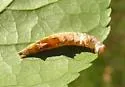
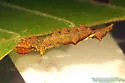
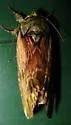
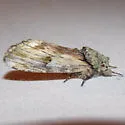
Photo credits: Contributed by Cotinis; Additional contributions by Hannah Nendick-Mason , john and jane balaban , Steve Nanz , Robin McLeod , Tony-2 , tom murray , Steve Morris
Frequently Asked Questions About Red-washed Prominent - Hodges#8012
What is Red-washed Prominent - Hodges#8012?
Red-washed Prominent - Hodges#8012 (Oedemasia semirufescens) is a species in the family Notodontidae, within the order Lepidoptera.
How big is Red-washed Prominent - Hodges#8012?
3-4.5cm wingspan
How do you identify Red-washed Prominent - Hodges#8012?
Variable grayish brown, FW variably streaked with yellowish, red, and black. Usually has a black basal dot, and reniform spot. HW light yellowish with gray shading. Caterpillar Yellow, pink or brown with extensive netwrk of brown mottling. A1 with fleshy, forward-projecting horn, cleft at its apex; last thoracic segment also drawn into sizable dorsal horn; and A5 humped. head usually with broad, brown stripe running from vertex to antenna. Pale chevron-shaped mark towards rear end of back.
Where is Red-washed Prominent - Hodges#8012 found?
| Feature | Details |
|---|---|
| Habitat | Woodlands and forests. |
| Range | Canada: NS to BC; USA (east): ME south to southern FL west to MN and eastern TX in wooded areas; USA (west): WA, ID, OR, CA, northwestern CO, southwestern SD. ( 3 ) Type locality ( leptinoides ): Middles States. Type locality ( mustelina ): Cambridge, MA. |
What does Red-washed Prominent - Hodges#8012 eat?
The diet of the Red-washed Prominent - Hodges#8012 includes A wide assortment of trees and shrubs. Apple, beech, birch, poplar, oak, maples, roses and willows..
When is Red-washed Prominent - Hodges#8012 active?
Red-washed Prominent - Hodges#8012: seasonal activity - Flies May-September. Two generations of mature caterpillars from June onward..