
Banded Dark Fishfly
Nigronia fasciata
This record describes Nigronia fasciata (species). Recorded family: Corydalidae. Recorded order: Megaloptera.
Identification and Appearance
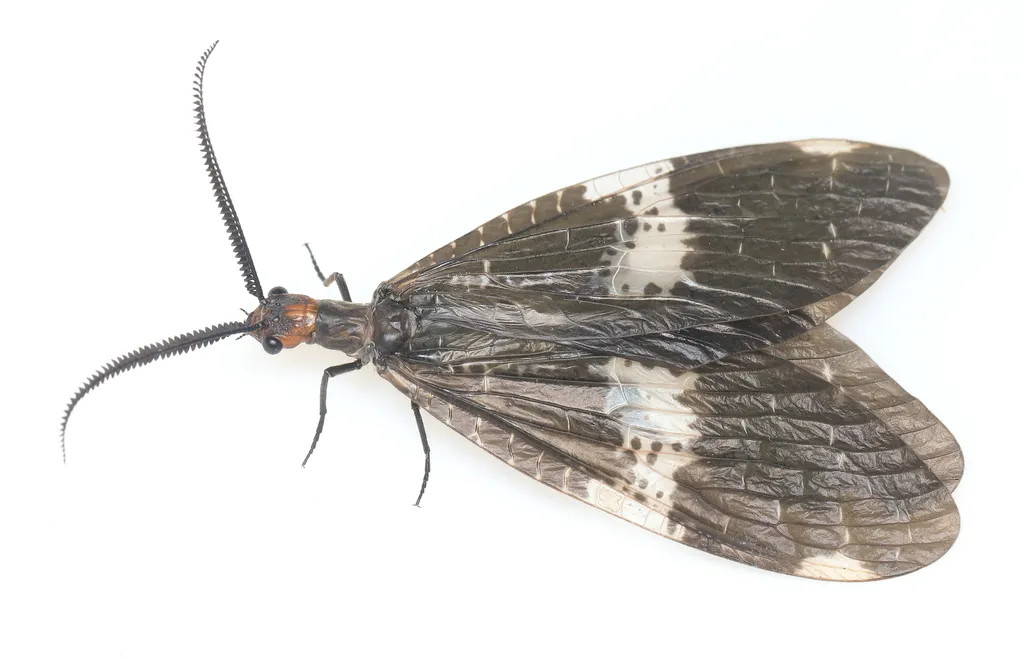
Wings are dark brown with an off-white (not bright white) stripe across the middle of the wings. The stripe extends from outside edge (costa) to just before inner wing margin and always has several brown spots, especially on the base half of the stripe. The base margin of the stripe also has a dip at center. Small off-white patch on outside edge (costal) near wing tip, and some white flecks. Hind wings also have off-white stripe across middle of wing, and white at base, and white flecks on lower half of wing. Types: Syntype of Chauliodes fasciatus male by Walker, 1853. Type Locality: New York. In the British National Museum, London, England. Syntype of Chauliodes lunatus by Hagen (nec Walsh), 1863. Type Locality: Illinois, Maryland, New York and Pennsylvania. Museum unknown.
Wikipedia reference for Nigronia fasciata: http://en.wikipedia.org/wiki/Nigronia_fasciata.
Classification
- Kingdom
- Animalia
- Phylum
- Arthropoda
- Class
- Insecta
- Order
- Megaloptera (Alderflies, Dobsonflies, and Fishflies)
- Family
- Corydalidae (Dobsonflies and Fishflies)
- Subfamily
- Chauliodinae
- Genus
- Nigronia (Dark Fishflies)
Imported taxonomy record. Source availability varies; see the source references and editorial policy below.
Habitat and Range
Habitat
Larvae: Small streams with sandy bottoms and few rocks; and good water quality.
Geographic Range
e. US (reported from 23 states but not from the upper Midwest) ; Not present in Canada.
Seasonal Activity
May to June, earlier in the southern states.
Diet and Behavior
Diet: Larvae feed on smaller aquatic animals. Adults may feed on nectar - drink sugar water in the lab.
Life History
Females lay large egg masses in the afternoon from May to early June on the underside of leaves of branches over-hanging streams. After hatching (14 days), larvae drop into the water and feed on mostly Isopoda and Caddisflies. They will resort to cannibalism.
Additional species information
Species notes from the sources
Etymology: Nigronia fasciata (Walker 1853)
About Alderflies, Dobsonflies, and Fishflies: the wider group
Order-level background for Megaloptera, the group containing Nigronia fasciata. Species-specific details appear above.
Group overview
Megaloptera (dobsonflies, fishflies, alderflies) includes ~380 described species. Male dobsonflies have enormous mandibles up to 40mm long - longer than their entire head - used in combat with rival males.
Ecological role of the group
Dobsonfly larvae (hellgrammites) are top predators in stream ecosystems, spending 2-5 years as aquatic nymphs before pupating. They can grow up to 90mm long, making them some of the largest aquatic insect larvae in North America.
Economic and practical significance of the group
Hellgrammites (dobsonfly larvae) are prized bait for bass fishing across North America. They are also important bioindicator species for freshwater stream health monitoring.
Recorded sources for this group: Freshwater ecology research, fishing industry. Imported estimates may describe particular regions or reporting periods.
Photos of Banded Dark Fishfly (3)
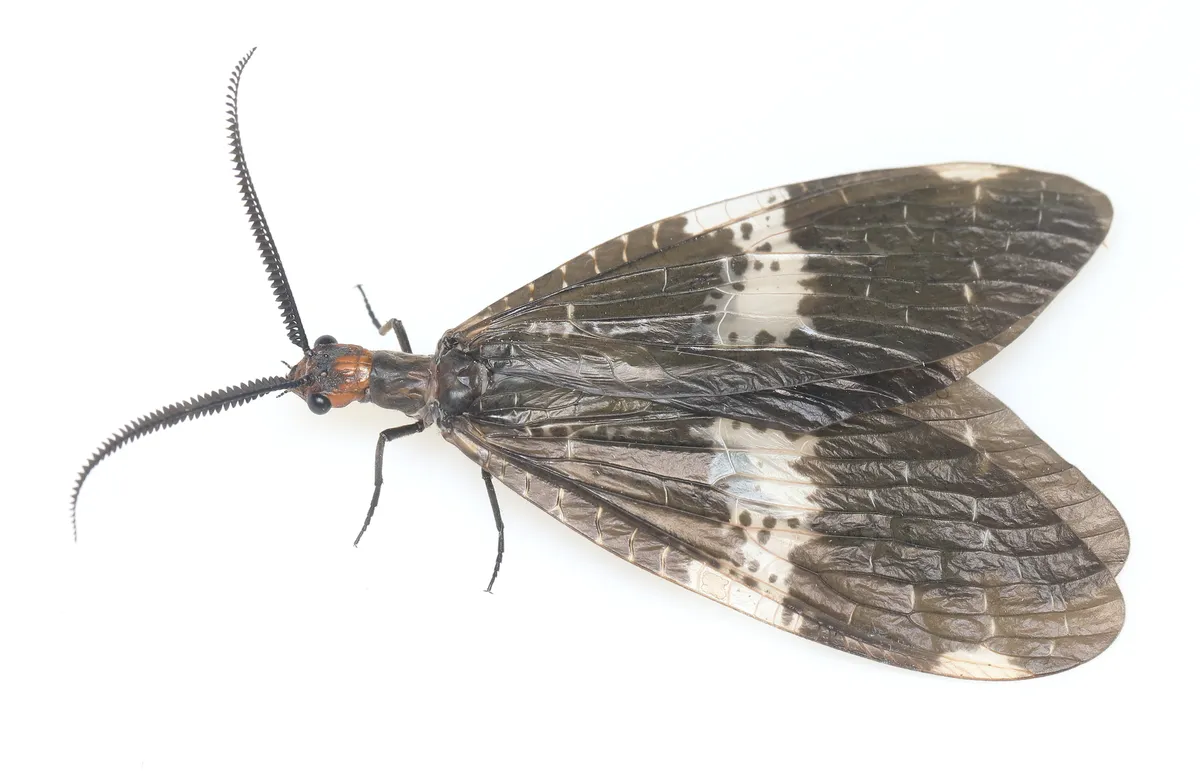
Photo credits: Contributed by Cotinis; Additional contributions by Bbarnd , v belov , lee_penner , PaleoJon
Frequently Asked Questions About Banded Dark Fishfly
What is Banded Dark Fishfly?
Banded Dark Fishfly (Nigronia fasciata) is a species in the family Corydalidae, within the order Megaloptera.
How big is Banded Dark Fishfly?
Female 23 to 30 mm. long; Male 10 to 25 mm. long. Larva 26 to 33 mm.
How do you identify Banded Dark Fishfly?
Wings are dark brown with an off-white (not bright white) stripe across the middle of the wings. The stripe extends from outside edge (costa) to just before inner wing margin and always has several brown spots, especially on the base half of the stripe. The base margin of the stripe also has a dip at center. Small off-white patch on outside edge (costal) near wing tip, and some white flecks. Hind wings also have off-white stripe across middle of wing, and white at base, and white flecks on lower half of wing.
Where is Banded Dark Fishfly found?
| Feature | Details |
|---|---|
| Habitat | Larvae: Small streams with sandy bottoms and few rocks; and good water quality. |
| Range | e. US (reported from 23 states but not from the upper Midwest) ; Not present in Canada. |
What does Banded Dark Fishfly eat?
The diet of the Banded Dark Fishfly includes Larvae feed on smaller aquatic animals. Adults may feed on nectar - drink sugar water in the lab..
When is Banded Dark Fishfly active?
Banded Dark Fishfly: seasonal activity - May to June, earlier in the southern states..
What is the life cycle of a Banded Dark Fishfly?
Females lay large egg masses in the afternoon from May to early June on the underside of leaves of branches over-hanging streams. After hatching (14 days), larvae drop into the water and feed on mostly Isopoda and Caddisflies. They will resort to cannibalism.