
Forcepfly
Merope tuber
This record describes Merope tuber (species). Recorded family: Meropeidae. Recorded order: Mecoptera.
Identification and Appearance
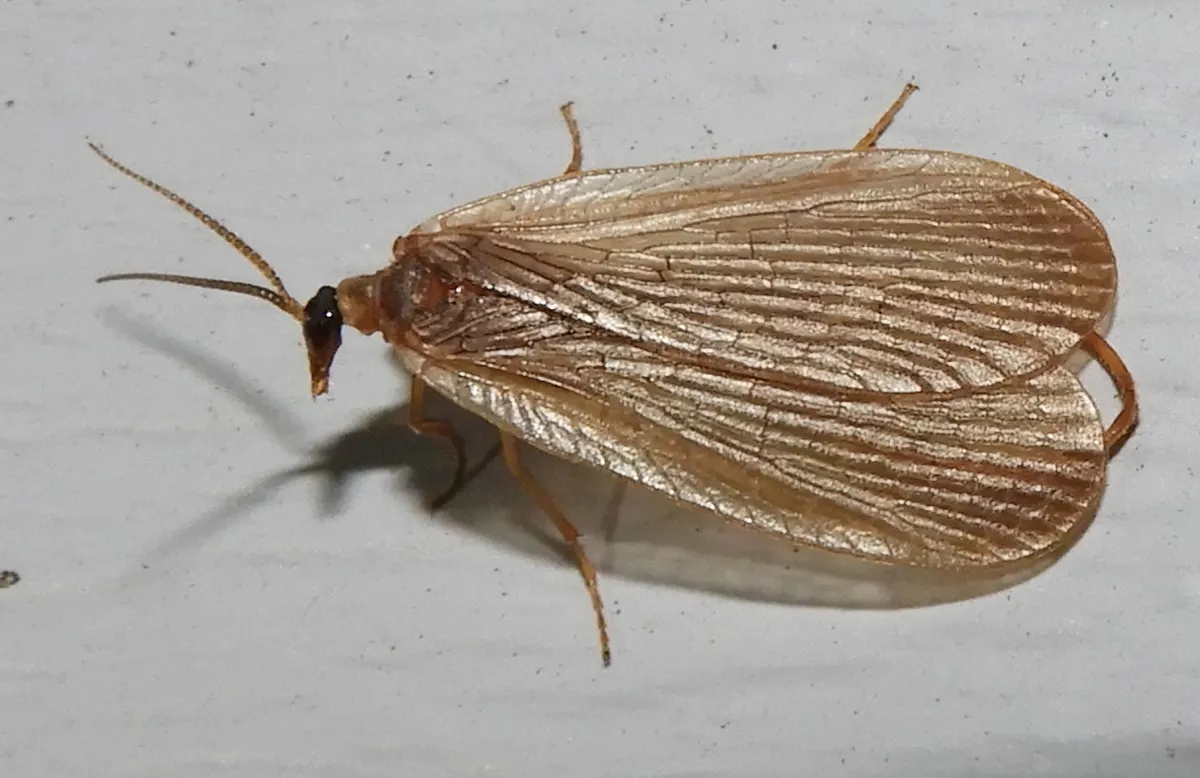
Appearance unique; body rather flattened, yellowish-brown; wings divided into many rectangular cells by numerous cross-veins; male with elongate, slender clasping structures at end of abdomen; female abdomen shorter, tapering to narrow tip. Jugum (a lobe at the base of a forewing along the hind margin) has serrated undersides and can be rubbed against a serrated area of the thorax to produce sound (stridulation), typically as a defense behavior when disturbed, but also to communicate with the opposite sex. Uncommon to rare in collections and seldom encountered, but more regularly collected over the last few decades (and in more states), may be due to increased use of flight intercept traps. Fairly large series collected in Malaise traps Sticky trap collections near a pig decomposition project suggest attraction to carrion
Wikipedia reference for Merope tuber: http://en.wikipedia.org/wiki/Merope_tuber.
Classification
- Kingdom
- Animalia
- Phylum
- Arthropoda
- Class
- Insecta
- Order
- Mecoptera (Scorpionflies, Hangingflies, and Allies)
- Family
- Meropeidae (Forcepflies)
- Genus
- Merope
Imported taxonomy record. Source availability varies; see the source references and editorial policy below.
Habitat and Range
Habitat
in low vegetation or on the ground in densely-vegetated woodlands, often near water or wet seeps (similar to scorpionfly habitat); adults are nocturnal and attracted to light.
Geographic Range
e. NA (QC-ON-ME-MN to GA-OK-TX)
Seasonal Activity
Jun-Sep
Diet and Behavior
Life History
Very little is known about biology or behavior. Larvae have never been discovered. The flattened appearance suggests that the adults probably spend much of their time close to the ground hiding in cracks and crevices.
Additional species information
Species notes from the sources
Etymology: Merope tuber Newman 1838
About Scorpionflies, Hangingflies, and Allies: the wider group
Order-level background for Mecoptera, the group containing Merope tuber. Species-specific details appear above.
Group overview
Mecoptera (scorpionflies) includes ~600 described species. Males of many species have an upturned abdomen tip resembling a scorpion's stinger, but they are completely harmless. Mecoptera are among the oldest insect orders with fossils dating to the Permian period (~270 million years ago).
Ecological role of the group
Scorpionflies are primarily scavengers feeding on dead insects and decaying organic matter. Some species practice 'nuptial gifting' - males offer prey items or salivary secretions to females as mating gifts.
Economic and practical significance of the group
Scorpionflies have little direct economic impact but are valuable research subjects - they are considered ancestral to fleas and possibly to all holometabolous insects (those with complete metamorphosis).
Recorded sources for this group: Entomological research, paleontology. Imported estimates may describe particular regions or reporting periods.
Photos of Forcepfly (3)
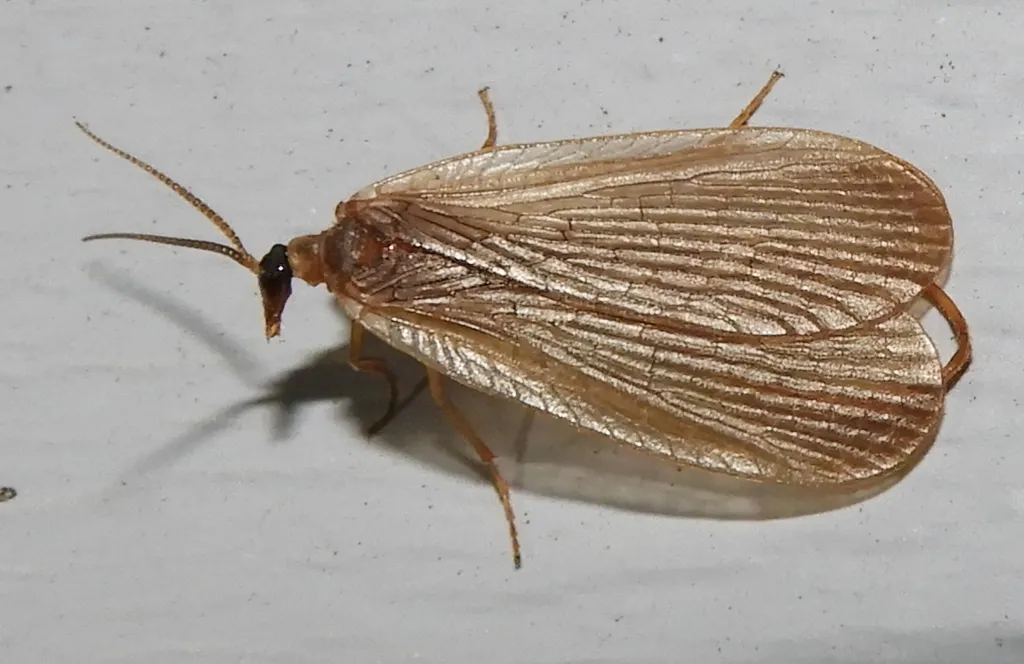
Photo credits: Contributed by Robin McLeod; Additional contributions by cotinis , John VanDyk , Andrew Meeds , Ted Kropiewnicki , v belov
Frequently Asked Questions About Forcepfly
What is Forcepfly?
Forcepfly (Merope tuber) is a species in the family Meropeidae, within the order Mecoptera.
How big is Forcepfly?
body 8-15 mm
How do you identify Forcepfly?
Appearance unique; body rather flattened, yellowish-brown; wings divided into many rectangular cells by numerous cross-veins; male with elongate, slender clasping structures at end of abdomen; female abdomen shorter, tapering to narrow tip. Jugum (a lobe at the base of a forewing along the hind margin) has serrated undersides and can be rubbed against a serrated area of the thorax to produce sound (stridulation), typically as a defense behavior when disturbed, but also to communicate with the opposite sex.
Where is Forcepfly found?
| Feature | Details |
|---|---|
| Habitat | in low vegetation or on the ground in densely-vegetated woodlands, often near water or wet seeps (similar to scorpionfly habitat); adults are nocturnal and attracted to light. |
| Range | e. NA (QC-ON-ME-MN to GA-OK-TX) |
When is Forcepfly active?
Forcepfly: seasonal activity - Jun-Sep.
What is the life cycle of a Forcepfly?
Very little is known about biology or behavior. Larvae have never been discovered. The flattened appearance suggests that the adults probably spend much of their time close to the ground hiding in cracks and crevices.