
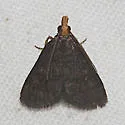
Merrick's Crambid Moth - Hodges#5117
Loxostegopsis merrickalis
This record describes Loxostegopsis merrickalis (species). Recorded family: Crambidae. Recorded order: Lepidoptera.
Identification and Appearance
Classification
- Kingdom
- Animalia
- Phylum
- Arthropoda
- Class
- Insecta
- Order
- Lepidoptera (Butterflies and Moths)
- Superfamily
- Pyraloidea
- Family
- Crambidae (Crambid Snout Moths)
- Subfamily
- Spilomelinae
- Tribe
- Steniini
- Genus
- Loxostegopsis
Imported taxonomy record. Source availability varies; see the source references and editorial policy below.
Habitat and Range
Geographic Range
Records from Manitoba to Texas, east to Florida, New Hampshire and southern Quebec. Paratypes: New Brighton, PA (F. Merrick, 9-26 Jul.).
Additional species information
Species notes from the sources
Etymology: Specific epithet in honor of New Brighton, Pennsylvania lepidoptera collector Frank A. Merrick (1845-1912) who collected the paratypes of this species. In 1862 Merrick was mustered as a sergeant into Hampton's Independent Battery F , Pennsylvania Light Artillery assigned to the Army of the Potomac, seemingly taking part in every major battle of the war, including Antietam, Bull Run, Chancellorsville and Gettysburg. After the war Merrick returned to New Brighton and took up the gentler pursuits of entomology, putting together a collection for his father's Merrick Free Art Gallery, Museum and Library that still exists today as an art gallery. Olethreutes merrickana (Kearfott, 1907) is also named in his honor.
About Butterflies and Moths: the wider group
Order-level background for Lepidoptera, the group containing Loxostegopsis merrickalis. Species-specific details appear above.
Group overview
Lepidoptera includes approximately 180,000 described species of butterflies and moths. Moths outnumber butterflies roughly 10:1. The monarch butterfly's eastern population has declined by more than 80% since the mid-1990s, and the western population by over 95% since the 1980s. The IUCN lists the migratory monarch as Vulnerable.
Ecological role of the group
Butterflies and moths are essential indicators of ecosystem health. As caterpillars, they are a primary food source for birds - a single nest of blue tit chicks requires ~10,000 caterpillars. Adult moths pollinate many night-blooming plants.
Economic and practical significance of the group
Lepidoptera are critical pollinators. In Europe, grassland butterfly species have declined by almost 50% since the early 1990s. In the UK, three-quarters of butterflies are in decline. In the U.S., five butterfly species have gone extinct since 1950, with 29 listed as endangered.
Recorded sources for this group: IUCN Red List, Xerces Society, USFWS, PNAS, WWF. Imported estimates may describe particular regions or reporting periods.
Photos of Merrick's Crambid Moth - Hodges#5117 (5)
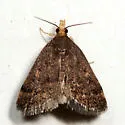
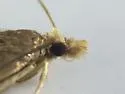
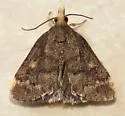
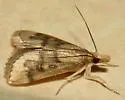
Photo credits: Contributed by tom murray; Additional contributions by Nick Block , KenW , Randy Hardy , Kyhl Austin