
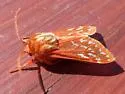
Lophocampa roseata - Hodges#8206
Lophocampa roseata
This record describes Lophocampa roseata (species). Recorded family: Erebidae. Recorded order: Lepidoptera.
Identification and Appearance
Classification
- Kingdom
- Animalia
- Phylum
- Arthropoda
- Class
- Insecta
- Order
- Lepidoptera (Butterflies and Moths)
- Superfamily
- Noctuoidea
- Family
- Erebidae
- Subfamily
- Arctiinae
- Tribe
- Arctiini
- Genus
- Lophocampa
Imported taxonomy record. Source availability varies; see the source references and editorial policy below.
Habitat and Range
Geographic Range
Restricted to western Oregon, western Washington, and southwestern British Columbia.
Diet and Behavior
Life History
Jeremy contacted Libby Avis who sent him a pdf from the Entomological Society of BC, which has a description of the caterpillar of Aemilia roseata. The description of the 4th instar fits these caterpillars well. ENTOMOLOGICAL SOCIETY OF BRITISH COLUMBIA Proc. (1958), Vol. 5, DEC. 22, 1958, pg 28 Aemilia roseata Wlk. - 4th instar Length: 20 to 25 mm. Head: shiny, black with labrum white. Body: velvet black above with a narrow white girdle at the juncture of the segments, mostly concealed by the tufts of short dense hairs that spread out to meet one another from their individual tubercles; each tuft consisted of hairs of two or three colours, arranged in layers: white at the base, then black, and where there were three colours, yellow above and central; along the dorsum were nine pairs of tufts, one pair per segment with a similar, smaller, yellow centred pair below the spiracular line. The rest were black and white; Tl had a pair of forward pointing white pencils of long hairs, and segments A8 and A9 had each a similar pair directed backwards. The admixture of the predominating white and black gave an overall ash colour to the caterpillar, the yellow points breaking up the otherwise solid appearance. Underside light fuscous, legs banded with black and white, zebra fashion, claspers pale dusky. Tanna Knouse contributed a nice series here, raised on Fir branches:
About Butterflies and Moths: the wider group
Order-level background for Lepidoptera, the group containing Lophocampa roseata. Species-specific details appear above.
Group overview
Lepidoptera includes approximately 180,000 described species of butterflies and moths. Moths outnumber butterflies roughly 10:1. The monarch butterfly's eastern population has declined by more than 80% since the mid-1990s, and the western population by over 95% since the 1980s. The IUCN lists the migratory monarch as Vulnerable.
Ecological role of the group
Butterflies and moths are essential indicators of ecosystem health. As caterpillars, they are a primary food source for birds - a single nest of blue tit chicks requires ~10,000 caterpillars. Adult moths pollinate many night-blooming plants.
Economic and practical significance of the group
Lepidoptera are critical pollinators. In Europe, grassland butterfly species have declined by almost 50% since the early 1990s. In the UK, three-quarters of butterflies are in decline. In the U.S., five butterfly species have gone extinct since 1950, with 29 listed as endangered.
Recorded sources for this group: IUCN Red List, Xerces Society, USFWS, PNAS, WWF. Imported estimates may describe particular regions or reporting periods.
Photos of Lophocampa roseata - Hodges#8206 (5)
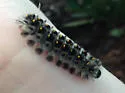
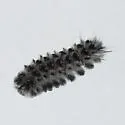
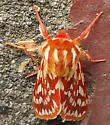
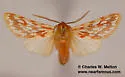
Photo credits: Contributed by john and jane balaban; Additional contributions by Ron M. , metrioptera